

According to TechSci Research report, “Stormwater Management Market Report- Global Industry Size, Share, Trends, Competition Forecast & Opportunities, 2031F, The Global Stormwater Management Market will grow from USD 17.92 Billion in 2025 to USD 30.25 Billion by 2031 at a 9.12% CAGR.
Request For Sample Copy of Report For More Detailed Market insight: https://www.techsciresearch.com/sample-report.aspx?cid=1318#requestform
Industry Key Highlights
The Global Stormwater Management Market is witnessing substantial growth due to increasing urbanization, climate change concerns, and rising investments in sustainable water infrastructure.
Governments worldwide are implementing stringent environmental regulations to reduce flooding risks and improve water quality.
Smart stormwater management systems integrated with IoT, AI, and real-time monitoring technologies are transforming traditional drainage infrastructure.
Rapid urban development and the expansion of impervious surfaces are increasing demand for advanced stormwater management solutions.
Green infrastructure practices such as rain gardens, permeable pavements, bioswales, and green roofs are gaining widespread adoption.
Rising incidents of extreme weather events and urban flooding are accelerating infrastructure modernization projects globally.
Municipalities and private developers are investing heavily in sustainable stormwater treatment and retention systems.
Market Drivers
Increasing Urbanization and Infrastructure Development
One of the most significant drivers of the Global Stormwater Management Market is rapid urbanization. Cities worldwide continue to expand, resulting in increased construction of roads, buildings, industrial facilities, and transportation networks.
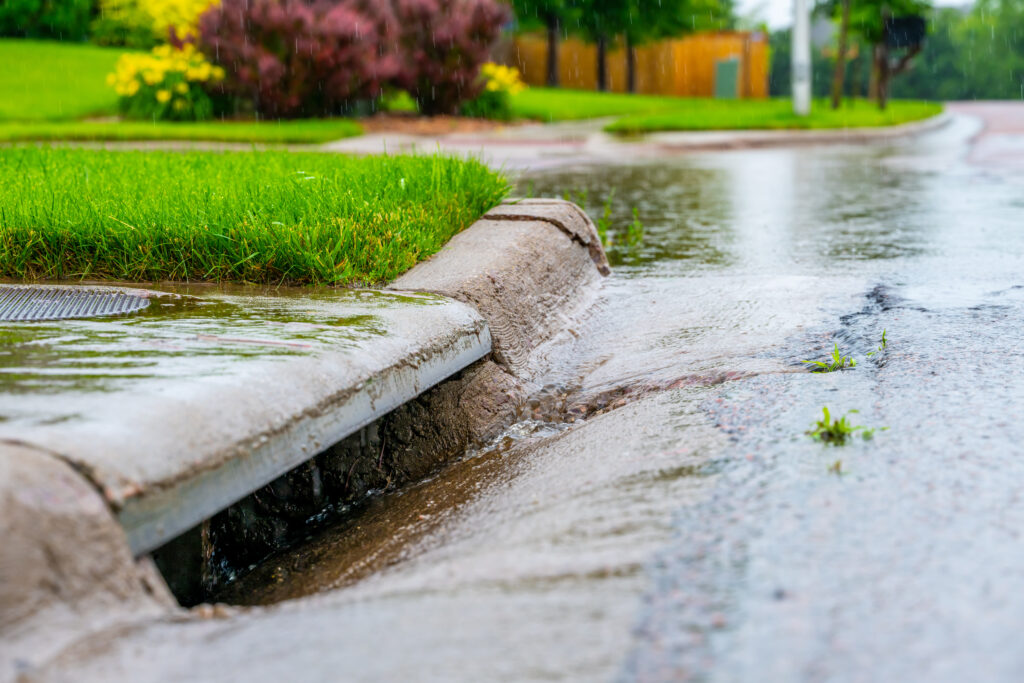
Urban development often replaces natural landscapes with impervious surfaces that prevent water infiltration. This increases runoff volumes and places additional pressure on drainage infrastructure.
As urban populations grow, municipalities are investing in advanced stormwater systems to prevent flooding and maintain sustainable urban environments.
Rising Incidence of Flooding Events
Flooding has become a major concern for cities across the globe. Extreme rainfall events, inadequate drainage infrastructure, and climate-related weather disruptions are contributing to increased flood risks.
The economic impact of flooding can be substantial, affecting residential areas, businesses, transportation systems, and public infrastructure.
Governments are therefore prioritizing stormwater management investments to enhance resilience and reduce disaster-related losses.
Climate Change and Weather Variability
Climate change is significantly influencing rainfall patterns, increasing the frequency and intensity of storms in many regions.
These changing weather conditions require modern stormwater systems capable of handling larger runoff volumes while protecting communities and ecosystems.
Climate adaptation strategies increasingly include stormwater management as a critical component of urban resilience planning.
Environmental Protection Regulations
Governments and environmental agencies are introducing stricter regulations aimed at reducing water pollution and protecting natural ecosystems.
Stormwater runoff often carries contaminants into waterways, creating environmental and public health concerns.
Compliance with environmental regulations is encouraging municipalities and industries to adopt advanced treatment and runoff control systems.
Growing Focus on Water Conservation
Water scarcity is becoming a major challenge in many parts of the world. Stormwater harvesting and reuse systems provide opportunities to supplement water supplies while reducing pressure on freshwater resources.
Organizations are increasingly viewing stormwater as a valuable resource rather than waste, creating new opportunities for sustainable water management solutions.
Emerging Trends in the Global Stormwater Management Market
Adoption of Smart Stormwater Management Systems
Digital transformation is reshaping the stormwater management industry. Smart systems equipped with sensors, cloud connectivity, and analytics platforms enable real-time monitoring of water levels, flow rates, and system performance.
These technologies help operators make informed decisions, optimize infrastructure utilization, and improve emergency response capabilities.
The integration of smart technologies is expected to become a defining trend in the industry.
Artificial Intelligence and Predictive Analytics
Artificial intelligence is increasingly being used to forecast storm events, optimize drainage operations, and predict infrastructure maintenance requirements.
AI-powered platforms can analyze weather data, historical runoff patterns, and infrastructure performance metrics to improve decision-making.
Predictive analytics enhances operational efficiency while reducing maintenance costs and flood risks.
Expansion of Green Infrastructure
Green infrastructure solutions are becoming a preferred approach for managing stormwater sustainably.
Rain gardens, bioswales, green roofs, urban wetlands, and permeable pavements allow water to infiltrate naturally while improving urban aesthetics and biodiversity.
These environmentally friendly solutions are gaining popularity among municipalities and developers seeking sustainable alternatives to traditional drainage systems.
Stormwater Reuse and Harvesting Systems
Water reuse initiatives are driving investments in stormwater harvesting technologies. Collected stormwater can be treated and reused for irrigation, industrial processes, landscaping, and non-potable applications.
This trend aligns with broader sustainability and water conservation objectives.
Integration with Smart City Programs
Smart city development projects increasingly incorporate intelligent stormwater infrastructure to improve urban resilience and environmental performance.
Connected systems enable centralized management of water resources, infrastructure assets, and emergency response operations.
Competitive Analysis:
Tetra Tech, Inc.
Xylem Inc.
Stantec Inc.
Danaher Corporation
BASF SE
AquaShield, Inc.
SPX Flow, Inc.
Hydro International Ltd.
HDR, Inc.
Regional Analysis
North America
North America remains a significant market due to stringent environmental regulations, infrastructure modernization initiatives, and growing climate resilience investments.
Europe
Europe continues to lead in sustainable urban development and green infrastructure adoption. Strong environmental policies support widespread implementation of advanced stormwater solutions.
Asia-Pacific
Asia-Pacific is expected to experience the fastest growth due to rapid urbanization, industrialization, population growth, and increasing government investments in infrastructure development.
Latin America
Growing urban populations and increasing awareness of flood management are driving market opportunities throughout the region.
Middle East & Africa
Investments in smart cities, water conservation projects, and sustainable infrastructure initiatives are contributing to market growth across the region.
10 Benefits of the Research Report
Provides detailed market size and growth analysis.
Identifies key drivers influencing market expansion.
Highlights emerging technology trends and innovations.
Offers comprehensive competitive landscape assessment.
Delivers in-depth regional market intelligence.
Supports strategic planning and investment decisions.
Provides insights into regulatory developments.
Identifies high-growth market segments and opportunities.
Assists stakeholders in understanding future industry dynamics.
Offers long-term forecasts and market outlook for informed decision-making.
Contact US:
Techsci Research LLC
420 Lexington Avenue, Suite 300,
New York, United States- 10170
Tel: +13322586602
Email: [email protected]
Comments
Log in or sign up to join the conversation.