


I bought a stock Friday morning on a single setup.
It was up a buck and a half within the hour. I did not guess and I did not lean on a feeling.
I read two things on the chart at the same time and let the market hand me the trade.
Most traders only read one of those two things. That’s why they get chopped up in consolidation patterns over and over again.
I’m going to walk you through the exact framework today.
By the end, you’ll know how to stop losing money in sideways action and how to enter only when the chart tells you to attack.
Two Toolsets, One System
There are two ways to read a chart.
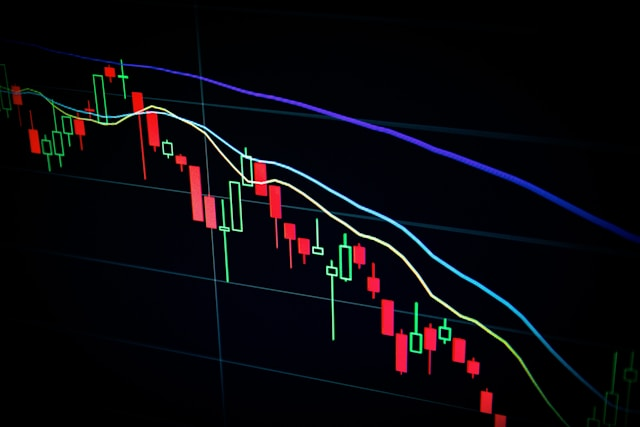
The first is candles. The four shapes that matter are the doji, the harami, the marubozu, and the engulfing pattern.
The second is classical patterns. The library has maybe sixteen total: rectangles, flags, double tops, double bottoms, wedges, and a few others.
Most traders pick one toolset and live or die on it. Both groups lose money over time.
Candles alone get you trapped in the moment. You see a bullish harami and you chase the entry. The next day prints a spinning top and you are already underwater.
Classical patterns alone leave you blind to the trigger. You see consolidation and assume it’s an invitation to buy. Consolidation actually breaks both ways with equal probability.
The marriage is the whole system. Candles are the trigger. Classical patterns are the risk management.
Yum Brands Showed The Whole Thing Today
I pulled up Yum Brands (YUM) during the session as a teaching case.
The stock had built a tight consolidation around 155. A bullish harami printed inside the box and most traders would have gone long right there.
The next day opened lower and printed a spinning top. That candle was a yellow light with no actionable signal.
A red candle followed but it did not take out 155, so the box held.
Then a green spinning top printed. Then a breakout candle opened at the heel and closed near the shoulder.
That breakout candle was the buy. The traders who waited for the candle to confirm inside the box made money the same week.
The traders who chased the harami earlier lost four dollars on the same chart.
International Paper Showed The Other Side
International Paper (IP) built an inverted flag formation while the stock was already trending lower.
Most traders saw consolidation and assumed the stock would rally. They bought the dip three separate times.
The candles inside the flag never confirmed a reversal. There was no bullish engulfing inside the box. There was no marubozu lifting off support. The flag held only neutral doji and spinning tops.
Then a massive red marubozu printed and broke the flag to the downside. The stock lost another twenty percent.
The classical pattern alone would have you long. The candles inside the box refused to confirm. Standing aside was the trade.
Triggers And Risk Management
Here is the rule I want you to walk away with.
The candles tell you when to act. The classical patterns tell you whether the act has any structural backing underneath it.
If the candle fires inside a clean pattern, you have a trade. If the candle fires against the pattern or with no pattern in sight, you have nothing.
This is how I read every consolidation chart that crosses my screen. It’s how the Burn Signal scans hundreds of names every session.
The signal only fires when both lines of evidence agree.
What To Do This Weekend
Spend one hour this weekend doing one thing.
Pull up the drawing tools on your platform and practice the rectangle and the trend line on five charts you already own.
Then overlay the four candle types and look at what fired at the edges of the boxes.
You’ll see the market differently by Monday morning.


Comments
Log in or sign up to join the conversation.