

Ramanujar once walked into exile for twelve years rather than abandon what he believed. This philosopher-saint reshaped how millions worship, turning devotion into something anyone could claim as their own, regardless of birth. His life reads less like a quiet scholar's biography and more like a slow, deliberate rebellion against exclusion, fought not with weapons but with unshakeable faith and razor-sharp philosophy.
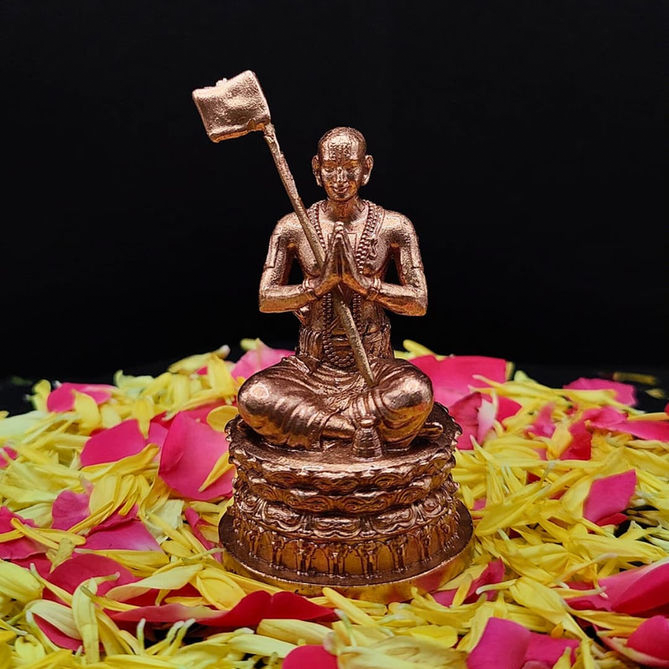
Today, a handcrafted bronze Ramanujar idol carries that same spirit of humility and conviction into homes and pooja spaces. This piece looks at who Ramanujar was, the philosophy he built, and the legacy that still shapes Sri Vaishnavism today - alongside the finely detailed bronze tribute available through Gold Plating Art Studio.
Who Is Ramanujar?
Early Life and Learning
Ramanujar, also known as Ramanujacharya, was born around 1017 CE in Sriperumbudur, near present-day Chennai. He first studied under the Advaita teacher Yadava Prakasha, but the two clashed repeatedly over their interpretation of Vedanta - young Ramanuja could not accept a philosophy that reduced the personal, loving God of devotion to an abstract, formless absolute. This early disagreement set the course for everything he would go on to build.
Yamunacharya's Unfulfilled Wishes
Before Ramanuja could formally meet the revered Vaishnava teacher Yamunacharya, the older sage passed away. Tradition holds that Yamunacharya died with three wishes unfulfilled, and that Ramanuja, moved by this, dedicated his life to completing them - becoming, in effect, Yamunacharya's spiritual successor at the Srirangam math without ever having studied under him directly.
The Philosophy Ramanujar Built
Vishishtadvaita: Qualified Non-Dualism
Ramanujar is best remembered as the founder of Vishishtadvaita, or "qualified non-dualism," a school of Vedanta that holds the individual soul and the world are real and distinct, yet inseparably united with the Supreme Being, Vishnu. This stood in direct contrast to Advaita's view of a formless, attributeless absolute, and instead gave devotees a personal, approachable God worthy of love and surrender.
Bhakti and Radical Inclusion
Perhaps Ramanujar's most lasting contribution was social rather than purely philosophical: he insisted that devotion to God was not the privilege of birth or social standing. He is remembered for personally opening temple worship to communities who had long been excluded from it, teaching that sincere Bhakti mattered more than birth - a position that put him at odds with the religious establishment of his time.
The Exile and Return of a Reformer
Conflict at Srirangam
As head of the Srirangam math, Ramanujar's growing influence and his inclusive teachings drew the attention of the Chola king Kulottunga I, a committed Shaivite who is said to have pressured Vaishnava scholars to renounce their beliefs. To protect both his life and his mission, Ramanujar fled Tamil Nadu for the Hoysala kingdom in present-day Karnataka.
Twelve Years in Karnataka
During his years in exile, Ramanujar is credited with converting the Hoysala king Bittideva to Vaishnavism, after which the king took the name Vishnuvardhana. Together, they established the Cheluvanarayana Swamy Temple at Melkote, which remains an important Sri Vaishnava center to this day.
Return to Srirangam
Once conditions in Tamil Nadu changed, Ramanujar returned to Srirangam, where he spent his remaining years teaching, writing and strengthening the temple traditions he had fought to protect. According to tradition, he lived to the age of 120, passing away around 1137 CE.
Ramanujar's Contribution to Vaishnavism
His Writings and Commentaries
Ramanujar's philosophical legacy rests heavily on the texts he wrote to give Vishishtadvaita a firm scriptural foundation. His Sri Bhashya, a detailed commentary on the Brahma Sutras, remains the definitive philosophical statement of Sri Vaishnavism, alongside his Vedartha Sangraha (a summary of Vedantic teaching) and his Gita Bhashya, a commentary on the Bhagavad Gita written from a devotional, Vishishtadvaita perspective. He is also credited with the three Gadyas - Saranagati Gadyam, Sriranga Gadyam and Vaikuntha Gadyam - short prose hymns of surrender that are still recited by Sri Vaishnava devotees today.
Building an Institution for Vaishnavism
Beyond his writing, Ramanujar is remembered for turning Sri Vaishnavism into a lasting, organized tradition rather than a loose set of teachings. He is traditionally said to have appointed 74 disciples, known as Simhasanadhipathis, as regional heads responsible for spreading and preserving his teachings across different parts of India - an early framework for what grew into the network of Sri Vaishnava mathas that still function today. At Srirangam, he is also credited with organizing temple worship procedures and administrative practices that shaped how Sri Vaishnava temples conduct daily ritual to this day.
Temples and Places Associated with Ramanujar
The Ranganathaswamy Temple at Srirangam remains the spiritual heart of Ramanujar's legacy, where he served as acharya and where his teachings continue to shape daily worship. The Cheluvanarayana Swamy Temple at Melkote stands as a reminder of his years in exile and his influence beyond Tamil Nadu. More recently, his legacy was honored on a monumental scale with the 216-foot "Statue of Equality," unveiled in Hyderabad in 2022 to commemorate his teachings on social equality and devotion.
Spiritual Significance of Ramanujar
Devotion without exclusion - his insistence that Bhakti belongs to everyone, regardless of birth.
Philosophical clarity - Vishishtadvaita's vision of a personal God, distinct yet united with the soul.
Resilience and conviction - his years of exile rather than compromise on his beliefs.
Living legacy - his teachings continue to shape Sri Vaishnava worship and thought today.
Why Is Ramanujar Different from Other Saint Idols
Unlike idols of deities shown with divine weapons or celestial attributes, a Ramanujar idol depicts a historical human teacher - typically seated in a posture of quiet instruction, hands often in a gesture of blessing or discourse. It is a reminder that his significance lies not in supernatural power, but in the strength of an idea: that sincere devotion and compassionate reform can outlast even royal opposition.
Conclusion
Ramanujar's life was defined by a refusal to separate philosophy from compassion. From his early disputes over the nature of God, to twelve years of exile rather than abandon his convictions, to a legacy that still shapes Sri Vaishnavism today, his story remains one of the clearest examples of devotion translated into action. A handcrafted bronze idol of Ramanujar offers a quiet, daily reminder that faith, held with conviction, can reshape how an entire tradition welcomes its devotees.
Comments
Log in or sign up to join the conversation.