

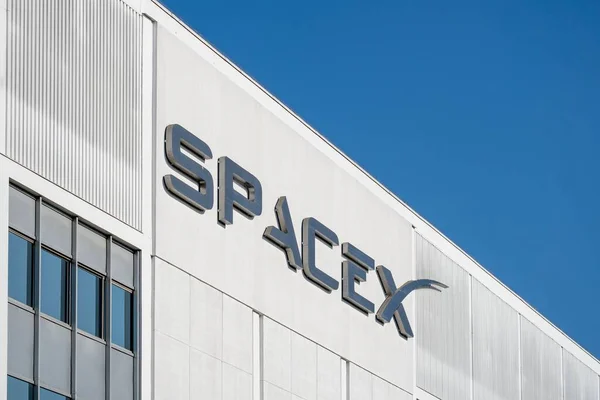
For months, SpaceX (SPCX) investors have been asking a simple question. When does the spending start paying off?
On Aug. 25, the company gave them a very large answer.
SpaceX and Louisiana Governor Jeff Landry revealed plans to build a $100 billion spaceport in Vermilion Parish, a project the company is calling Starbase, Louisiana.
State officials say it is the largest capital investment in Louisiana history.
The stock responded right away.
Shares of SPCX rose about 2% to close at $137.95 on the day of the announcement, and moved higher again in premarket trading the next morning.
For a stock that spent much of August trading below its June IPO price, that reaction matters.
Here is what the plan actually involves, and how it changes the case for owning the shares.
What SpaceX is building on the Louisiana coast
Starbase, Louisiana, will sit on a 125,000-acre former Exxon (XOM) property near Pecan Island, roughly 50 miles south of Lafayette.
SpaceX plans to build about 10 launch pads across the site, with construction starting in 2027 and the first Starship flight targeted for 2029, according to Investing.com.
CEO Elon Musk said the site will eventually support more than 30 Starship flights per day, which would make it the busiest launch location on Earth.
The facility is designed to run on its own.
SpaceX President Gwynne Shotwell said it will include local fuel production, its own power plant, a deep-water shipping port, employee housing, and a private airport.
That self-sufficiency solves a real problem.
High-volume rocket launches need steady fuel, power, and shipping, and building all of it in one place removes SpaceX’s reliance on outside suppliers.
Why the timing lifted SPCX stock
SpaceX went public on June 12, pricing its IPO at $135 a share in the largest stock market debut ever, CoinDesk reported.
The shares jumped to $225.64 within days, then gave most of it back.
The stock’s summer slide came down to spending.
In its first earnings report on Aug. 4, SpaceX posted second-quarter revenue of $7.81 billion, up 92% and beating expectations.
Capital spending jumped to $18.4 billion, and the shares fell 13.6% the next day.
Investors worried that costs were rising faster than the business could support.
The Louisiana announcement pushes back on that fear.
It signals that the spending has a clear destination, and that management believes demand for Starship flights will justify a facility built for thousands of launches a year.
How the deal removes a major regulatory risk
One of the biggest overlooked benefits for shareholders is legal certainty.
SpaceX has faced repeated trouble at its Boca Chica, Texas, site.
In 2024, regulators found the company violated the Clean Water Act by releasing pollutants, and earlier launches caused environmental damage near protected habitats.
Louisiana went out of its way to avoid a repeat.
Governor Landry signed laws effective in May 2026 that exempt certain aerospace projects from standard public review and offer financial incentives to rocket companies, Quartz reported.
For investors, that reduces the risk of the delays and lawsuits that have slowed SpaceX before.
Predictable timelines make it easier to forecast when a project this large starts generating revenue.
The space AI angle that Wall Street is watching
The Louisiana site is tied to SpaceX’s most ambitious idea yet, which is putting AI data centers in orbit.
The plan is to launch satellites carrying advanced computing hardware, tapping constant solar power in space instead of fighting for land, electricity, and water on the ground.
SpaceX and Nvidia (NVDA) are jointly developing the first satellite in that constellation, called Starmind AI1, with prototype testing set for early 2027.


Comments
Log in or sign up to join the conversation.