

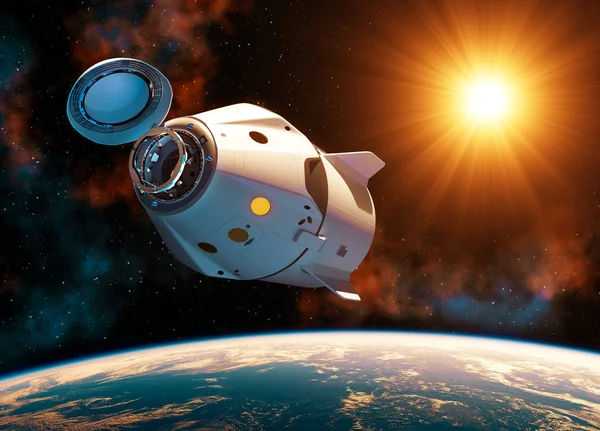
SpaceX (SPCX) completed one of the largest IPOs in history, pricing at $135 per share, raising approximately $75 billion, and debuting strongly (closing around $161, pushing market capitalization above $2 trillion). This reflects immense investor enthusiasm for its leadership in reusable rocketry, global satellite broadband via Starlink, and long-term potential in defense, space infrastructure, and advanced computing. The company’s 2025 consolidated revenue reached $18.7 billion (up ~33% YoY), with Starlink as the dominant driver. GAAP net losses were ~$4.9 billion amid heavy capex (~$20+ billion), R&D, stock-based compensation, and AI-related investments. Adjusted EBITDA remained positive at ~$6.6 billion, underscoring operational leverage in core activities.
Business Segments: SpaceX’s operations revolve around vertical integration in space access and orbital infrastructure, creating powerful synergies:
Starlink (Connectivity): The primary revenue and profit engine. This LEO satellite constellation delivers high-speed broadband to ~10.3 million subscribers (as of early 2026) across consumer, enterprise, maritime, aviation, and mobility markets, backed by over 9,600 satellites. It generated ~$11.4 billion in 2025 revenue (~61% of total, +48% YoY) with strong operating profits (~$4.4 billion) and high margins from recurring subscriptions. First-mover scale, in-house manufacturing, and network effects provide a significant moat, though ARPU faces pressure from pricing strategies and competition. Starshield variants enhance government/military offerings for secure communications and observation.
Launch Services: The foundational business leveraging Falcon 9/Heavy and developing Starship. Record launch cadence (165+ Falcon 9 missions in 2025) delivers cost leadership through reusability. Revenue was ~$4-7 billion (remainder after Starlink), with much activity internalized for Starlink deployment. Starship promises revolutionary cost reductions, higher throughput, and new markets like lunar/Mars missions and point-to-point transport. NASA/DoD contracts provide backlog stability.
Defense/Starshield and Emerging Initiatives: Growing contributions from national security contracts (secure comms, reconnaissance). Investments in orbital AI/computing and space infrastructure add high-upside optionality but currently contribute to losses.
Inter-segment synergies—launches enabling low-cost Starlink deployment while Starlink cash flows fund Starship R&D—are a core competitive advantage.
Our Outlook (2026-2028): Mid-30%+ revenue CAGR remains a realistic base expectation, led by Starlink subscriber and ARPU momentum (especially in mobility and international markets), alongside early Starship commercialization. Starlink’s operating margins should expand meaningfully with manufacturing scale and network efficiency, paving the way for company-wide EBITDA growth and free cash flow positivity as capex intensity begins to moderate post-2026.
Key catalysts include Starship orbital reusability milestones, expanded government/enterprise contracts, and satellite-to-mobile partnerships. Risks encompass execution delays on Starship, intensifying broadband competition (Kuiper), regulatory and spectrum challenges, and sustained capital demands.
Valuation Thoughts: At current levels (> $2T market cap on ~$18.7B trailing revenue), SpaceX trades at premium multiples (~94-110x sales), akin to disruptive tech platforms rather than traditional aerospace. This embeds aggressive growth assumptions, including Starship success and space/AI synergies.
Illustrative Sum-of-the-Parts (SOTP, $ billions):
Starlink: $225-350B (20-30x revenue multiple, reflecting SaaS-like recurring revenue and moat).
Launch Services: $100-200B (dominance plus Starship optionality).
Defense/Emerging: $150-300B+ (government stability and speculative infrastructure/AI upside).
Base Case Fair Value: $800B–$1.5T, implying a discount to current trading but supporting 15-25x forward revenue in a DCF with 25-40% CAGR and 4-6% terminal growth. Bull case exceeds $2.5T with full Starship realization and massive TAM capture; bear case $400-700B on delays or margin erosion.
Investment Thesis: Post-IPO volatility is likely, but long-horizon investors may be rewarded by execution on transformative potential. Near-term, the stock appears richly valued on fundamentals yet justified by optionality. Monitor upcoming earnings for Starlink metrics, Starship progress, and margin trends. This is not investment advice—perform your own due diligence. SpaceX embodies a high-conviction bet on the commercialization of space.



Comments
Log in or sign up to join the conversation.