

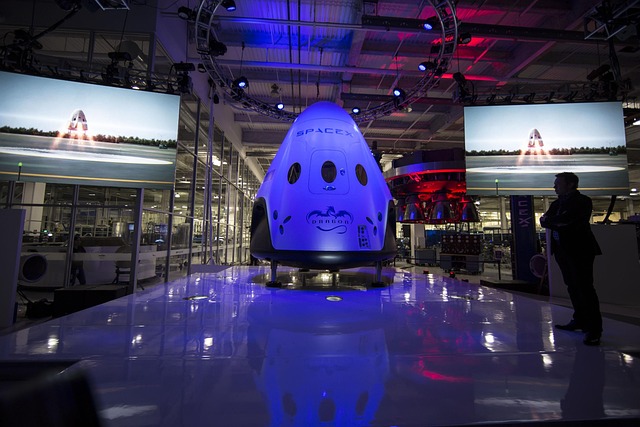
SpaceX (SPCX) has been the name on the lips of Wall Street experts since its IPO earlier this month. The company made headlines as it joined one of the world's most valuable businesses almost overnight. Its founder, Elon Musk, also became the first person ever to reach a net worth of more than $1 trillion.
But after the excitement of the IPO, reality has started to set in. SpaceX stock fell over 3 straight trading sessions. It wiped out much of the gains investors got during the company's first days on the market. So, is it safe to buy the dip now or just wait for a further drop? I’d share what I think in this piece and what I would advise should be your next move.
SpaceX's Post-IPO Rally Hits a Speed Bump
When SpaceX launched on June 12, many of us rushed to buy the shares. The stock opened at $150, above its IPO price of $135, and went up really quickly.
At one point, SpaceX passed Amazon (AMZN) and Microsoft (MSFT) in market cap, which pushed its valuation close to $3 trillion. Investors piled into the stock, hoping to gain exposure to Musk's plans in space, artificial intelligence, and satellite communications.
But of course, the rally did not last. Shares have now fallen for three consecutive trading days. This includes a 16% drop on Monday, June 22 alone. The stock has now lost about 27% since reaching its high of $211.39 on June 16.
However, investors should still keep in mind that the SpaceX stock is still up by almost 30% above their IPO price. This kind of volatility is not unusual for newly listed companies. Many IPO stocks experience swings as investors still evaluate a fair valuation after the hype dies down
The Business Still Has Plenty of Strength
The company announced an offering of senior unsecured notes as it looks to refinance an existing bridge loan due in 2027. Also, SpaceX revealed it had a massive $100.8 billion in cash and cash equivalents as of June 19.
That cash position gives the company flexibility as it continues investing in its long-term projects.
SpaceX also secured a deal with AI startup Reflection. Under the agreement, Reflection will pay $150 million per month starting in July to use computing resources at SpaceX's Colossus 2 data center. The contract runs through 2029 and could be worth $6.3 billion.
So you see, deals like this, and you can not be excited about the prospect for the company’s stock. Essentially, SpaceX is looking to be a player in the booming AI market.
Elon Musk's Trillion-Dollar Milestone
One reason SpaceX attracted so much attention is that the IPO brought Elon Musk into a new phase of wealth.
After the company's debut, Musk's net worth climbed to about $1.1 trillion. This made him the world's first trillionaire. Much of that wealth comes from his ownership stake in SpaceX, which is estimated to be worth hundreds of billions of dollars.
Critics often point to that enormous number as evidence of excessive wealth. However, supporters argue that most of Musk's fortune exists only on paper.
Unlike cash sitting in a bank account, the majority of his wealth is tied to shares in companies such as SpaceX and Tesla (TSLA). If those companies fail to meet expectations, a large portion of that wealth could disappear quickly.
For context, the sell-off explains this point. Peter Schiff said in a post that Musk lost about $150 billion on paper during Monday's decline alone. Even after that drop, Musk is still the world's only trillionaire.
The Biggest Risk Investors Face
While SpaceX has exciting growth opportunities, investors should not ignore the risks. The company lost $4.9 billion in 2025 and reported another loss of $4.28 billion during the first quarter of 2026.
SpaceX is also spending heavily on projects such as Starlink, Starship, AI data centers, and future Mars missions. These investments require billions of dollars and may take years before they generate returns.
Competition is also another concern investors should think of. Amazon's Project Kuiper is challenging Starlink in satellite internet services, while other companies continue investing in launch services, AI infrastructure, and communications technologies.
Launch approvals, government contracts, safety reviews, and international regulations all also have the potential to slow growth.
Then to the biggest risk: valuation. Even before the pullback we are seeing, some analysts asked questions on if SpaceX's market value accurately reflected its current financial performance.
Investors Back in Play
Investors are already returning to the market as the stock is back up by 6% in Tuesday's trading session. The fact that SpaceX owns some of the strongest assets in technology is enough reason to buy the dip. Starlink is still expanding globally. In fact, the company dominates the commercial launch industry.
Analysts at KeyBanc even called SpaceX the biggest leader in space-related businesses. On the other hand, the stock is still trading at a premium valuation despite the recent correction. Investors are paying today for growth that may not fully materialize for years.
History also suggests you should take precautions. Many stocks pull back after their initial excitement goes away. Data shows that a large percentage of newly listed companies underperform the market after their first one to two years as public companies.
That doesn't necessarily mean SpaceX will follow the same path. But it tells me not to just chase the stock simply because of the bullish headlines we see.
So Should You Buy?
We can’t doubt that SpaceX is one of the most exciting companies in the market today. The business almost sits at the intersection of everything. Musk has invested in space exploration, satellite communications, artificial intelligence, and manufacturing. Not many companies have these kinds of growth drivers in their system.
But then, the recent sell-off is a wake-up call that even great companies can become overpriced in the short term.
So I would say for investors who like the long-term game, the pullback may be an opportunity to start building a position. Then, for short-term investors looking for quick gains, I’d advise observing the price moves a little more before making any more.

Comments
Log in or sign up to join the conversation.