

The S&P 500 (Index: SPX) rose 1.2% over its previous week's close, ending at 7,575.39 at the close of trading on Friday, 10 July 2026.
Although in a new quarter, the next earnings season hasn't yet gotten underway, making the week one in which there was little news from companies to influence their outlook. But this week was also notable because there was also a notable lack of new information for investors to absorb from Federal Reserve officials.
That's by design because of one of the first major policy initiatives of the Fed's new boss, Kevin Warsh. On 1 July 2026, Warsh put a new policy into action of not providing much, if any, forward guidance for markets when the Fed announces how it will set the Federal Funds Rate.
That changes how the Fed has operated since the 2008-2009 recession, when it initiated its policy of providing forward guidance to reduce surprises in markets from the Fed's actions and to stabilize them.
In any case, investors responded by sending the S&P 500 higher, but well within the trajectory of the redzone forecast range added to the redzone forecast range of the alternative futures chart in the previous edition of this S&P 500 chaos series. In the latest update of the chart, we've rolled the chart forward to show the dividend futures-based model's projections for all of 2026-Q3.
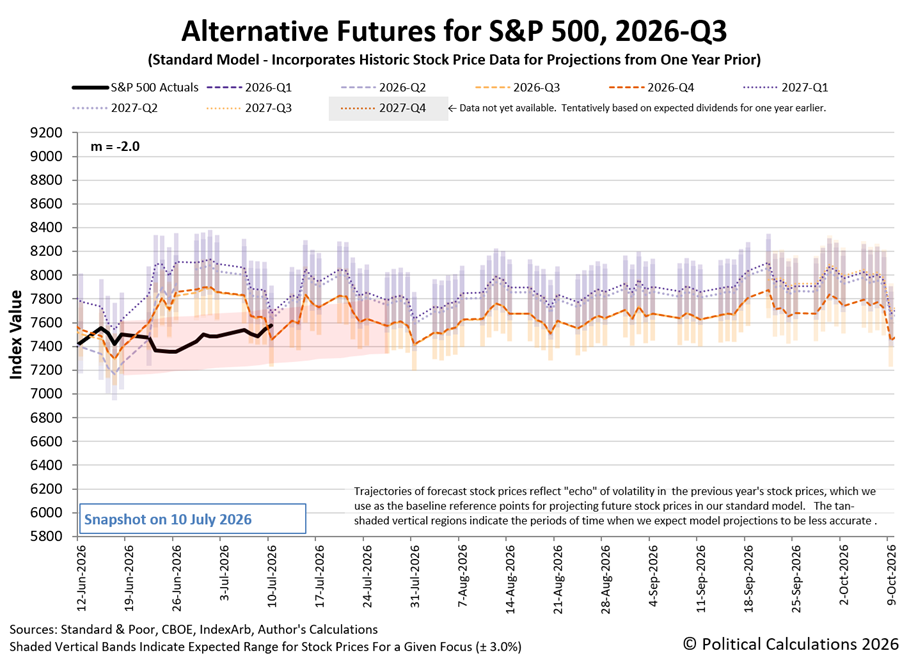
The trajectory of the S&P 500 remained well within the redzone forecast range, which indicates there was little that happened in the week that was to influence the future outlook of investors. Here is what passed for the trading week's marketing moving headlines:
Monday, 6 July 2026
Signs and portents for the U.S. economy:
Fed minions say U.S. has risk of high inflation, also say main contributor to recent inflation has weakened:
Bigger trouble, stimulus developing in China:
BOJ minions get wage hike inflation they've sought, bigger trouble developing in Japan:
Bigger trouble developing in Eurozone:
Tuesday, 7 July 2026
Signs and portents for the U.S. economy:
Fed minions notice fall in oil prices:
Bigger trouble, stimulus developing in China:
ECB minions worried about weak Eurozone economy, say region's banks need to do more to fend of cyber attacks:
Wednesday, 8 July 2026
Signs and portents for the U.S. economy:
Fed minions worried about inflation last month:
Bigger trouble, stimulus developing in China:
Some BOJ minions want to see demand-driven inflation before signing off on next rate hike:
Thursday, 9 July 2026
Signs and portents for the U.S. economy:
Fed minions talking about how they do business, think oil prices on track to come down:
Bigger trouble, stimulus developing in China:
BOJ minions getting excited to hike Japan's interest rates again with inflation fears, Japan's bond market somewhat less impressed as BOJ minion independence under question:
ECB minions learn their rate hikes didn't constrain Eurozone inflation:
Friday, 10 July 2026
Signs and portents for the U.S. economy:
Fed minions worrying about inflation:
Bigger trouble developing in Japan, BOJ minions licking at their chops to hike interest rates again:
Bigger trouble developing in Eurozone, ECB minions thinking about repeating what they've been doing since the Iran war started:
S&P 500 logs weekly gains as Energy and Technology stocks lead
The CME Group's FedWatch Tool still projects the Fed will hike the Federal Funds rate by a quarter point to a target range of 3.75-4.00% after the Fed meets on 16 September (2026-Q3). Beyond that date, the FedWatch tool forecasts another quarter point rate hike on 27 January (2027-Q1).
The Atlanta Fed's GDPNow tool's estimate of real GDP growth for the U.S. economy in the current quarter of 2026-Q2 ticked up to +1.3% from the previous week's real growth estimate of +1.2%.
Comments
Log in or sign up to join the conversation.