

The S&P 500 (Index: SPX) rebounded from the previous week's heavy rotation away from AI and technology stocks, which had sent the index lower because several of these stocks happen to be among the biggest components of the capitalization weighted index. Altogether, the S&P rose by a little under 1.8% on the strength of their rebound, closing at 7,483.24 on Thursday, 2 July 2026 before traders and investors both headed out for the long Fourth of July holiday weekend.
Perhaps the most notable headlines driving stock prices during the week were those reporting about the declines of oil and fuel prices. The oil shock from the Iran war geopolitical event had raised fears of prolonged high inflation as the impact of high oil and gas prices would progressively spread into other sectors of the economy.
Falling oil and gas prices however would mitigate those inflationary pressures. That in turn would reduce the odds of multiple interest rate hikes by the Federal Reserve in upcoming months.
Overall, we find the S&P 500's trajectory falls well within the new redzone forecast range we added to the alternative futures chart in the previous edition of this series:
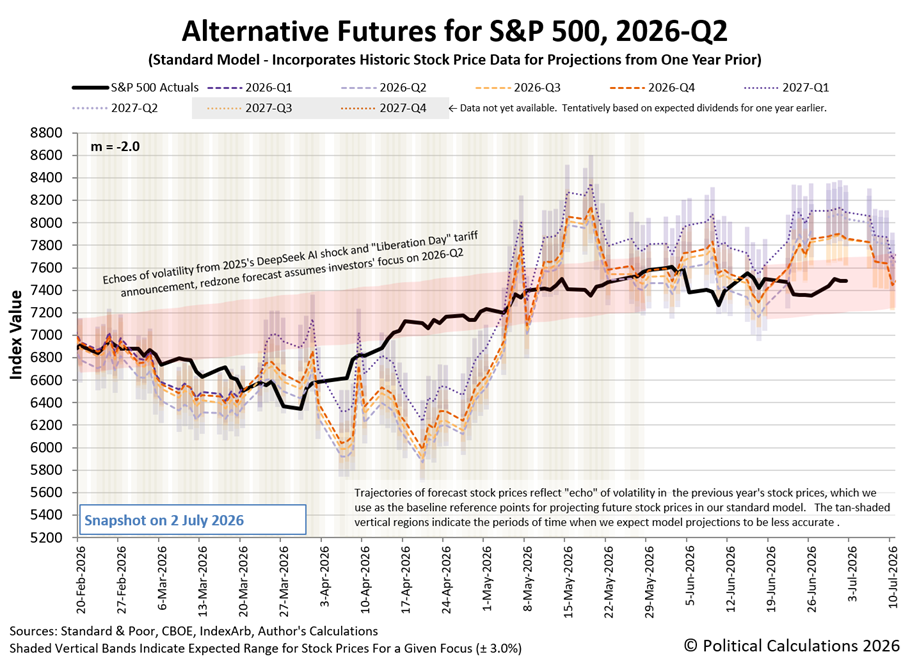
This new redzone forecast range is based on the assumption investors will hold their forward-looking focus on the current quarter of 2026-Q3 as they set current day stock prices. That makes sense because the CME Group's FedWatch Tool projects the Fed will hike the Federal Funds rate by a quarter point to a target range of 3.75-4.00% after the Fed meets on 16 September (2026-Q3).
The bigger question right now is what will happen beyond that date. Through the close of trading on 2 July 2026, the FedWatch tool anticipates another quarter point rate hike on 17 March (2027-Q1). But that expectation has been fluid over the last several weeks. If oil and fuel prices continue falling, we would expect the probability the Fed will hike rates in 2027 will drop below 50%. If oil and gas prices drop more quickly in the weeks ahead, then the expected rate hike in September 2026 will come into question.
That possibility, and other market moving events, will be something investors consider as weigh what they absorb the random onset of new information from the newstreams in those upcoming weeks. Speaking of which, here are the market moving headlines from the week that was:
Monday, 29 June 2026
Signs and portents for the U.S. economy:
Fed minion with alleged ethics problems allowed to stay on job 'for now':
Bigger trouble, stimulus developing in China:
ECB minions say Eurozone economy so good they can afford to hike rates:
Wall Street closed higher as tech rebounded and U.S.-Iran tensions eased
Tuesday, 30 June 2026
Signs and portents for the U.S. economy:
US single-family home prices ease on a monthly basis in April, FHFA says
Oil falls as investors focus on potential Iran-US talks in Doha
US retailers frontload China orders for holiday season, shipping firms say
US job openings rise to two-year high, but hiring still struggling
US expected to not extend USMCA, starting a decade-long countdown for trade pact
Fed minions looking forward to some peace and quiet, still fear inflation and are starting to lose some of their best customers:
Some growth signs developing in China:
Bigger trouble developing in Japan, BOJ minions credibility again at risk:
ECB minions suddenly rethinking their rate hike plans for Eurozone, still afraid of inflation:
S&P 500, Nasdaq register best quarter since 2020 despite Iran war
Wednesday, 1 July 2026
Signs and portents for the U.S. economy:
New chief Fed minion lays out the central bank's agenda for Fed minions:
Mixed growth signs developing in China:
Japan's economy shows signs of growth, BOJ minions salivate over opportunity to hike Japan's interest rates:
ECB minions plans to keep hiking rates may be put on hold:
U.S. stocks decline at the start of the second half of the year as tech struggles
Thursday, 2 July 2026
Signs and portents for the U.S. economy:
U.S. economy added 57,000 jobs in June, less than expected; unemployment rate at 4.2%
US factory orders fall in May, weighed down by weak demand for commercial aircraft
Oil falls for a third straight day after US, Iran conclude talks in Doha
Odds of rate hike before year-end fall; odds for one 25 bps cut rise
Fed minions thinking about maybe not hiking U.S. interest rates, say their current monetary policies are 'slightly restrictive':
Bigger trouble, stimulus developing in China:
BOJ minions / Bigger trouble developing in Japan:
ECB minions want to keep tight control over Eurozone banks to keep them from risk of failure, even if it means losing money:
S&P 500 posts weekly gain, led by financials and communication services
The Atlanta Fed's GDPNow tool's estimate of real GDP growth for the U.S. economy in the current quarter of 2026-Q2 plunged to +1.2% from the previous week's real growth estimate of +2.5%.
Comments
Log in or sign up to join the conversation.