

Through the close of trading on Friday, 28 February 2020, the S&P 500 (Index: SPX) has experienced the fastest stock market correction on record, falling by more than 10 percent from its record high peak of 3,386.15 on 19 February 2020 to 2,954.22 on Friday, 28 February 2020.
We've captured most of that decline in our alternative futures spaghetti forecast chart for the S&P 500, which we've animated to show the decline in the period from Friday, 21 February 2020 through Friday, 24 February 2020. This portion of the market's decline captures most of the second Lévy flight event of 2020, which got underway on Tuesday, 25 February 2020.
Since then, investors have nearly completed refocusing their forward-looking attention away from the distant future quarter of 2020-Q4 toward the nearer term future quarter of 2020-Q2, which has been accompanied by the rapid collapse of stock prices, just as we predicted [1] would occur in response to China's coronavirus epidemic going global a month ago, in accordance with a dividend futures-based model that describes how stock prices behave.
(Click on image to enlarge)
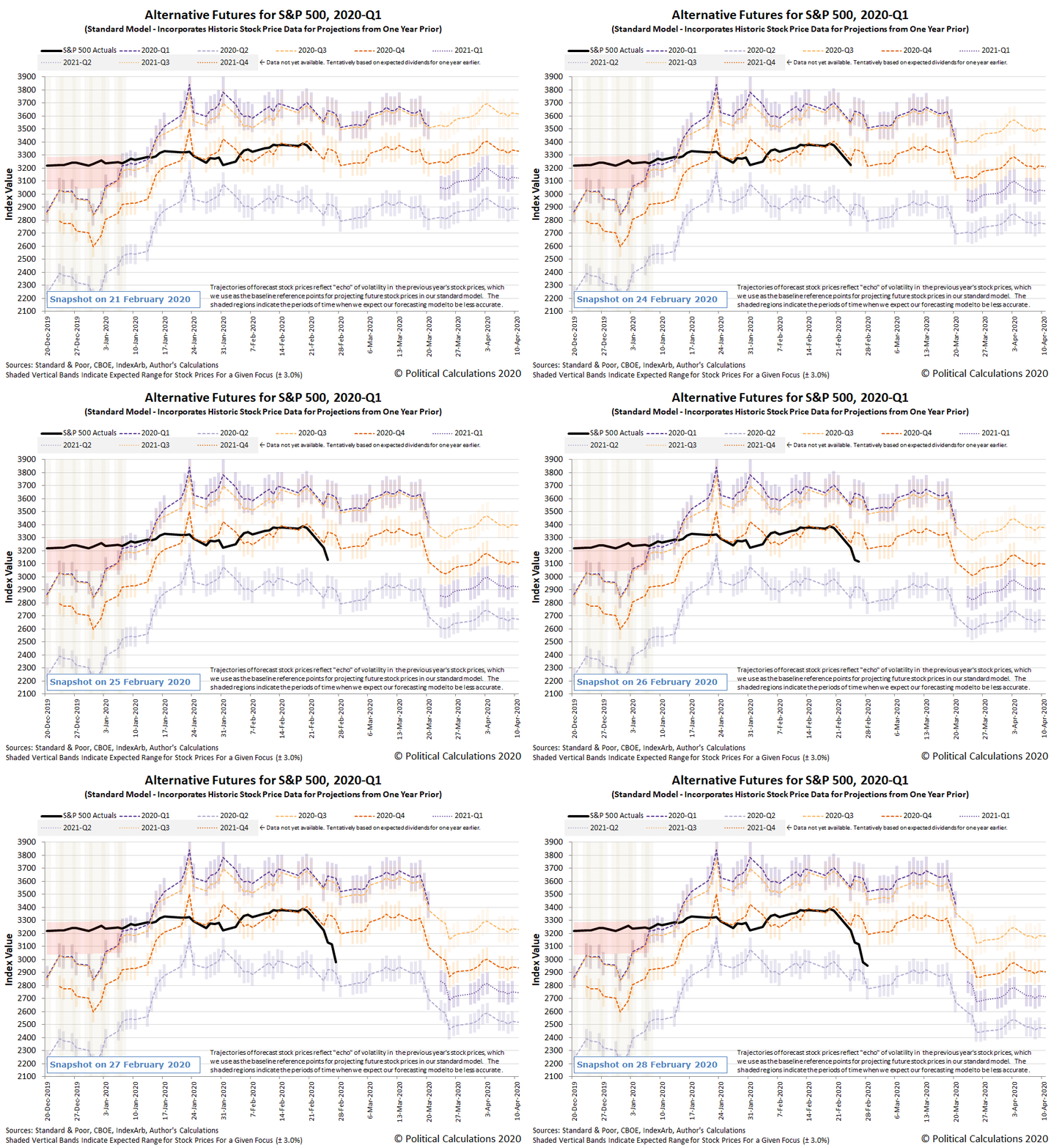
The driving factor behind the decline in stock prices during the past week is a conflict that has erupted between investors and central banks, where the credibility of central bankers over expectations of the future for their monetary policies has come into question. ZeroHedge describes how that battle escalated during the latter part of the week, as investors considered the coronavirus epidemic's impact on global supply chains and the economy and reacted to what they increasingly saw as fecklessness on the part of monetary policymakers - in this case, at the European Central Bank.
With Christine Lagarde blowing up the market's hopes for an emergency coordinated central bank rate cut, traders have decided to switch to the "stick" approach, and instead of asking nicely for another bailout from the Fed, they have decided to force one through.
That apparent fecklessness wasn't limited to European central bankers, which you can see in the fourth week of February 2020's market moving headlines below:
Monday, 24 February 2020
- China braces for inevitable big hit to economy from virus, says Xi
- Oil sinks 4% on demand concerns as coronavirus spreads
- Central bankers will look at options for responding to coronavirus: Mnuchin
- China central bank says to launch new measures to counter coronavirus impact
- Kuroda says BOJ will be 'fully prepared' to act on virus risk
- Bank of Korea seen cutting rates to record-low to battle coronavirus: Reuters poll
- Fed's Mester sees U.S. economy performing well, coronavirus a 'big risk'
- Coronavirus set to deal heavy blow to Italy's ailing economy
- Markets bet Fed is pushed to cut rates in coronavirus response
- Wall Street plunges on fears of coronavirus pandemic
Tuesday, 25 February 2020
- Oil falls for third day as virus fears accelerate on U.S. warning
- Bigger trouble developing in the Eurozone, Mexico (Note: before China's coronavirus became a thing):
- Fed's Clarida: We are 'closely monitoring' impact of coronavirus
- Wall Street plunges as coronavirus spread sends investors fleeing
Wednesday, 26 February 2020
- Oil prices drop to lowest in more than a year as coronavirus spreads
- Lower mortgage rates, mild weather lift U.S. new home sales to twelve and a half year high
- Bigger trouble, literal money laundering, developing in China:
- Bigger trouble, bigger stimulus developing in Germany, Eurozone:
- Wall Street falls more slowly as investors parse coronavirus fears
Thursday, 27 February 2020
- Oil prices dive to lowest in over a year on coronavirus fears
- Traders betting Fed will slash rates amid coronavirus threat
- What the Fed's minions were focusing on today as markets were plunging:
- Highlights: Fed policymakers on why diversity matters and how to get there
- Fed's Evans: too early to cut growth outlook or rates on coronavirus
- Fed's Fisher Stuns CNBC: "Time To Wean Generation Of Money Managers Off Their Dependency On A Fed Put"
- The former Dallas Fed official's comments were both a good illustration of the mindset of many current Fed officials and also perhaps the most counterproductive of the week in how they badly damaged their credibility.
- But the European Central Bank's minions' statements were worse, which sparked off the investor rebellion:
- ECB plays down immediate action against economic impact of coronavirus
- ECB's Knot says coronavirus to hit economy harder than SARS
- ECB's Lane says coronavirus poses risk to economy if it lasts
- Coronavirus 'no catastrophe' for economy: ECB's Holzmann
- ECB won't be able to ignore risks if virus persistent: Schnabel
- Meanwhile, in China and in the Eurozone:
- Stocks plunge on coronavirus fears even as U.S. ramps up fight against spread
Friday, 28 February 2020
- Oil prices sink to lowest in more than a year
- Fed minions start thinking they may need to do something:
- Worse than the Fed in the Eurozone:
- ECB rate setters see no need for action as coronavirus spreads
- ECB's Weidmann: No need for immediate monetary policy action due to coronavirus
- France: "force majeure" can be declared over coronavirus in contracts with smaller firms
- ECB could hold extraordinary virus meeting if needed, Vasiliauskas says
- Stocks Extend Fall to Cap Worst Week Since 2008
Stock prices may have begun to stabilize on Friday, 28 February 2020 with Fed Chair Jerome Powell's comments indicating the Fed may soon move off its "no change is needed" mindset. We'll see how stable the developing new equilibrium might be in week ahead.
Comments
Log in or sign up to join the conversation.