


An argument increasingly being made is that inflation is being built into wage demands in a context of really tight labor markets, and this would induce a wage-price spiral. This outcome is plausible, but I think it’s useful to compare wages against CPI to see if wages are really abnormally high, and are starting to rise in tandem with inflation.
If one examines average hourly earnings in the private economy, not holding composition constant (and including supervisory and nonproduction workers), then in fact the real wage looks high, but is declining through June.
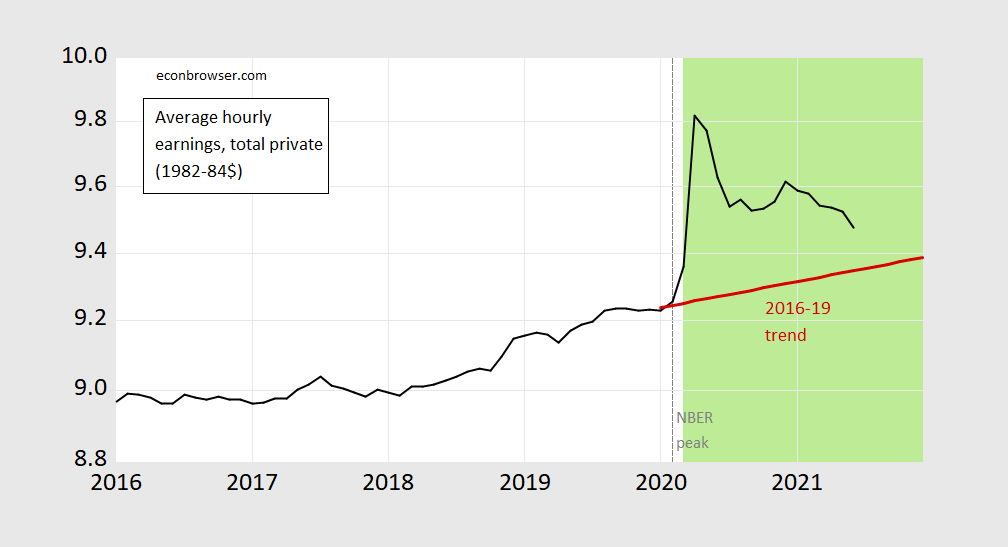
Figure 1: Average hourly earnings for total private industry, deflated by CPI-all (black), and 2016-19 stochastic trend (red), both in 1982-84$. Source: BLS via FRED, and author’s calculations.
However, once one looks more at front line workers — i.e. excluding nonproduction and supervisory workers, and controls slightly for sectoral composition, one finds a more complicated story. Consider at the extremes manufacturing and accommodation and food services.
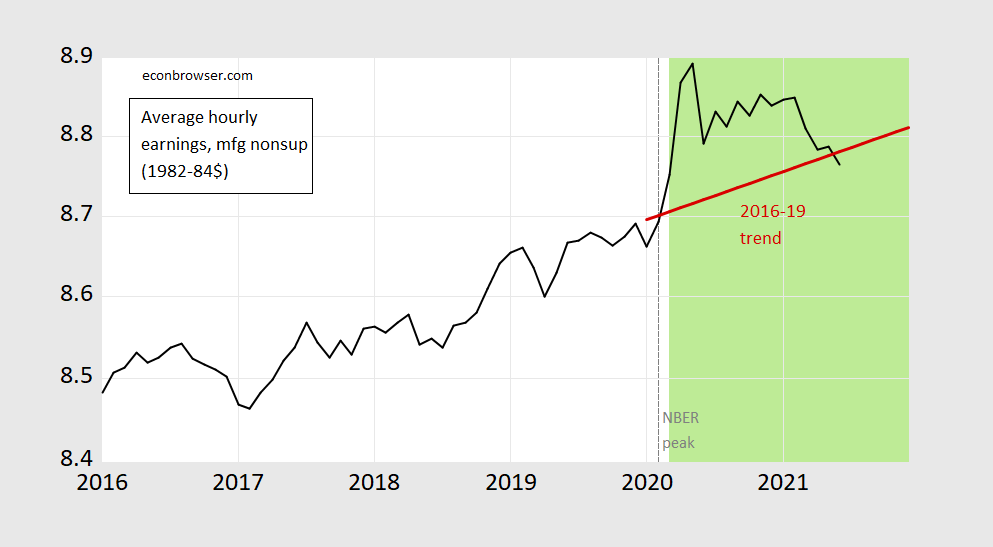
Figure 2: Average hourly earnings for manufacturing, production and nonsupervisory workers, deflated by CPI-all (black), and 2016-19 stochastic trend (red), both in 1982-84$. Source: BLS via FRED, and author’s calculations.
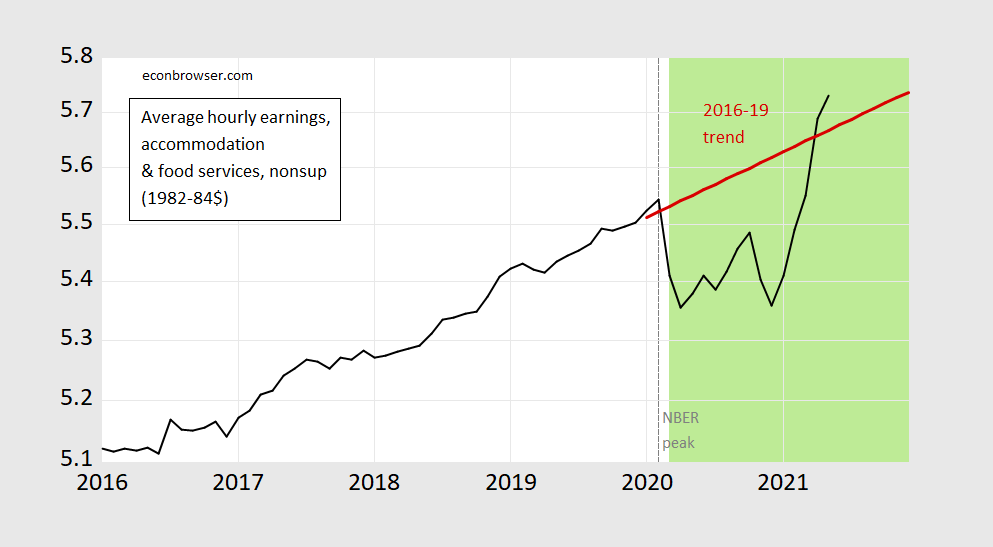
Figure 3: Average hourly earnings for accommodation and food services, nonsupervisory workers, deflated by CPI-all (black), and 2016-19 stochastic trend (red), both in 1982-84$. Source: BLS via FRED, and author’s calculations.
CPI deflated manufacturing wages are falling and below trend, while accommodation and food services are rising and above trend. Accommodation and food services on the other hand are still rising (through May) and above trend — but only by 1%.
Update, 5:15pm:
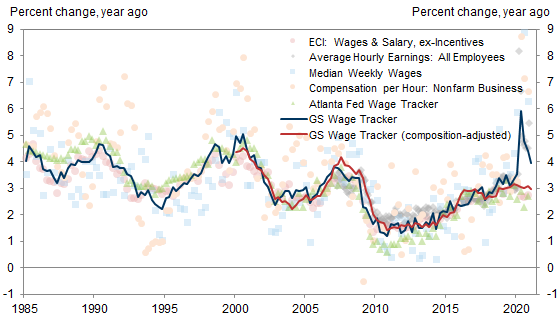
Two months ago, Goldman Sachs published a graph with their composition adjusted (nominal) wage series, which (at the time) suggested slower wage growth than the reported series.

Comments
Log in or sign up to join the conversation.