

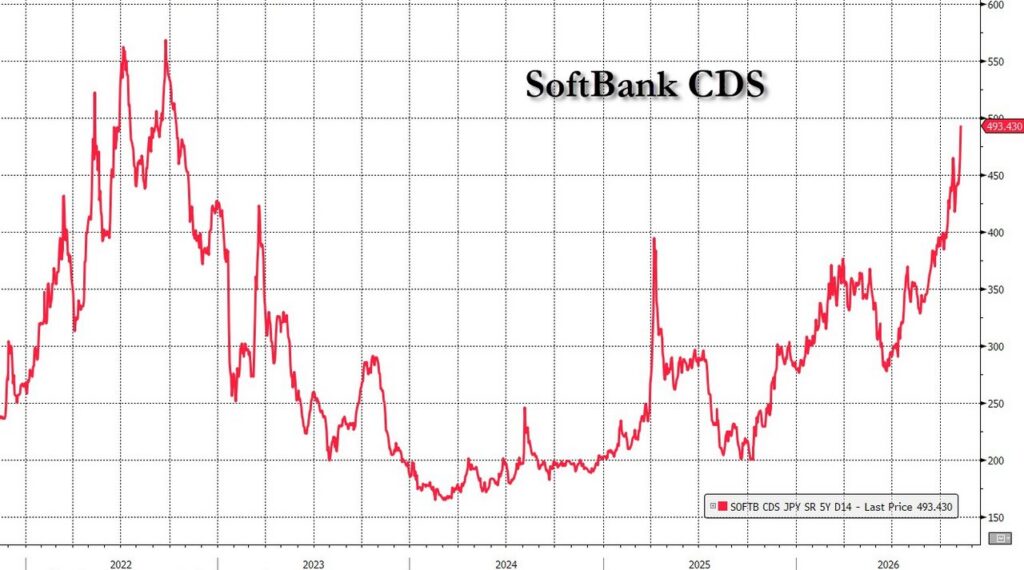
SoftBank reported a 1.1 trillion yen loss, roughly $7 billion, for the three months through September. As we share below, courtesy of ZeroHedge, its credit default swaps are sitting at a four-year high, revealing some investor angst. Beyond share and debt holders of SoftBank, we think its financial situation should interest all investors, because SoftBank is one of the largest investors in artificial intelligence.
SoftBank is a Japanese holding company that borrows against its assets to take large leveraged equity stakes in technology companies. Two of its largest positions include a $64.6 billion stake in OpenAI and a 90% stake in Arm (a UK chip designer). Despite the loss, revenue rose 16% in the quarter. The loss came entirely from mark-to-market changes on its holdings, including a US data center and its stake in Intel. As is typical, the credit market is ahead of the equity market. SoftBank’s five-year CDS is nearing 500 basis points, the widest since October 2022. SoftBank’s financial structure explains the bond market’s concern. Its debt costs are rising, its collateral is declining in value, and a large pool of its assets is illiquid. Furthermore, a positive liquidity event was delayed when OpenAI pushed its equity offering into 2027.
SoftBank’s woes are also likely to be worried about CoreWeave’s bonds yielding roughly 16% and CDS of nearly 1300 bps. Meta, rated AA-, had its outlook cut to negative. And as we wrote last week in Oracle Sells Cheap Stock As Its Debt Window Narrows, negative free cash flow and a BBB- rating left Oracle issuing equity at a discount.
While equity investors try to figure out how much AI investments pay off, the bond market is starting to worry about when that payoff may occur, whether it will be too late for some companies, and whether enough investment interest exists to bridge capex-revenue gaps. Keep an eye on the credit markets for clues.
What To Watch Today
A heavy Fed-speaker day and a 30-year bond auction with the 10-year yield back above 5%. The AI trade gets its first real test since the selloff after the close, with Applied Materials, Cisco and Cerebras all reporting.
Economy
Time (ET) | Release (period) | Prior | Consensus | Forecast |
|---|---|---|---|---|
8:30 a.m. | Initial Jobless Claims (week ending Nov. 7) | 189K | 195K | 191K |
8:30 a.m. | Continuing Jobless Claims (week ending Oct. 31) | 1,718K | 1,710K | 1,722K |
10:00 a.m. | Existing Home Sales (Oct.) | 3.99M | 3.85M | 4.00M |
1:00 p.m. | 30-Year Bond Auction | 5.618% | n/a | n/a |
2:00 p.m. | Monthly Budget Statement (Oct.) | −$27B | −$298.6B | −$298.0B |
Earnings
Company (Ticker) | Timing | EPS est. | Rev. est. |
|---|---|---|---|
Brookfield (BN) | Before open (6:45 a.m.) | $0.72 | n/a |
Nebius Group (NBIS) | Before open (7:42 a.m.) | −$0.61 | $916.8M |
Applied Materials (AMAT) | After close (call 4:30 p.m.) | $4.06 | $10.30B |
Cisco Systems (CSCO) | After close (call 4:30 p.m.) | $1.33 | $18.09B |
Cerebras Systems (CBRS) | After close (4:05 p.m.) | −$0.13 | $215.8M |
Nu Holdings (NU) | After close (5:40 p.m.) | $0.22 | $5.70B |
Fed speakers: Cleveland’s Hammack (9:00 a.m.), Governor Barr (10:00 a.m.), Chicago’s Goolsbee (11:30 a.m., Yahoo Finance Invest), San Francisco’s Daly (1:10 p.m.) and New York’s Williams (6:30 p.m.). PPI follows Friday at 8:30 a.m.
All times Eastern. Economic data: Trading Economics, confirmed against the Federal Reserve Bank of Chicago event page and RIA’s Nov. 11 calendar. Earnings: Earnings Whispers, confirmed against Applied Materials and Cisco investor relations. As of Nov. 11, 2026.
Market Trading Update
Yesterday, we asked “Is Nvidia Still Cheap?” and concluded the math says yes, even if growth estimates were cut in half. Today, I want to push that math harder, then answer the question clients are actually asking. Is the Nvidia technical washout a buy, and how do you buy it without catching the proverbial falling knife?
Start with the stress test. Consensus has Nvidia earning roughly $15.90 per share in fiscal 2028 on about $692 billion of revenue. At Tuesday’s $168.89 close, that’s under 11 times earnings. Now assume the midterm backlash against data center construction bites far harder than Bloomberg’s estimate of a 5% to 7% hit to 2027 AI spending. As the table shows, a 30% cut to data center revenue still leaves the stock near 15 times earnings. It takes a 40% collapse to lift Nvidia to the market’s 18x multiple.
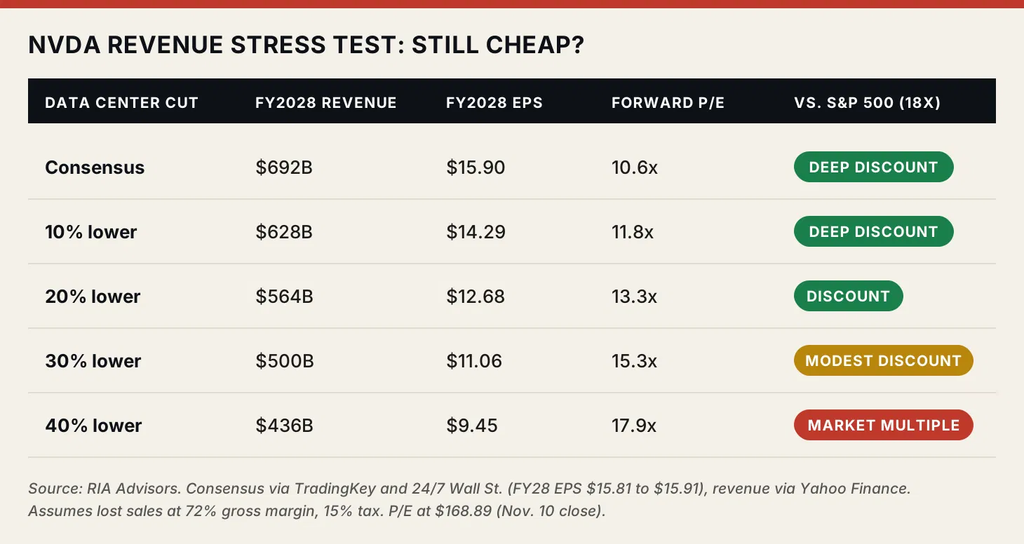
“So it’s a screaming buy,” says the guy on financial TV who bought every dip since 2023. Not so fast. Chip stocks have historically looked cheapest at peak earnings, right before the cycle turned. A low multiple on “peak” earnings isn’t a margin of safety. It’s the question the market is asking right now.
Technically, the selling has reached a genuine extreme. NVDA fell 18.3% in five sessions and closed 29.4% below its October 6 record of $239.24. The 14-day RSI hit 24 on Tuesday, its most oversold daily reading since at least mid-2024, deeper than the April 2025 tariff low. Price closed 2.5 standard deviations below its 20-day average and 17.4% under its 200-DMA at $204.54. Wednesday’s early 4% bounce came on CoreWeave’s revenue beat and its $132.5 billion backlog.
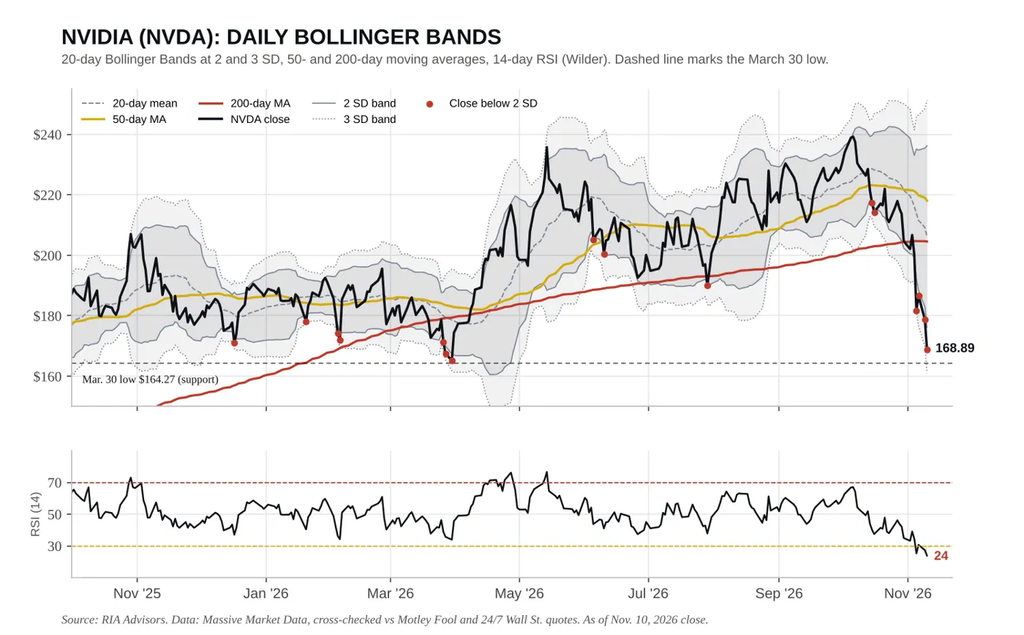
But oversold is NOT the same as washed out. The weekly RSI sits at 34, so the longer-term selling hasn’t exhausted itself. The March 30 low of $164.27 is the line that matters. Two binary events also land within 48 hours: earnings on November 17 and the House committees’ request for Jensen Huang’s appearance on November 18. Bob Farrell’s Rule #2 says that excesses in one direction lead to an opposite excess in the other direction. October’s euphoria bought us this overshoot, and overshoots rarely end on the first bounce.
That is why we scale in rather than swing for the fences. Buy the washout in thirds, let the tape confirm each step, and keep one stop for the whole position.
The first tranche is earned now, with RSI under 30 and the March low intact.
The second waits for the stock to hold $164 after the earnings print.
The third comes only on a weekly RSI turn and a close back above the 200-DMA.
A daily close below the lower 3 SD band near $161 stops out everything.
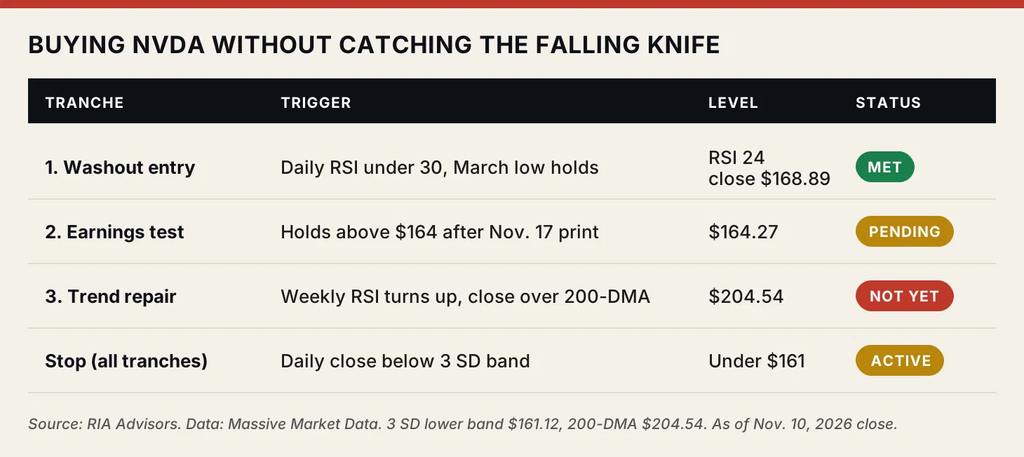
Keep the total position small until the trend repairs. Size it so being wrong costs you a tranche, not a year of returns. The knife doesn’t care what you paid for it.
CoreWeave Earnings Breathe Life Into the Tech Sector
CoreWeave (CRWV) gave the AI trade a needed lift yesterday, with shares rising over 20% intraday. The stock had fallen about 40% over the prior month as rising rates hit leveraged neoclouds and investors rotated out of AI infrastructure. Tuesday evening’s report pushed back on the slowdown narrative. Revenue grew 168% to $3.66 billion, and adjusted operating income of $379 million easily topped guidance. Furthermore, the revenue backlog rose to $132.5 billion from $104 billion in June. Pricing on older Ampere and Hopper GPUs rose 30% to 50% last quarter, a sign that demand still outstrips supply.
Management also took on the funding concerns behind the selloff. CEO Michael Intrator canceled his personal 10b5-1 stock sale plan, a vote of confidence after criticism of insider sales. The company also pledged not to issue new unsecured debt at the parent level through 2027 at current yields. Its existing bonds yield roughly 15%. Instead, CoreWeave will launch an asset-backed debt offering, backed by customer contracts, within the next two weeks at an expected 7% to 7.5%.
The risks have not gone away, however. CoreWeave carries nearly $47 billion of debt, and as a result, management expects fourth-quarter interest expense above $1 billion. Capex of $37 billion to $39 billion this year means the borrowing will continue. Cheaper secured financing helps, but the company still has to prove its returns can outrun its interest bill.
Buying Bond Exposure Without Buying Bonds
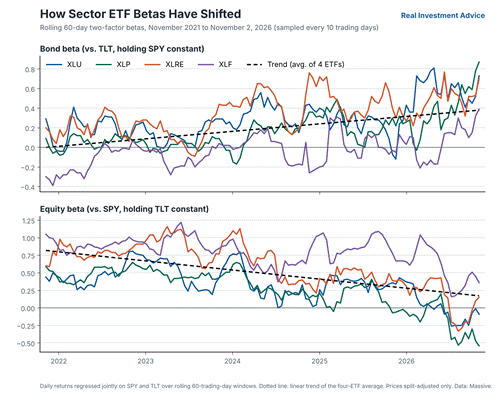
The recent rise in yields presents an opportunity to earn a respectable return while reducing risk in a stock portfolio. At current yields, some investors are happy locking in bond income. Others may want exposure to bond yields but are wary of owning bonds.
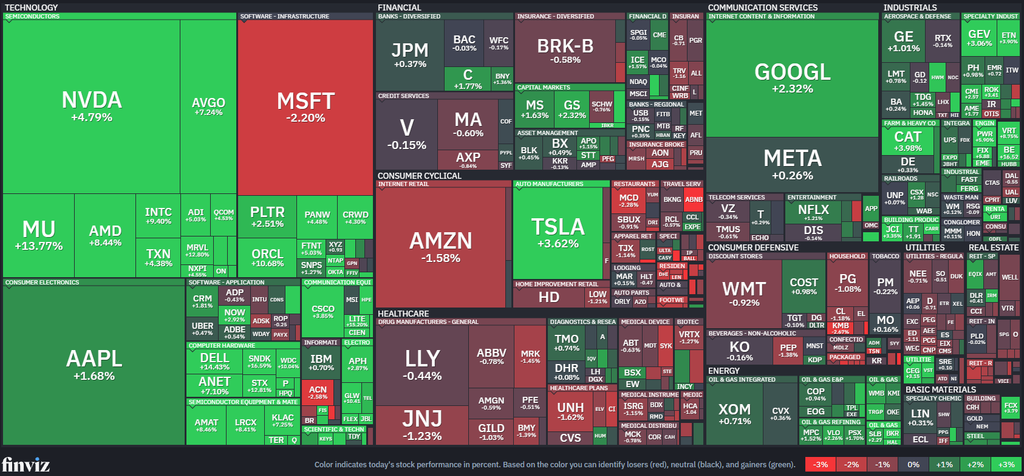
For investors in the second camp, the stock market currently offers more options than usual. Many stocks across multiple S&P sectors are more sensitive to Treasury yields than at almost any time over the past five years. Before we dig deeper, it helps to understand why gaining exposure to bonds in today’s yield environment can improve your odds of reaching your financial goals.
Tweet of the Day


Comments
Log in or sign up to join the conversation.