

According to TechSci Research report, “Soft Robotics Market Size- Global Industry Share, Trends, Competition Forecast & Opportunities, 2030F”. Global Soft Robotics Market was valued at USD 613.3 million in 2024 and is expected to reach USD 1111.31 million by 2030 with a CAGR of 10.25% through 2030.
Industry Key Highlights
The global soft robotics market is witnessing significant growth due to increasing automation across manufacturing, healthcare, logistics, food processing, and consumer industries.
Rising demand for robots capable of handling delicate, irregularly shaped, and fragile objects is accelerating market adoption.
Advancements in artificial intelligence, machine learning, sensor technologies, and advanced materials are reshaping the capabilities of soft robotic systems.
Healthcare applications, including rehabilitation devices, surgical assistance systems, and wearable robotic technologies, are emerging as major growth segments.
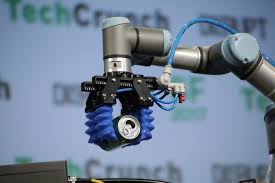
Food and beverage industries are increasingly utilizing soft robotic grippers for safe handling and packaging operations.
Collaborative robotics and human-machine interaction technologies are creating new opportunities for soft robotic deployments.
Investments in Industry 4.0 initiatives and smart manufacturing ecosystems continue to support market expansion globally.
Research institutions and robotics companies are developing innovative actuators, flexible sensors, and bio-inspired robotic systems.
Growing labor shortages across various sectors are encouraging organizations to adopt intelligent robotic automation solutions.
North America, Europe, and Asia-Pacific continue to represent key regional markets, driven by technological innovation and industrial modernization.
Request For Sample Copy of Report For More Detailed Market insight: https://www.techsciresearch.com/sample-report.aspx?cid=22042#requestform
Introduction
The robotics industry has evolved dramatically over the past decade, moving beyond rigid mechanical systems toward more adaptable, intelligent, and human-friendly technologies. Among the most transformative developments in this evolution is the emergence of soft robotics—a field that combines engineering, material science, artificial intelligence, and biology to create machines capable of interacting safely with humans and delicate environments.
Unlike conventional robots constructed from rigid metals and mechanical joints, soft robots utilize flexible materials such as elastomers, polymers, silicone-based structures, and smart materials. These systems mimic the flexibility and adaptability found in living organisms, enabling them to perform complex tasks in environments where traditional robots face limitations.
Soft robotics has become increasingly relevant as industries seek automation solutions that can safely coexist with humans, handle fragile products, and perform tasks requiring adaptability. From healthcare and agriculture to manufacturing and logistics, soft robotic technologies are revolutionizing how automation is deployed across diverse sectors.
As industries embrace intelligent automation and digital transformation, the global soft robotics market is positioned for remarkable growth during the forecast period.
Key Market Drivers
Growing Demand for Safe Human-Robot Collaboration
One of the primary drivers fueling the growth of the soft robotics market is the increasing need for safe collaboration between humans and robots.
Traditional industrial robots often require safety cages and restricted workspaces due to their rigid structures and powerful movements. Soft robots, however, are designed using compliant materials that reduce collision risks and enable direct interaction with human workers.
This capability is particularly valuable in industries such as:
Manufacturing
Healthcare
Logistics
Electronics assembly
Consumer goods production
As collaborative work environments become more common, demand for soft robotic technologies continues to rise.
Expansion of Industrial Automation
Industrial automation remains a significant growth catalyst for the market.
Manufacturers are increasingly seeking flexible automation solutions capable of handling multiple product types, varying production volumes, and dynamic operational requirements.
Soft robotic systems provide:
Enhanced adaptability
Reduced reconfiguration costs
Improved precision
Increased operational efficiency
Better product handling capabilities
As global industries continue investing in smart manufacturing initiatives, adoption of soft robotic solutions is expected to accelerate.
Rising Labor Shortages Across Industries
Many industries worldwide are facing challenges related to labor shortages, aging workforces, and increasing labor costs.
Sectors such as logistics, agriculture, healthcare, and manufacturing require innovative solutions to maintain productivity while addressing workforce constraints.
Soft robotics offers an effective response by automating repetitive, labor-intensive, and physically demanding tasks while maintaining high levels of safety and flexibility.
Organizations increasingly view robotic automation as a strategic necessity rather than a technological luxury.
Growth in Healthcare Applications
The healthcare industry represents one of the fastest-growing segments for soft robotics.
Medical institutions are adopting soft robotic technologies for:
Rehabilitation devices
Surgical assistance systems
Wearable exoskeletons
Prosthetics
Patient mobility support
Remote healthcare solutions
The ability of soft robotic systems to mimic human movement and interact gently with patients makes them highly suitable for medical applications.
Growing healthcare expenditures and increasing demand for personalized treatment solutions are further supporting market growth.
Advancements in Material Science
Material innovation has significantly expanded the capabilities of soft robotic systems.
Researchers are developing advanced materials that offer:
Greater flexibility
Improved durability
Self-healing properties
Enhanced responsiveness
Increased energy efficiency
These advancements are enabling the creation of more sophisticated robotic systems capable of operating in complex environments.
As material technologies continue to evolve, the functionality and commercial viability of soft robotics are expected to improve substantially.
Emerging Trends in the Soft Robotics Market
Integration of Artificial Intelligence and Machine Learning
Artificial intelligence is transforming the future of soft robotics.
AI-powered robotic systems can:
Learn from experience
Adapt to changing environments
Improve object recognition
Optimize movement patterns
Enhance decision-making processes
Machine learning algorithms enable robots to perform increasingly complex tasks while continuously improving performance.
The combination of AI and soft robotics is creating intelligent automation systems capable of unprecedented levels of adaptability.
Development of Bio-Inspired Robotics
Bio-inspired design has become a major trend within the soft robotics industry.
Researchers are studying biological organisms such as:
Octopuses
Starfish
Caterpillars
Jellyfish
Human muscles
These biological models inspire robotic systems capable of navigating complex environments and performing highly adaptive movements.
Bio-inspired robotics is expected to play a crucial role in future applications involving exploration, healthcare, underwater operations, and search-and-rescue missions.
Smart Wearable Robotics
Wearable soft robotic devices are gaining significant attention.
These systems are being developed for:
Physical rehabilitation
Mobility assistance
Industrial worker support
Military applications
Elderly care
Soft exosuits and robotic wearables provide enhanced comfort and natural movement compared to traditional rigid exoskeletons.
Growing demand for human augmentation technologies is expected to drive substantial market growth.
Advanced Soft Grippers in Food Processing
Food processing companies are increasingly adopting soft robotic grippers capable of handling delicate products without causing damage.
Applications include:
Fruit sorting
Vegetable packaging
Bakery processing
Seafood handling
Confectionery manufacturing
The food industry's emphasis on quality control and automation efficiency is creating significant opportunities for soft robotics providers.
Market Challenges
High Development Costs
Despite promising growth prospects, soft robotics development remains expensive.
Research and development activities require substantial investments in:
Material science
Sensor technologies
AI systems
Manufacturing processes
Smaller organizations may face challenges in adopting advanced soft robotic solutions due to budget constraints.
Technical Complexity
Designing flexible robotic systems involves significant engineering challenges.
Developers must address issues related to:
Motion control
Material durability
Power efficiency
Precision performance
Environmental resistance
Overcoming these challenges remains critical for broader commercialization.
Limited Standardization
The market currently lacks universal standards for many soft robotic technologies.
Variations in design approaches, materials, and performance metrics can complicate adoption and integration efforts.
Industry-wide standardization initiatives will play an important role in supporting future growth.
Competitive Landscape Outlook
Soft Robotics Inc.
FANUC Corporation
RightHand Robotics, Inc
KUKA Aktiengesellschaft
Yaskawa Electric Corporation
BionicHIVE
Pneubotics Inc
Shadow Robot Company
Customers can also request for 10% free customization on this report.
10 Benefits of the Research Report
1. Comprehensive Market Insights
Provides detailed understanding of current market dynamics and future growth opportunities.
2. Accurate Forecast Analysis
Offers reliable market forecasts to support strategic planning.
3. Competitive Intelligence
Examines key market participants and their competitive strategies.
4. Emerging Trend Identification
Highlights technological and industry trends shaping future market growth.
5. Investment Opportunity Assessment
Identifies high-potential investment areas and emerging revenue streams.
6. Strategic Decision Support
Helps organizations develop informed business strategies.
7. Regional Market Evaluation
Provides detailed analysis of regional growth opportunities and challenges.
8. Technology Landscape Assessment
Examines innovations influencing market development.
9. Risk and Challenge Analysis
Identifies barriers and potential market risks.
10. Future Growth Roadmap
Offers actionable insights for long-term market positioning and expansion.
Contact US:
Techsci Research LLC
420 Lexington Avenue, Suite 300,
New York, United States- 10170
Tel: +13322586602
Email: [email protected]
Web: https://www.techsciresearch.com/
Comments
Log in or sign up to join the conversation.