

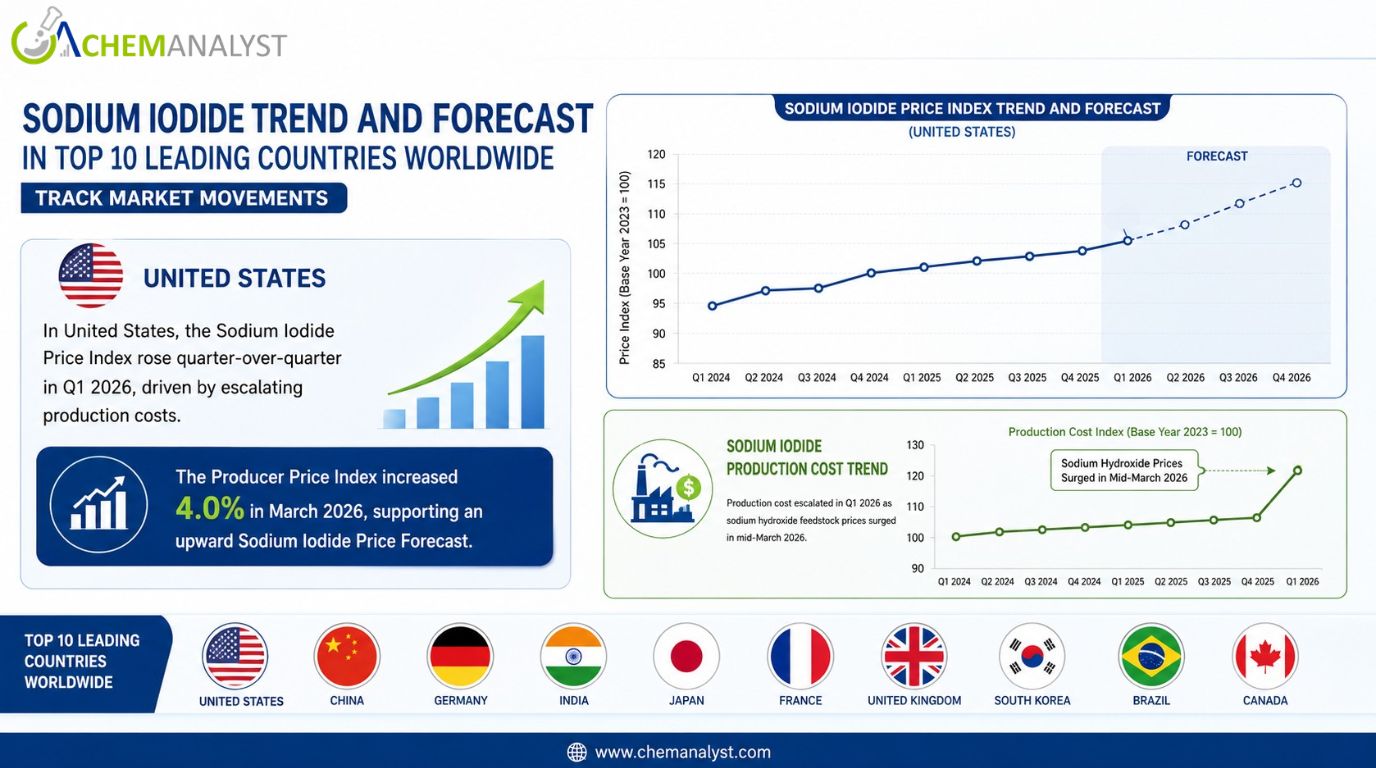
The global Sodium Iodide Price market witnessed strong upward momentum during the first quarter of 2026 as escalating production expenses, tightening feedstock availability, and rising energy prices continued to pressure manufacturers across key economies. Markets in the United States, China, and Germany all recorded quarter-over-quarter price increases, signaling a broader global supply-side inflationary cycle affecting iodine derivatives.
According to ChemAnalyst Sodium Iodide Price: - https://www.chemanalyst.com/Pricing-data/sodium-iodide-2369
Sodium iodide, widely used in pharmaceuticals, medical imaging, radiation detection, and specialty chemical applications, has become increasingly vulnerable to shifts in raw material pricing and industrial energy costs. As demand from healthcare and industrial sectors remains resilient, market participants are closely monitoring regional production costs and supply chain dynamics.
Analysts expect the Sodium Iodide Price Forecast to remain firm through the remainder of 2026, particularly as manufacturers face sustained inflationary pressures and fluctuating feedstock supply conditions.
North America Sodium Iodide Price Trend
United States Sodium Iodide Price Analysis
In the United States, the Sodium Iodide Price Index increased quarter-over-quarter during Q1 2026. The rise was primarily attributed to higher production expenses and elevated industrial operating costs.
The U.S. Producer Price Index (PPI) climbed by 4.0% in March 2026, contributing directly to increased chemical manufacturing costs and supporting bullish Sodium Iodide Price Forecasts across the region.
Key Factors Driving U.S. Sodium Iodide Prices
Rising iodine feedstock procurement costs
Higher labor and manufacturing expenditures
Elevated transportation and logistics expenses
Persistent pharmaceutical sector demand
Increased compliance and energy-related operating costs
The healthcare sector remained a major consumer of sodium iodide, especially for diagnostic imaging and radiopharmaceutical applications. Strong domestic demand, combined with higher industrial inflation, continued to support pricing strength throughout the quarter.
APAC Sodium Iodide Price Trend
China Sodium Iodide Price Analysis
China also recorded a quarter-over-quarter rise in the Sodium Iodide Price Index during Q1 2026. Tightening feedstock supply conditions and increasing upstream costs were among the primary drivers behind the market increase.
Producer prices in China rose 0.5% year-over-year in March 2026, signaling gradual industrial inflation that directly affected Sodium Iodide Production Cost Trends.
The Chinese market experienced supply-side constraints as iodine raw material availability tightened, reducing manufacturing flexibility and pushing suppliers to raise prices.
Major Market Drivers in China
Feedstock shortages and tighter iodine availability
Increased industrial operating expenses
Stable export demand from pharmaceutical manufacturers
Rising packaging and transportation costs
Government industrial sustainability measures
China continues to play a critical role in the global sodium iodide supply chain due to its large-scale chemical manufacturing infrastructure. However, rising environmental compliance costs and tighter raw material conditions have increased production expenditures across the specialty chemical sector.
Read the LinkedIn Article: - https://www.linkedin.com/pulse/global-sodium-iodide-price-trends-2026-rising-energy-iodine-singh-momvc/
Europe Sodium Iodide Price Trend
Germany Sodium Iodide Price Analysis
In Germany, the Sodium Iodide Price Index also moved upward during Q1 2026, primarily due to surging regional energy costs and broader inflationary pressures within Europe’s industrial sector.
Germany’s Consumer Price Index (CPI) increased by 2.7% year-over-year in March 2026, contributing to higher manufacturing and operational expenses for specialty chemical producers.
European chemical manufacturers continued to struggle with volatile electricity and natural gas costs, which significantly impacted Sodium Iodide Production Cost Trends during the quarter.
Key Drivers Supporting German Sodium Iodide Prices
Elevated industrial energy prices
Rising utility and transportation costs
Inflationary manufacturing environment
Stable pharmaceutical consumption
Limited regional production flexibility
Germany remains one of Europe’s major chemical production hubs, and changes in energy pricing directly influence regional specialty chemical markets. The sodium iodide sector was no exception, with producers passing increased operational expenses downstream to buyers.
Sodium Iodide Production Cost Trend Analysis
The global Sodium Iodide Production Cost Trend continued to rise during Q1 2026 as manufacturers across multiple regions faced simultaneous cost pressures.
Major Cost Components Affecting Sodium Iodide Prices
Iodine Feedstock Prices
Iodine remains the most critical raw material in sodium iodide production. Tight supply conditions and fluctuating mining output significantly affected global production economics.
Energy Costs
Rising electricity and natural gas prices, particularly in Europe, substantially increased operational costs for chemical manufacturers.
Transportation and Logistics
Global shipping costs remained elevated due to ongoing supply chain inefficiencies and fuel price volatility.
Labor and Compliance Costs
Industrial wage inflation and stricter environmental regulations continued to raise operational expenditures in major producing regions.
Sodium Iodide Demand Outlook
Demand for sodium iodide remained stable to strong during the first quarter of 2026, supported by expanding applications in healthcare and industrial technologies.
Key End-Use Industries
Pharmaceutical Industry
Sodium iodide is extensively used in radiopharmaceutical formulations and diagnostic imaging procedures.
Medical Imaging
The increasing use of nuclear medicine technologies continues to support long-term sodium iodide demand growth globally.
Radiation Detection
Industrial and security applications involving radiation detection equipment also contributed to steady market consumption.
Chemical Manufacturing
Specialty chemical applications continued to provide stable downstream demand across Asia, Europe, and North America.
Sodium Iodide Price Forecast 2026
Industry analysts expect the Sodium Iodide Price Forecast to remain moderately bullish through the remainder of 2026 due to persistent production-side inflation and constrained feedstock availability.
Factors Likely to Influence Future Sodium Iodide Prices
Global iodine mining output
Energy market volatility
Inflationary manufacturing conditions
Pharmaceutical sector expansion
International trade and logistics trends
While demand growth remains supportive, market participants are likely to closely monitor macroeconomic conditions and raw material supply developments throughout the year.
Global Sodium Iodide Market Outlook
The global sodium iodide market is entering a period of structurally higher production costs as energy inflation, raw material constraints, and industrial cost pressures continue to reshape pricing patterns.
North America experienced strong price support from elevated manufacturing inflation, while China’s tightening feedstock environment pushed production costs upward. Europe, led by Germany, faced severe energy-related challenges that significantly impacted chemical manufacturing economics.
Despite regional differences, the broader market direction remains upward, reinforcing expectations for sustained pricing strength in the global sodium iodide industry.
As healthcare demand and specialty chemical consumption continue expanding worldwide, Sodium Iodide Prices are expected to remain sensitive to both supply chain disruptions and macroeconomic cost movements throughout 2026.
Conclusion
The Sodium Iodide Price market showed strong upward momentum in Q1 2026 across major global regions. Rising production expenses in the United States, tightening feedstock supplies in China, and surging energy costs in Germany collectively contributed to higher prices worldwide.
With industrial inflation, logistics expenses, and energy volatility still affecting chemical manufacturing, the Sodium Iodide Price Forecast remains firm for the upcoming quarters. Market participants are expected to maintain close attention on feedstock availability, macroeconomic indicators, and healthcare sector demand as the global sodium iodide market continues evolving through 2026.
FAQs
Why did Sodium Iodide Prices rise in Q1 2026?
Prices increased due to rising production costs, tightening feedstock supplies, and higher energy expenses across major producing regions.
Which country saw strong Sodium Iodide Price growth?
The United States, China, and Germany all reported quarter-over-quarter increases in Sodium Iodide Prices during Q1 2026.
What affects Sodium Iodide Production Costs?
Major factors include iodine feedstock prices, energy costs, labor expenses, transportation, and industrial inflation.
What is the Sodium Iodide Price Forecast for 2026?
Analysts expect prices to remain firm due to persistent inflationary pressures and stable pharmaceutical demand.
Which industries use Sodium Iodide?
Key industries include pharmaceuticals, nuclear medicine, radiation detection, and specialty chemical manufacturing.
Contact US:
Email-Id: - [email protected]
Contact No: - +1 (332) 258-6602
Address: - 420 Lexington Avenue, Suite 300
New York, NY
United States, 10170
Comments
Log in or sign up to join the conversation.