

Choosing a dentist is a personal decision. Patients want to know that they can trust the practice, feel comfortable with the team, and receive professional care. Before booking an appointment, many people look beyond a clinic’s website and search for additional information about the practice online.
This is why social media for dentists has become an important part of a modern dental practice’s digital presence. When used thoughtfully, social media can help dentists educate patients, showcase their practice, build familiarity, and maintain relationships with their local community.
The goal is not to post simply for the sake of being active. A successful dental social media strategy should provide useful information and give potential patients a genuine reason to engage with your practice.
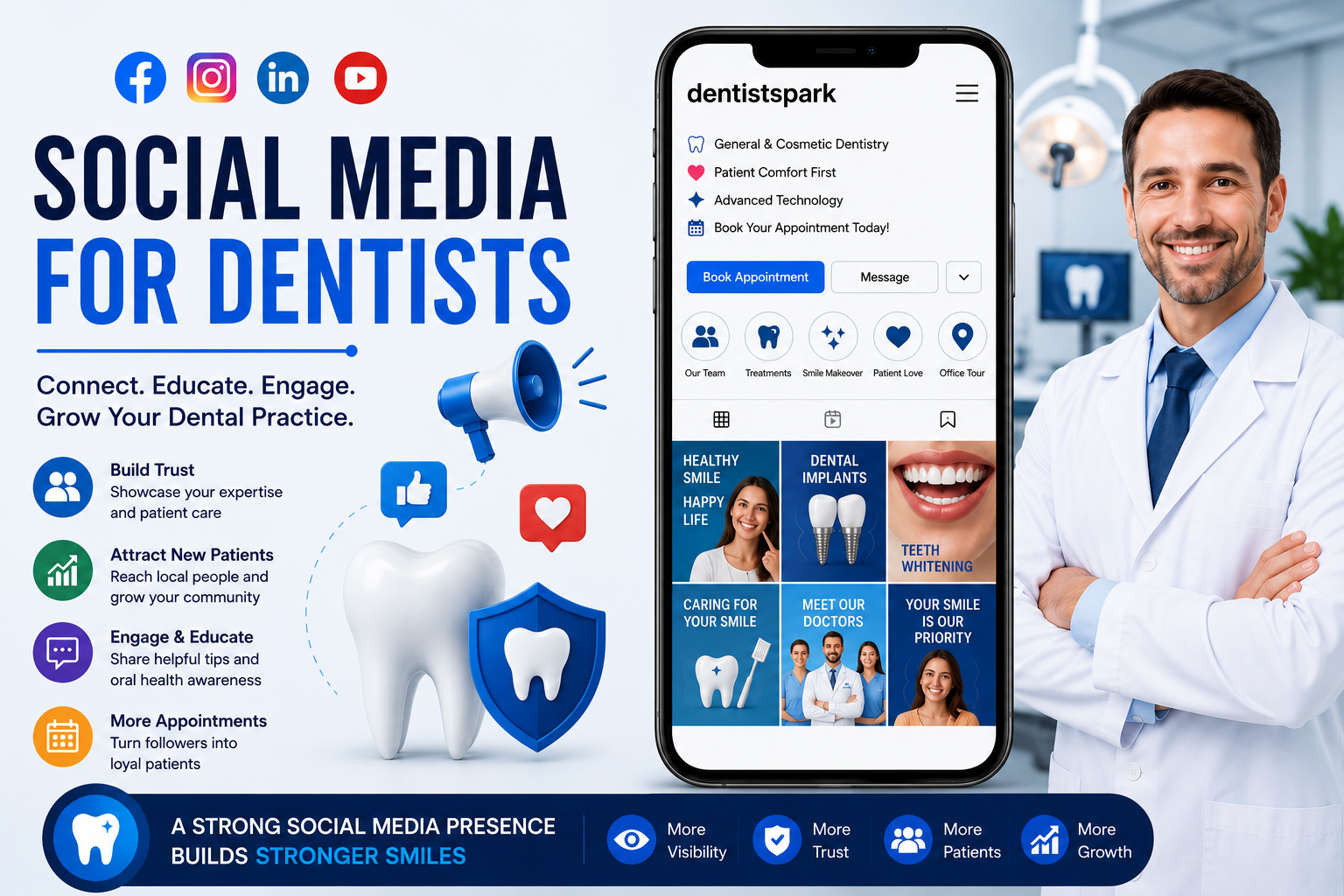
Why Social Media Matters for Dental Practices
Dental care is often associated with questions, uncertainty, and sometimes anxiety. Patients may want to understand a treatment before they contact a clinic or simply become familiar with the people who will be caring for them.
Social media gives dental practices an opportunity to communicate before the appointment.
A practice can use its social channels to explain common treatments, answer general questions, introduce team members, share oral health advice, and show what the clinic environment is like.
This helps create familiarity. When someone sees useful and professional content from a dental practice consistently, the clinic can become more recognizable when that person eventually needs dental care.
Social media should therefore be viewed as a communication and trust-building channel, rather than only an advertising platform.
What Should Dentists Post on Social Media?
The best content is usually content that patients find useful, understandable, or reassuring.
Instead of making every post promotional, create a healthy mix of educational and practice-focused content.
Educational Dental Content
Educational posts can answer common questions patients may have about oral health and dental treatments.
Topics might include:
How to maintain good oral hygiene
Common causes of tooth sensitivity
When a dental check-up may be needed
What patients can expect from a dental procedure
General information about dental implants
Tips for maintaining oral health between appointments
The purpose is not to diagnose people through social media. Keep educational content general and encourage patients to speak with a qualified dental professional about their individual circumstances.
Introduce Your Dental Team
People often feel more comfortable when they know who they are going to meet.
Introduce dentists, hygienists, assistants, and other members of your team. Share professional backgrounds, areas of interest, or simple introductions that allow potential patients to put faces to the practice.
This can make a dental clinic feel more approachable and personal.
Show Your Practice Environment
Photos and videos of the reception area, treatment rooms, equipment, or team can help patients understand what to expect.
For people who feel nervous about visiting a dentist, seeing the environment beforehand may make the experience feel more familiar.
Keep visuals professional, authentic, and respectful of patient privacy.
Focus on Quality Rather Than Posting Constantly
A common mistake with social media for dentists is believing that more posts automatically produce better results.
Consistency matters, but quality matters more.
A smaller number of useful, well-planned posts can be more valuable than frequent posts that provide little information.
Create a realistic content schedule that your practice can maintain. For example, you could organize content around educational advice, frequently asked questions, team introductions, practice updates, and relevant seasonal reminders.
Planning content in advance can also help maintain a consistent tone and avoid last-minute posts that feel disconnected from your overall strategy.
Connect Social Media With Your Dental Website
Social media should not operate independently from your website.
Your website is where potential patients can find detailed information about your services, practice, location, team, and appointment process. Social media can introduce people to your practice and encourage them to learn more.
This makes dentist website design an important part of your overall digital strategy.
Your website should be mobile-friendly, easy to navigate, fast, and simple to use. When someone arrives from a social media post, they should quickly find the information promised by that post.
For example, if you publish a post about dental implants, link interested visitors to a dedicated implant page where they can learn more and find an appropriate way to contact your practice.
A consistent visual identity across social media and your website can also make your brand easier to recognize.
Support Social Media With Dental SEO Services
Social media is one part of digital marketing, while search engine optimization helps your website become more visible in organic search results.
Dental SEO services can help optimize your website, service pages, local search presence, content, and technical elements.
These two channels can complement one another.
For example, you may publish a social media post answering a common question about tooth sensitivity and then create a detailed website article covering the topic. Social media can help distribute the content, while the website can provide a more comprehensive resource.
SEO also helps potential patients discover your practice when they search for services or information directly.
The important point is to give each channel a clear role rather than expecting one platform to do everything.
Combine Social Media With Google Ads
Paid search can provide another way to reach people actively looking for dental services.
Google Ads for dentist campaigns can target relevant search terms and direct potential patients to specific service or landing pages.
Social media serves a different purpose. Someone scrolling through social media may not be actively searching for a dentist, but useful content can help them become familiar with your practice.
Search advertising can capture existing intent, while social media can support awareness and relationship building.
When these channels are coordinated, your messaging and branding can remain consistent across the patient journey.
Build Trust Without Making Unnecessary Claims
Healthcare marketing requires particular care.
Dental practices should avoid exaggerated statements, misleading claims, guaranteed outcomes, or content that could create unrealistic expectations.
Patient testimonials and treatment-related content should be presented honestly and responsibly. Obtain appropriate permission before sharing patient images or stories, and protect confidential information.
Your social media content should demonstrate professionalism through accuracy and transparency rather than relying on dramatic claims.
Trust is built through consistent, useful communication.
Measure What Actually Matters
Likes and follower counts can be useful indicators, but they do not tell the entire story.
Look at actions that are more closely connected to your practice goals.
For example:
Which posts generate meaningful questions?
Which content sends visitors to your website?
Which topics receive the most engagement?
Are people clicking through to service pages?
Are social visitors contacting your practice?
Which types of content consistently attract attention?
Use these observations to improve your content strategy.
If educational posts about specific treatments consistently attract interest, consider creating more content around those subjects.
Make Social Media Part of a Complete Dental Marketing Solution
The strongest digital strategies usually connect multiple channels rather than treating each one separately.
A complete dental marketing solution may include social media, SEO, Google Ads, website design, content marketing, local search optimization, and reputation management.
Each channel can perform a different role.
Social media can build familiarity and engagement. Dental SEO can support organic visibility. Google Ads can reach people searching for specific services. A well-designed website can provide detailed information and make appointment requests easier.
When these elements work together, your practice can provide a more consistent experience from the first online interaction through to the appointment.
Conclusion
Social media for dentists is most effective when it focuses on people rather than simply promoting services. Educational content, team introductions, practice visuals, and helpful answers can make your dental practice more approachable and recognizable.
However, social media works best as part of a wider digital strategy. Connecting it with dentist website design, dental SEO services, and Google Ads for dentist campaigns can create a stronger and more consistent online presence.
By making social media useful, authentic, and patient-focused, your practice can build meaningful digital relationships and create more opportunities for people to take the next step toward dental care. Start with the questions your patients ask most often, create content that genuinely helps them, and build your strategy from there.
Comments
Log in or sign up to join the conversation.