


Recently, the U.S. bailed out Japan. The latter had accumulated government debt that, on a per capita basis, dwarfed that of any other country ever. Its currency, the yen, had been falling in value and its interest rates had been rising — a potentially fatal combination that might force Japan to dump its $1.1 trillion of U.S. Treasury bonds, thus pushing Treasury prices down and dollar interest rates up (also a dangerous combination).
So the U.S. sold some euros (sorry about that, Germany) and bought yen, pushing up the yen’s exchange rate. The apparent goal was to give Japan time to fix its problems or something. Good luck with that.
But What About Our Self-Bailout?
The U.S., like Japan, is massively indebted, and its interest rates have been rising lately.
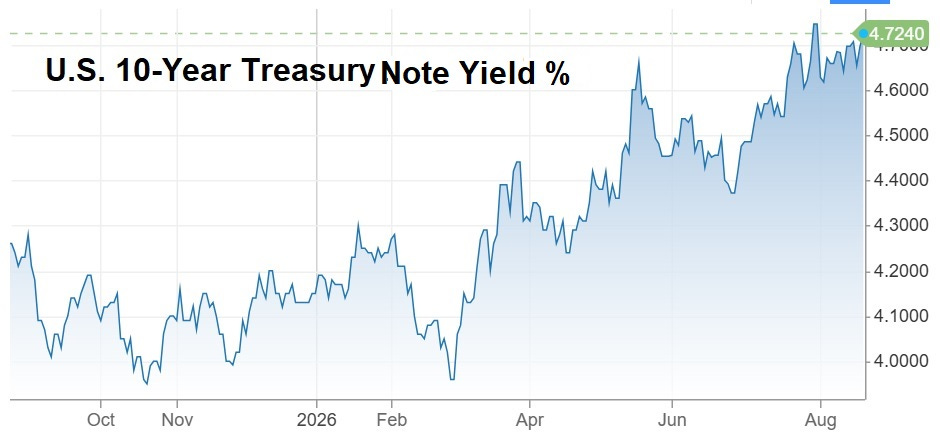
Rising interest rates risk popping the stock market bubble, causing trillions of dollars of private credit loans and AI circular financing deals to implode, which in turn might crash the global economy. So no pressure.
In response, the U.S. Treasury decided to try something called “yield curve control”, which involves issuing short-term bills and using the proceeds to buy back outstanding long-term bonds. As with the Japan bailout, the goal is to push down long-term interest rates to give the U.S. some breathing room to fix its problems.
But — like Japan — we’re not doing anything to fix our massive structural deficits, so bond traders responded with a resounding “no thank you.”
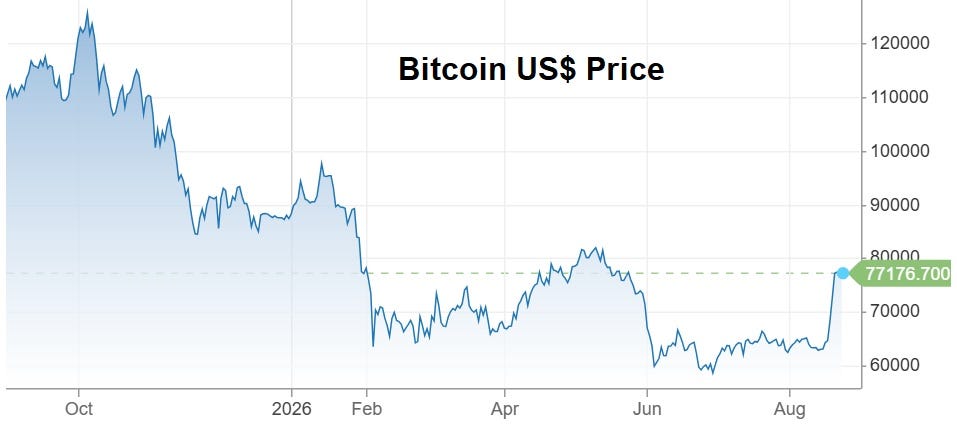
Instead of embracing government paper, capital poured into cryptos…
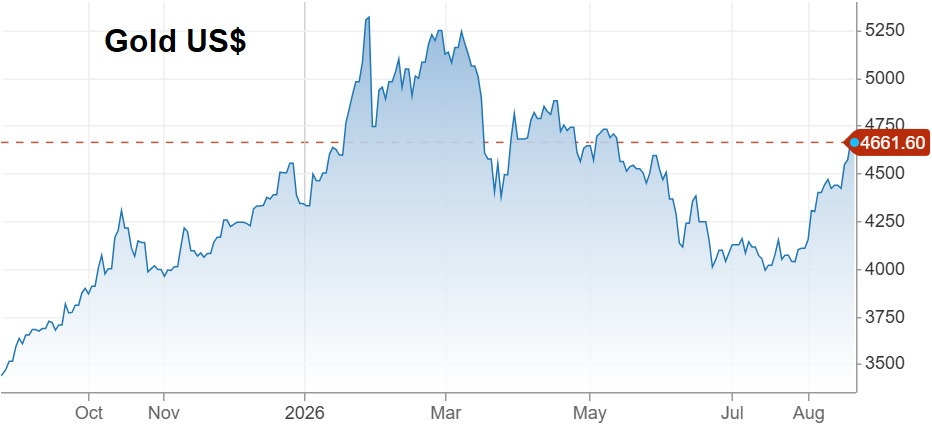
…and gold:
Remember, We’re Already Doing QE
In January, the Fed started buying assets, a practice called “quantitative easing,” or QE. Basically, this means creating currency out of thin air and using it to buy bonds from banks, which then (hopefully) lend their newfound cash to productive borrowers. So far, the Fed’s balance sheet is up by about $200 billion, which, based on recent bond market behavior, looks like wasted money.
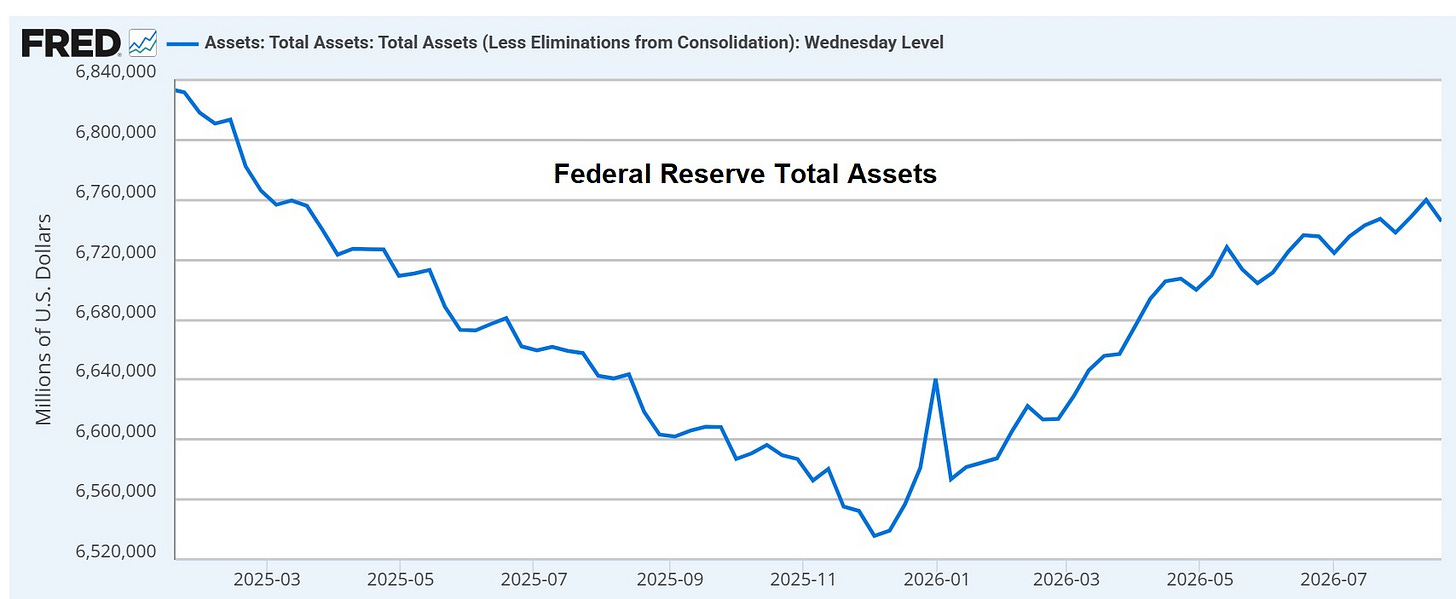
The Treasury’s attempt at yield curve control doesn’t involve creating new currency, so it’s not, strictly speaking, wasting money. But it is wasting effort. Think of it as the financial version of rearranging deck chairs on the Titanic. And pay more attention to gold.
Here’s a representative snippet from the mainstream press that ends appropriately:
US Treasury secretary Scott Bessent’s bid to tame US borrowing costs knocked down long-term yields for barely a day. The more lasting market signal: the dollar weakened while gold and Bitcoin rallied, reinforcing a debasement trade fuelled by swelling US deficits and concerns over the direction of US economic policy.
The divergence exposed a deeper predicament. Washington wants cheaper money even as inflation remains a constraint on the Federal Reserve. And it comes just as governments and companies are competing more fiercely for capital, from large-scale public borrowing to the vast sums pouring into artificial intelligence.
The AI boom sits on both sides of that contest. Financing it adds another enormous claim on debt markets, while the profits investors expect it to generate are helping stocks withstand its rising cost. With equities proving resilient, some of the anxiety over has instead surfaced elsewhere.
Bessent’s intervention also revealed Washington’s pain threshold for higher yields. For Charlie McElligott of Nomura, the market response showed where some of that pressure was going: he described the gold-up, dollar-down move, with Bitcoin also rallying, as a “pressure-release valve” as US authorities sought to stabilise long-term rates.
Ray Dalio gave the trade a more ominous reading on Friday (Aug 21), urging investors to cut bond exposure and hold gold and some Bitcoin as protection against a potential US debt crisis.



Comments
Log in or sign up to join the conversation.