

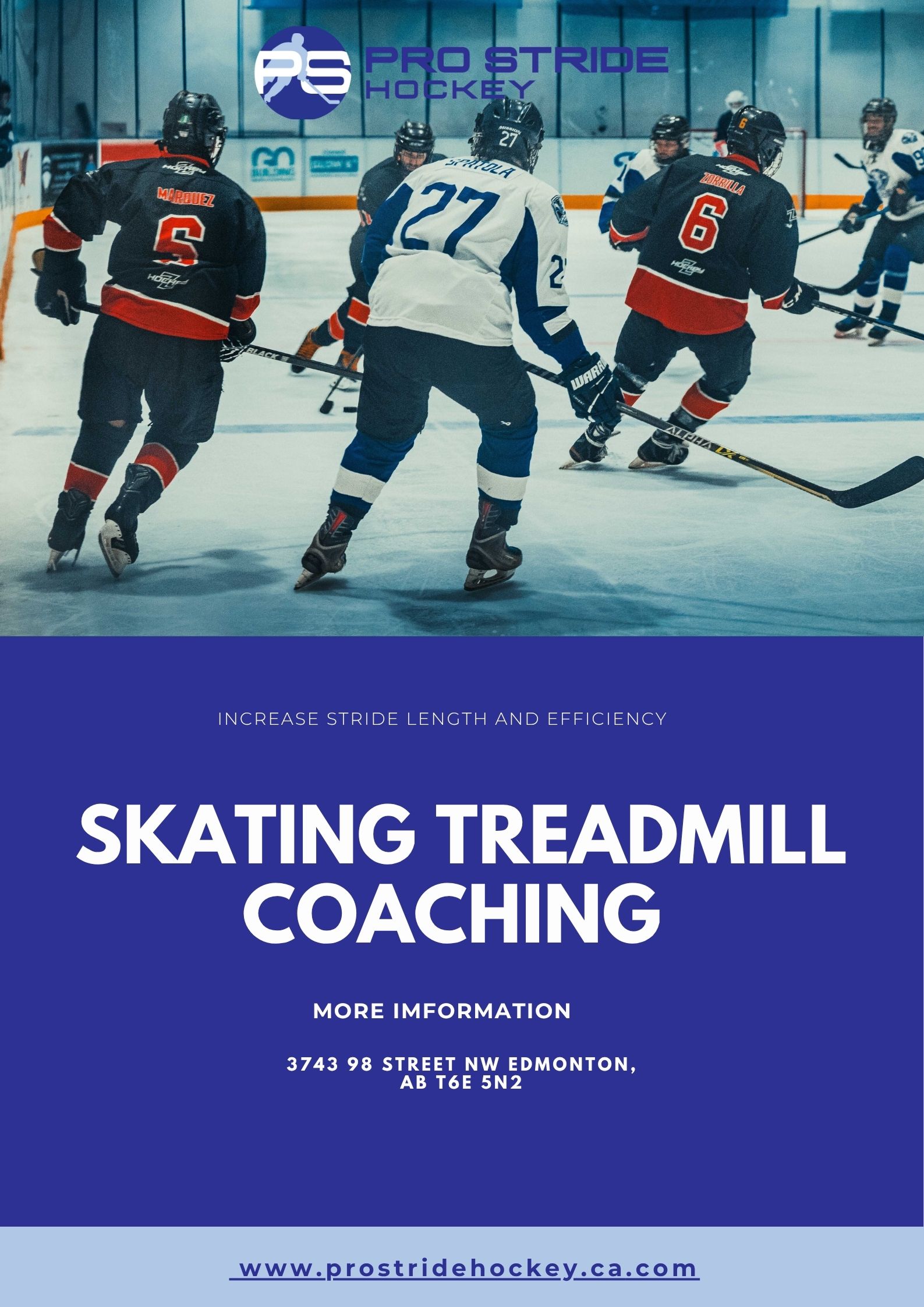
For players learning hockey, Skating treadmill coaching Edmonton can provide a controlled way to practice skating mechanics, balance, stride efficiency, and body positioning. Unlike regular ice practice, a skating treadmill allows athletes to repeat specific movements while focusing closely on technique. This can be useful for beginners who want to understand how skating fundamentals translate into faster, more controlled movement on the ice.
What Is Skating Treadmill Coaching?
Skating treadmill coaching uses a specialized moving surface that allows a hockey player to skate continuously while remaining in a controlled training environment. A coach can observe skating mechanics from different angles and identify areas that may need improvement.
The training may focus on:
Stride technique
Balance and stability
Knee and hip positioning
Forward skating
Acceleration mechanics
Edge control
Body posture
Weight transfer
Skating efficiency
Because the athlete can repeat movements without repeatedly skating from one end of the rink to another, training can provide more opportunities to focus on specific technical details.
Why Skating Technique Matters in Hockey
Skating is one of the most important foundations of hockey. Players need to accelerate, stop, turn, change direction, and maintain balance while handling a stick and puck.
Good skating technique is not simply about moving faster. It involves using the body efficiently so that energy is transferred into each stride.
For beginners, several fundamentals are particularly important:
Proper Body Position
A slightly bent knee position helps players stay balanced and ready to move. The upper body should remain controlled rather than excessively leaning forward.
Strong Weight Transfer
Efficient skating involves shifting body weight from one leg to the other. Learning this movement helps players develop more effective strides.
Edge Control
Skates have inside and outside edges that allow players to turn, stop, and change direction. Beginners should gradually learn how to control these edges rather than relying only on straight-line movement.
Consistent Stride
A controlled stride is generally more useful than simply trying to take as many steps as possible. Players can work toward longer, stronger, and more efficient movements as their technique develops.
Benefits of Skating Treadmill Training
Skating treadmill coaching Edmonton programs can be useful because they provide a structured environment for practicing specific skating movements.
1. Repetition
Repetition is important when learning a new movement. A controlled treadmill session can allow players to repeat a technique several times while receiving feedback.
2. Technique Awareness
Players may not always notice inefficient movements during normal game play. Coaching can help identify issues such as excessive upper-body movement, poor knee bend, or inconsistent weight transfer.
3. Controlled Learning Environment
Beginners may find it easier to concentrate on one skating skill at a time when there are fewer distractions than during a competitive game.
4. Improved Balance
Maintaining a stable skating position requires coordination between the legs, hips, core, and upper body. Repeated skating movements can help players become more comfortable maintaining balance.
5. Better Understanding of Acceleration
Acceleration depends on more than simply moving the legs quickly. Body angle, stride direction, force production, and weight transfer all contribute to effective acceleration.
Skating Treadmill vs. Traditional Ice Practice
Both training methods can play an important role in hockey development. They simply provide different learning environments.
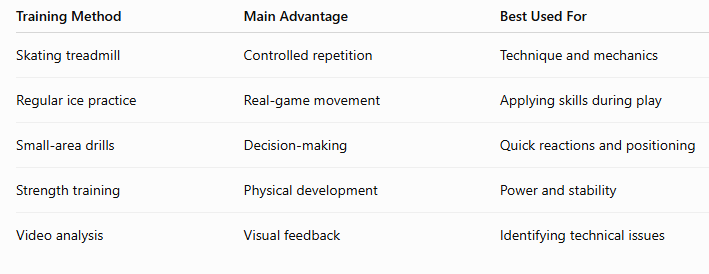
A balanced development plan can combine these methods instead of treating one as a complete replacement for the others.
How Beginners Can Prepare for a Session
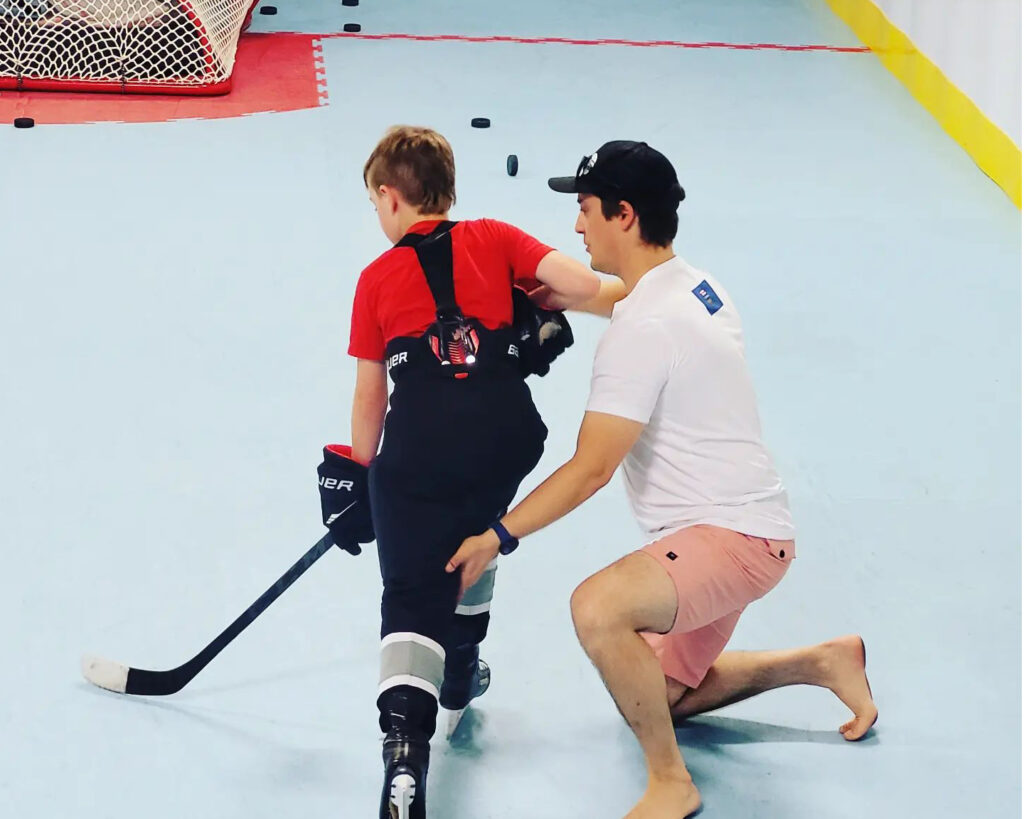
Before beginning skating treadmill training, beginners should understand what they want to improve.
A simple preparation checklist includes:
Wear properly fitted hockey equipment.
Make sure skates are appropriately sharpened.
Warm up before intensive skating.
Listen carefully to coaching instructions.
Start with controlled movements.
Focus on technique before speed.
Drink enough water before and after training.
Players should also tell their coach about any previous skating experience or difficulties they regularly experience.
Common Mistakes Beginners Make
Learning to skate efficiently takes time. Some common mistakes can make the process more difficult.
Standing Too Upright
Players who keep their legs too straight may have difficulty maintaining balance and generating power. A controlled athletic stance generally provides a stronger foundation.
Bending Too Far Forward
Leaning excessively forward can affect balance and make movements less controlled. The body should remain stable while the knees and hips provide the necessary flexion.
Moving Only the Feet
Fast foot movement does not automatically create an effective skating stride. Proper skating also requires coordinated movement of the hips, knees, ankles, and upper body.
Trying to Skate Too Fast Too Soon
Beginners sometimes focus on speed before learning proper mechanics. Increasing speed on top of poor technique can reinforce inefficient movement patterns.
Ignoring Edge Control
Turning and stopping depend heavily on edge control. Players who focus only on forward skating may struggle when they need to change direction.
Expert Tips for Better Skating Development
When learning skating skills, quality practice is generally more valuable than simply increasing training volume.
Focus on One Skill at a Time
Instead of attempting to correct every movement simultaneously, choose one technical goal. For example, a player might focus on knee position during one session and weight transfer during another.
Use Video Feedback
Video can help players see movements they may not feel while skating. Comparing earlier and later sessions can also make progress easier to recognize.
Build Technique Before Speed
A controlled movement performed correctly provides a stronger foundation for increasing speed later.
Practice Both Directions
Hockey requires players to move in multiple directions. Developing comfort on both sides can help create more balanced skating skills.
Connect Training to Game Situations
Once a movement becomes more comfortable, players should practice applying it during hockey drills. This helps transfer technical improvements into real game situations.
Combining Skating With Hockey Fundamentals
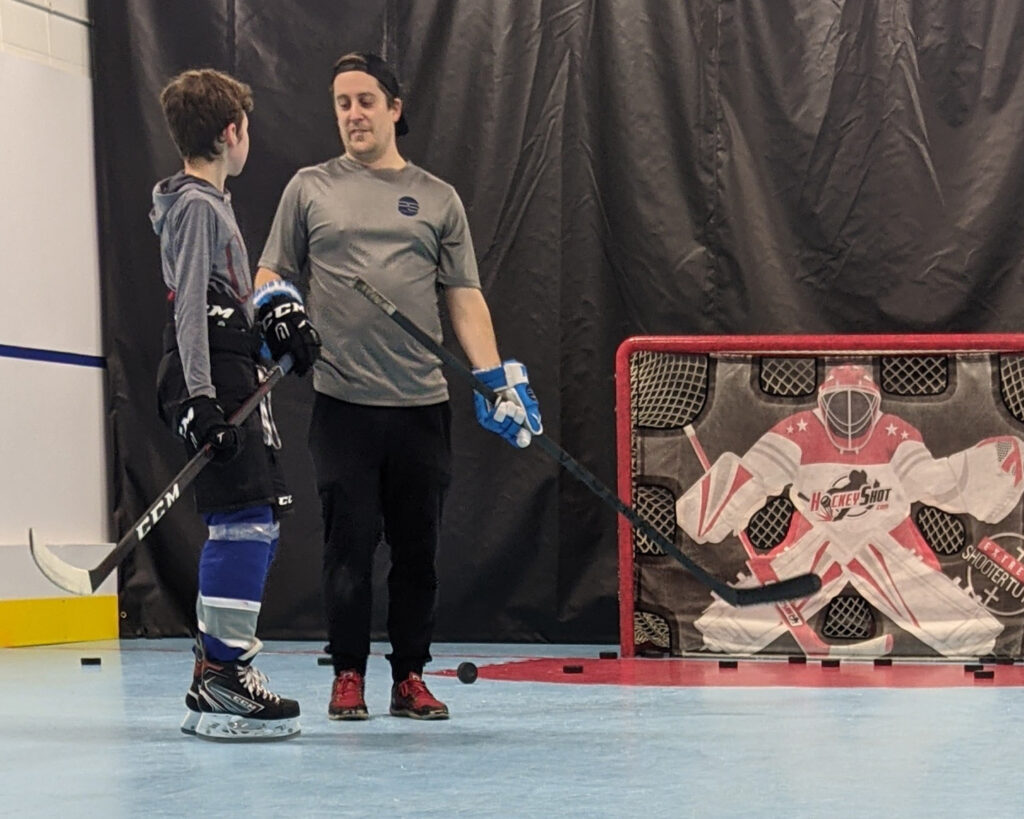
Skating ability is only one part of becoming a better hockey player. Beginners also need to understand stickhandling, passing, shooting, positioning, and basic game awareness.
Hockey Basics Classes can help introduce these fundamental skills in a structured way. Combining skating development with basic hockey instruction allows beginners to understand how individual movements fit into actual gameplay.
For example, a player may learn acceleration separately and then practice accelerating into open space while carrying the puck. This connects skating mechanics with a practical hockey situation.
Best Practices for Long-Term Improvement
Consistent development usually comes from combining technical practice, physical preparation, and appropriate recovery.
Useful best practices include:
Set specific skating goals.
Practice regularly rather than relying on occasional intensive sessions.
Record progress over time.
Correct technique before increasing intensity.
Practice both sides of the body.
Combine skating drills with puck skills.
Allow adequate recovery between demanding sessions.
Ask for feedback when a movement feels difficult or inconsistent.
The goal should be gradual improvement rather than immediate perfection.
People Also Ask
Is skating treadmill training good for hockey beginners?
Yes. It can provide a controlled environment where beginners can practice balance, stride mechanics, body position, and weight transfer with coaching feedback.
Does treadmill skating make you faster?
It can help improve the technical elements that contribute to skating efficiency. Actual speed also depends on strength, coordination, skating technique, and practice on the ice.
How often should a beginner practice skating?
The appropriate frequency depends on age, experience, overall training, and recovery. Consistent practice with adequate rest is generally more useful than excessive training.
Can skating treadmill training replace ice practice?
No. Treadmill training can complement ice practice, but players still need experience performing skills during real hockey situations.
What should a beginner learn first in hockey?
Basic skating, balance, stopping, turning, puck control, passing, and shooting are useful foundational skills.
Frequently Asked Questions
1. What is the main purpose of skating treadmill coaching?
Its main purpose is to provide controlled practice for skating mechanics, allowing players to work on movement patterns and receive technical feedback.
2. Is treadmill skating suitable for young players?
It can be suitable when training is supervised appropriately and adapted to the player's age, experience, equipment, and physical ability.
3. What equipment is needed?
Players typically use appropriate hockey equipment, including skates, helmet, protective equipment, and other gear recommended for the specific training environment.
4. Can treadmill training improve skating balance?
It can provide repeated opportunities to practice stable skating positions, weight transfer, and controlled movements, all of which contribute to balance.
5. Should beginners focus on speed or technique?
Technique should generally come first. Once movement patterns become more consistent, players can gradually work on increasing speed and intensity.
6. How does video help skating development?
Video can show body positioning, stride patterns, balance, and other details that may be difficult for players to recognize while moving.
7. Is skating enough to become a complete hockey player?
No. Skating is a major foundation, but complete development also involves puck skills, passing, shooting, positioning, decision-making, and understanding game situations.
Skating development is a gradual process that benefits from consistent practice and thoughtful feedback. Skating treadmill coaching Edmonton can provide beginners with a structured environment for understanding skating mechanics and repeating important movements. When combined with regular ice practice and fundamental hockey training, it can help players build a stronger technical foundation and become more confident on the ice.
Pro Stride Hockey
Comments
Log in or sign up to join the conversation.