

Image: Bigstock
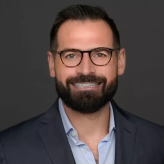
The Rapid Rise of Leopold Aschenbrenner
It would be difficult for anyone to find a more rapid Wall Street ascent than Leopold Aschenbrenner. In 2021, Aschenbrenner graduated from the prestigious Columbia University as valedictorian at the ripe age of just 19 years old. Two years later, he joined AI juggernaut OpenAI to pursue technical breakthroughs to steer and control AI systems. However, in 2024, he was fired from OpenAI over an alleged information leak. Nevertheless, Leopold did not let his artificial intelligence go to waste. Instead, he wrote a 165-page essay named“Situational Awareness: The Decade Ahead” outlining his bull case for the AI industry.
Soon after, Aschenbrenner’s essay went viral, receiving widespread coverage from the mainstream media and the attention of big money investors. To capitalize on his newfound fame, Leopold Aschenbrenner launched an AI-focused hedge fund dubbed Situational Awareness. Initially, Situational Awareness raised $225 million (which quickly grew to $1.5 billion. His timing couldn’t have been more perfect. The portfolio piled into several multi-bagger AI infrastructure winners such as Bloom Energy (BE - Free Report), SanDisk (SNDK - Free Report), Hive Digital Technologies (HIVE - Free Report), CleanSpark (CLSK - Free Report), and IREN (IREN - Free Report).
Situational Awareness is Forced to Unwind Positions
By 2026, the fund’s AUM ballooned to a mind-boggling $45 billion as it continued to ride the AI boom and attract new investment. However, in July, the AI trade came to a screeching halt, and high-beta momentum stocks encountered their worst drawdowns since the COVID-19 market crash.
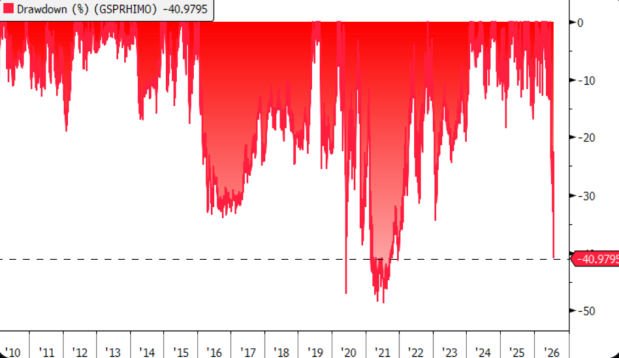
Image Source: Goldman Sachs Momentum Index
Last week, news broke that Situational Awareness was forced to unwind all of its publicly traded positions (which were scooped up by Citadel).
Lessons from the Situational Awareness Debacle
According to a letter sent to investors, SA, which was up more than 400% at one point in 2026, lost 67% of its value in July alone. Although Aschenbrenner manages more capital than 99% of investors, there are important lessons any investor can take from the situation, including:
· Extreme Leverage is Dangerous: Situational Awareness used an extreme 4:1 leverage ratio. Leverage can magnify volatility – especially in the high-beta momentum stocks the firm trades.
· Portfolio Construction is Critical: Because all of SA’s stocks were AI-related, they were highly correlated and prone to concentration risk.
· Stocks Take the Stairs Up, Elevator Down: Momentum stocks tend to grind higher but can break down in a hurry. For instance, AI leader SNDK plunged 57% in under a month.
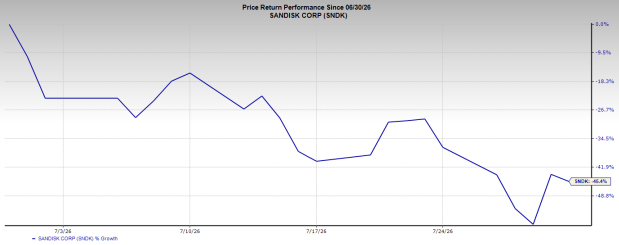
Image Source: Zacks Investment Research
· Execution is Everything: In old interviews, Aschenbrenner discussed the importance of risk management and understanding volatility. However, like many investors, he succumbed to visions of grandeur and failed to implement sound risk management principles.
Situational Awareness remains up 80% year-to-date, but much of the incredible results have been eroded, and the fund has undoubtedly suffered a reputational hit.
Bottom Line
The rapid rise and violent drawdown of Situational Awareness serve as a masterclass in market physics for retail and institutional investors alike. While Aschenbrenner’s vision for the AI revolution was sound, his fund’s concentration left it defenseless against a sudden shift in market regime.



Comments
Log in or sign up to join the conversation.