

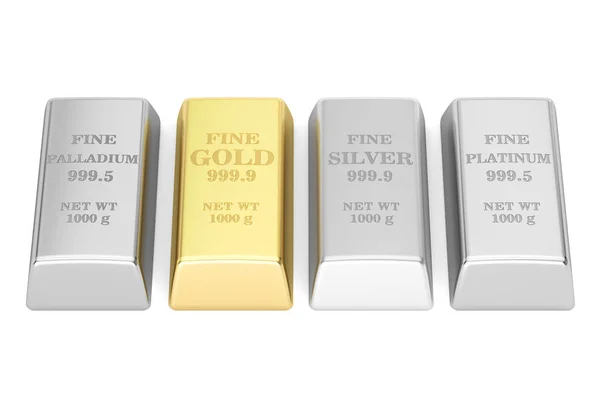
At the moment of writing these words, December gold futures trade near $4,060, and silver futures trade near $53.
Gold has regained about a third of Tuesday's $84.30 slide, while silver has already erased its entire decline, so the gold-to-silver ratio is falling. Palladium is rising even more than silver.
On October 30, I wrote: "Late in a rally, investors chase silver, so silver outperforms gold, and the ratio falls." This is what we see today, and palladium confirms it.
The Weaker Metal Leads in Both Pairs
Since gold's top on August 25, silver has declined much more than gold, and palladium has declined more than platinum. Today, the weaker metal of each pair is the one that's rising more.
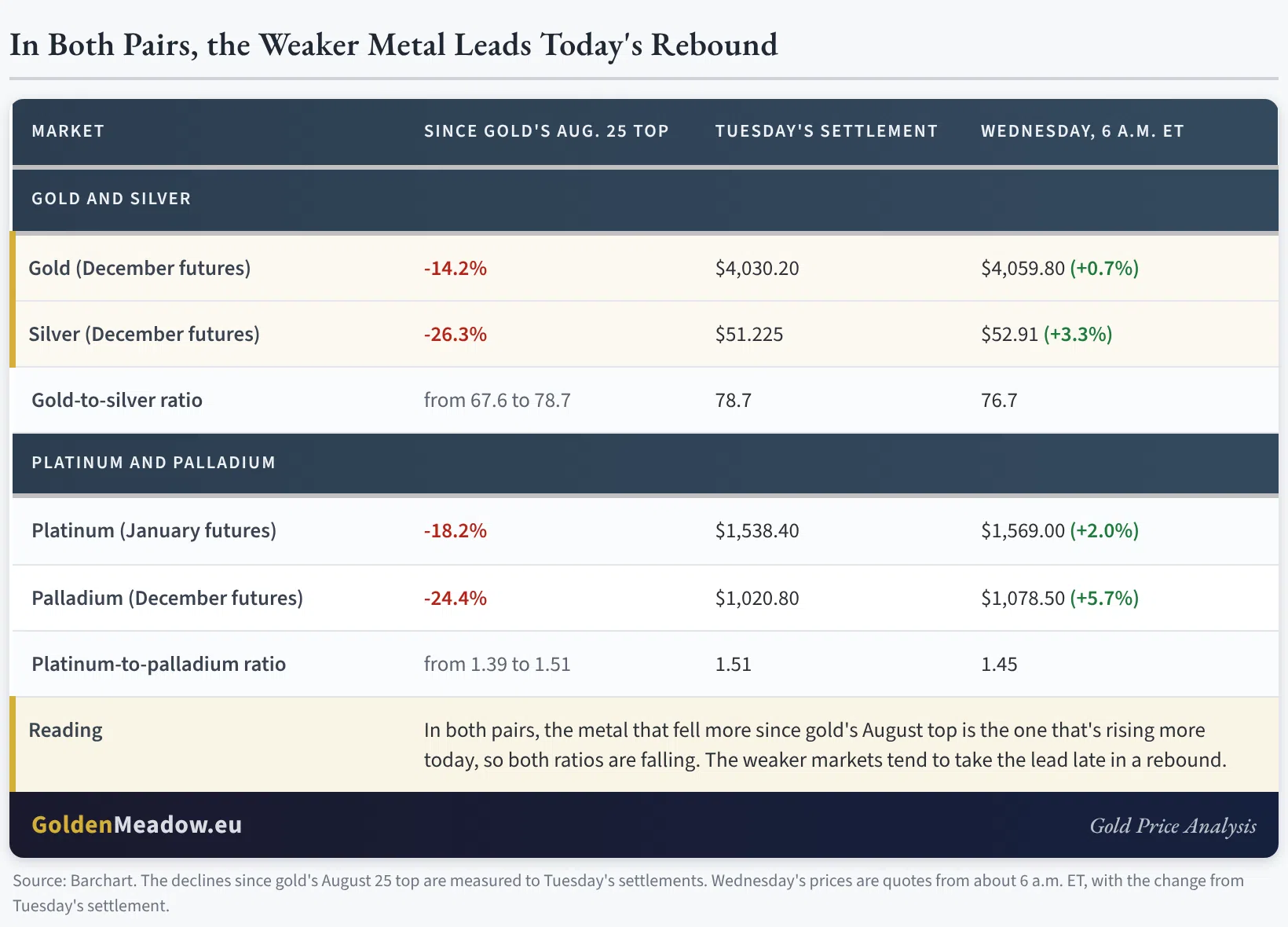
The gold-to-silver ratio fell from 78.7 at Tuesday's close to below 77, and the platinum-to-palladium ratio fell from 1.51 to about 1.45.
Palladium is the weakest of the four precious metals. At Tuesday's close, it was about 30 percent below its level from a year earlier, and on November 3, it closed at its lowest level in more than a year. Today, it's up by almost $60, close to twice as much as platinum in dollar terms, even though its price is a third lower.
So, the small and weak markets are performing much better than the bigger ones today. This is a phenomenon that we often see at the end of rallies or before declines, and here's what stands behind it.
Why Strength in the Weakest Markets Is Not Bullish
When prices have been falling for months, the markets that fell the most start to look like bargains. People pile into them because they are cheap, without considering that they might be cheap for a reason.
Size matters too. The silver market is much smaller than the gold market, and the palladium market is smaller still, so a wave of buying that would barely move gold moves them a lot. This is why their rallies look impressive, and why they say little about the strength of the whole sector.
This rebound has already shown how it works. On November 4, silver jumped much more than gold, and over the next two sessions, silver moved lower, while gold ended them where it had started. On Monday and early on Tuesday, silver outperformed gold again, and then gold slid $84.30 after the hot CPI report.
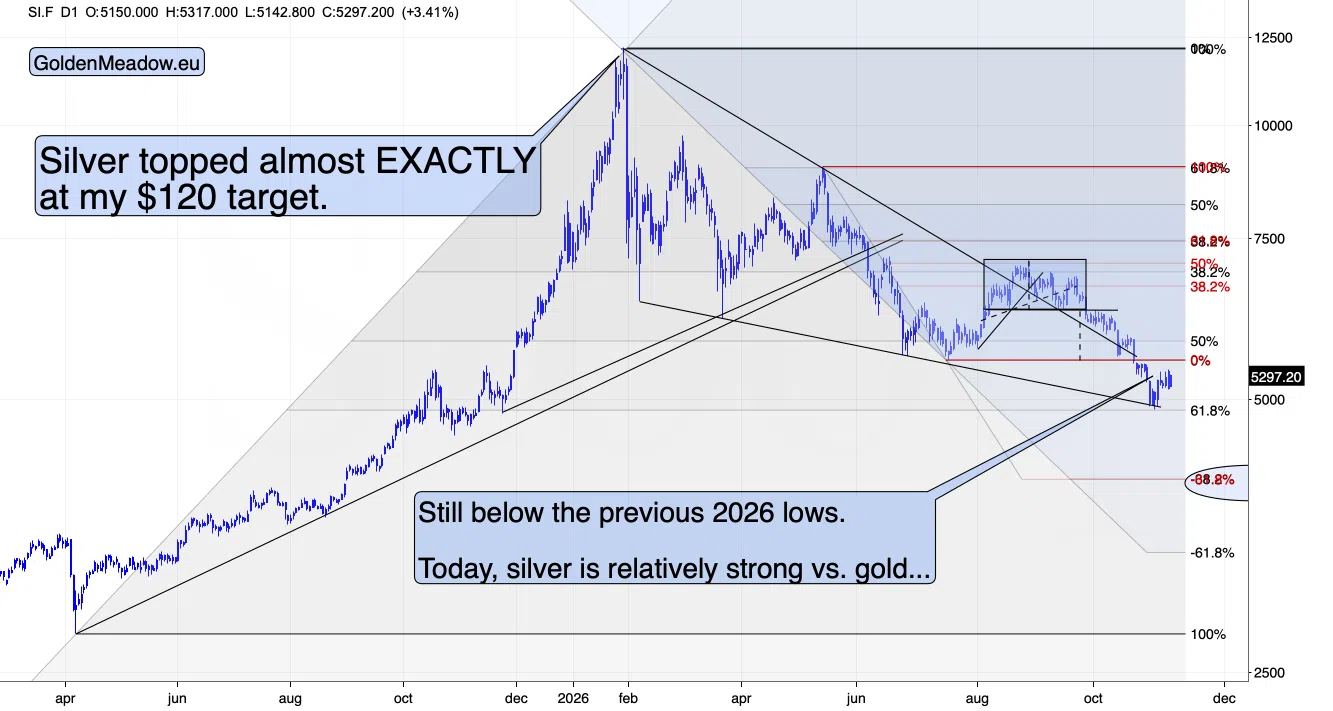
Silver's strength is relative. It's still below its previous 2026 lows, so the breakdown below them wasn't invalidated. In my silver price forecast for November 2026, I explained why a silver-led rebound is usually corrective.
The dollar makes today's rebound even less convincing.
The Dollar Is Breaking Out
Yesterday, I wrote: "In my view, this points to another move up in the USD Index, which would be bearish for gold." The move continued. The USD Index futures closed at 102.13 on Tuesday, and this morning, they moved above 102.4, to their highest level since October 14.
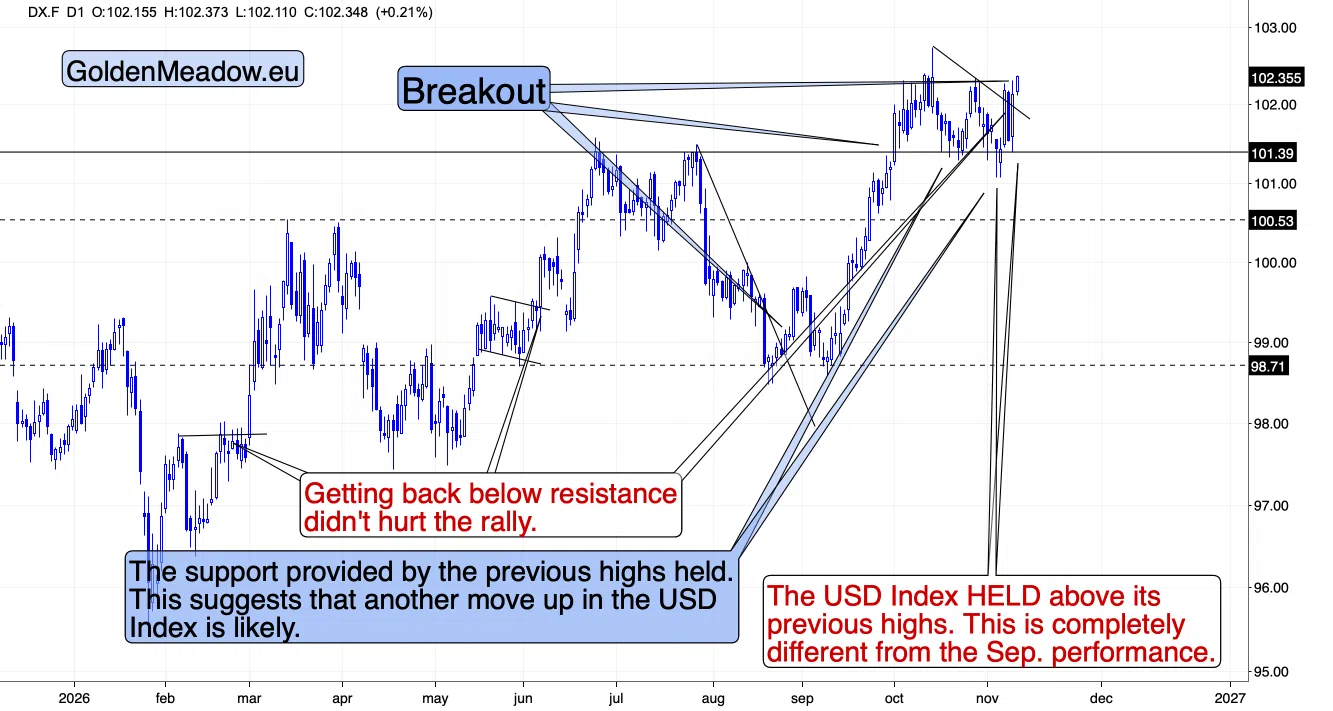
The USD Index futures are back above their declining resistance line, so the breakout is here. Their highest daily close of the year is 102.375, and they are trading slightly above this level. It looks like the USD Index is ready to move to new yearly highs.
This is bearish for gold, even if we don't see it right now. Gold's reaction was delayed before. On October 12, when the USD Index futures closed at their highest level of the year, gold was only about $12 below its October 1 close. In the next two and a half weeks, it fell by about $290.
Where This Leaves Us
Silver and palladium, the weaker metals, lead today's rebound, and the USD Index is breaking out. In my view, this combination is bearish for gold, and its next big move is likely to be down, toward about $3,500. In today's Gold Trading Alert, I also covered the mining stocks, the stock market, copper and crude oil, along with the signal that I'm waiting for in the miners.
When the weakest metals take the lead, the rebound is often closer to its end than to its start.
Important note: the forecasts are up-to-date at the moment of their publication, we don’t guarantee updating them for free readers. We will, however, keep our premium subscribers updated at all times.

Comments
Log in or sign up to join the conversation.