

Signal vs. Noise: Why B2B Leads Are Failing Without Quality Focus
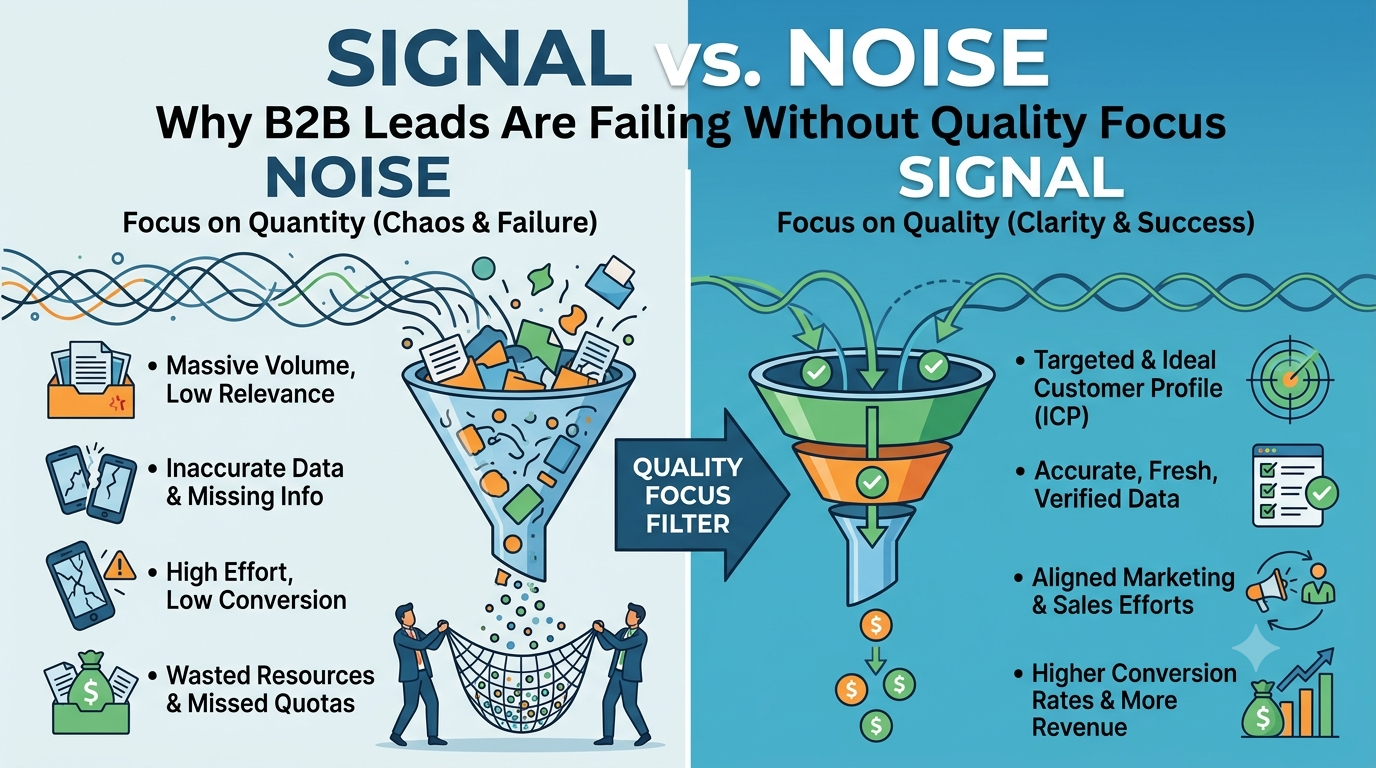
Generating a high volume of leads has long been considered a measure of marketing success. However, in today's competitive B2B landscape and content syndication, quantity alone does not drive business growth. Many organizations fill their sales pipelines with contacts that never convert, leaving sales teams to sort through large amounts of irrelevant data.
The key to better outcomes is separating meaningful buying signals from background noise. Businesses that focus on lead quality rather than lead volume are better positioned to generate revenue and improve sales efficiency.
Understanding Signal vs. Noise in B2B Marketing
A buying signal is any action or behavior that indicates a prospect has genuine interest in a product or service. Examples include repeated website visits, engagement with high-value content, demo requests, or interactions from decision-makers.
Noise, on the other hand, consists of activities that show minimal purchase intent. Content downloads, accidental clicks, or incomplete engagement may increase lead counts but often provide little value to sales teams.
Why Lead Volume Can Be Misleading
Large lead databases may appear impressive, but they often contain contacts that are not qualified or ready to buy. Pursuing these prospects consumes time, increases acquisition costs, and slows down the sales process.
Organizations that prioritize qualified leads instead of raw numbers can allocate resources more efficiently and improve conversion rates.
Using Data to Identify High-Intent Buyers
Modern B2B marketing relies on data to distinguish valuable prospects from casual visitors. Behavioral insights, firmographic information, engagement history, and buyer intent signals help businesses identify accounts that are more likely to move through the sales funnel.
These insights allow marketing and sales teams to prioritize outreach and deliver more personalized experiences.
Aligning Sales and Marketing Around Lead Quality
Strong collaboration between sales and marketing is essential for effective lead qualification. Shared definitions of qualified leads, common performance metrics, and regular feedback help ensure both teams focus on opportunities with the greatest revenue potential.
This alignment improves pipeline quality and supports more predictable business outcomes.
Turning Better Signals Into Better Results
Successful B2B marketing is not about collecting the largest number of leads—it is about identifying prospects with genuine buying intent. By filtering out noise, improving qualification processes, and focusing on high-value accounts, businesses can strengthen their sales pipeline, increase conversion rates, and achieve sustainable revenue growth.
Comments
Log in or sign up to join the conversation.