

Signal-Based Marketing: Turn Buyer Intent Data into Revenue
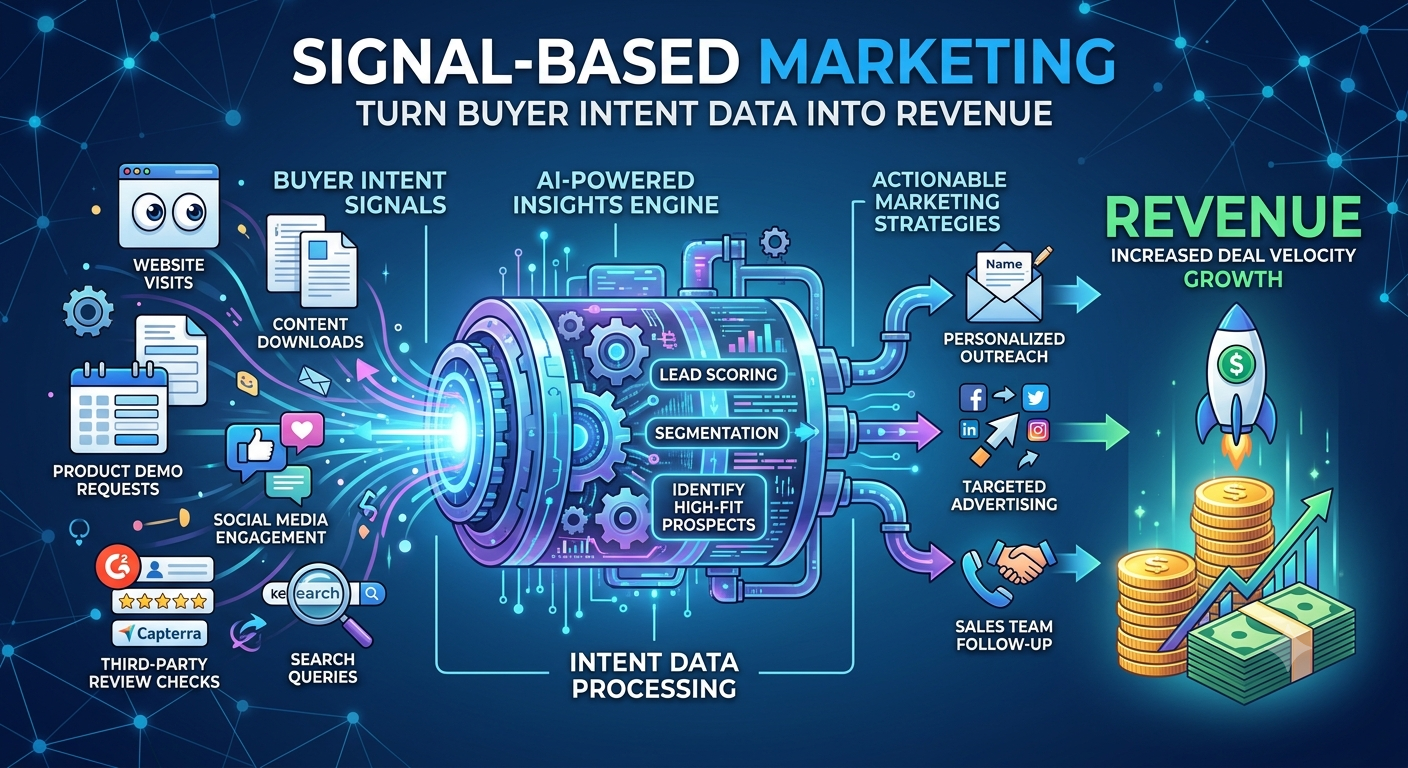
Modern B2B buyers leave digital signals throughout their purchasing journey. Website visits, content downloads, webinar participation, email engagement, and product research all provide valuable insights into buying intent. B2B account based marketing uses these behavioral indicators to identify prospects who are actively evaluating solutions, allowing marketing and sales teams to engage them at the right time with relevant messaging.
Instead of relying on lead volume alone, organizations can use buyer intent signals to improve lead quality, increase marketing efficiency, and generate more predictable revenue.
What Is Signal-Based Marketing?
Signal-based marketing is a data-driven approach that uses customer behavior and engagement patterns to identify potential buyers showing genuine purchase intent. Rather than treating every interaction equally, marketers analyze multiple signals to determine which accounts are most likely to move forward in the buying process.
This strategy enables businesses to focus resources on prospects with the highest conversion potential.
Why Buyer Intent Data Matters
Not every marketing interaction represents a buying opportunity. A single website visit or content download may indicate curiosity, while repeated engagement across multiple channels often reflects stronger purchase intent.
Buyer intent data helps organizations distinguish meaningful engagement from routine activity, enabling marketing teams to prioritize qualified prospects and deliver more personalized experiences.
First-Party Data Improves Signal Accuracy
First-party data has become one of the most reliable sources for signal-based marketing. Information collected directly through websites, webinars, email campaigns, CRM systems, and customer interactions provides accurate insights into audience behavior.
Combining first-party data with intent signals improves targeting, supports privacy compliance, and enables more informed marketing decisions.
Align Sales and Marketing Around Buyer Signals
Signal-based marketing is most effective when signal-based marketing and sales teams work together. Marketing identifies accounts demonstrating meaningful buying behavior, while sales teams use these insights to deliver timely and relevant outreach.
This alignment reduces wasted effort, improves lead qualification, and helps organizations build stronger relationships with prospective customers.
Measure and Optimize Continuously
Buyer intent changes as purchasing decisions evolve. Organizations should continuously monitor engagement trends, validate intent signals, and evaluate campaign performance to refine targeting strategies.
Regular optimization ensures marketing investments remain focused on accounts with the greatest revenue potential.
Turning Buyer Intent into Revenue
Signal-based marketing enables businesses to replace assumptions with data-driven decision-making. By combining buyer intent data, first-party insights, and coordinated sales and marketing efforts, organizations can identify qualified opportunities earlier in the buying journey and deliver more relevant customer experiences.
As B2B purchasing becomes increasingly digital, businesses that leverage signal-based marketing are better positioned to improve conversion rates, accelerate pipeline growth, and generate sustainable revenue.
Comments
Log in or sign up to join the conversation.