

Shipping containers come in different sizes, designs, and configurations to meet a wide range of storage, transportation, and business needs. Choosing the right size is important because the container should provide enough usable space without creating unnecessary delivery, placement, or maintenance concerns.
When looking at shipping containers for sale, buyers commonly compare 10-foot, 20-foot, and 40-foot options. Each size has different advantages, and the best choice depends on what you plan to store, how much space is available, and whether the container will be used for temporary or long-term storage.
10-Foot Shipping Containers
A 10-foot container is a practical option when you need secure storage but have limited space. Its smaller footprint makes it easier to place at locations where a larger container may not fit.
These containers can be useful for:
Small business inventory
Tools and equipment
Construction materials
Seasonal items
Household storage
Outdoor equipment
A 10-foot container can also be easier to position in tighter areas. However, it has less interior space than larger containers, so it may not be suitable for large amounts of furniture, machinery, or inventory.
20-Foot Shipping Containers
The 20-foot container is one of the most commonly used container sizes. It offers a useful balance between storage capacity and footprint, making it suitable for both residential and commercial applications.
A standard 20-foot container generally provides around 1,170 cubic feet of interior storage space, although exact dimensions can vary slightly depending on the container design.
A 20-foot container may be suitable for:
Construction sites
Business inventory
Warehouse overflow
Household moves
Tools and equipment
Farm and agricultural storage
Job-site materials
For many buyers, this size provides enough room for regular storage without requiring the larger footprint of a 40-foot container.
40-Foot Shipping Containers
When maximum storage capacity is the priority, a 40-foot container can be a strong option. It provides approximately twice the floor space of a standard 20-foot container while maintaining a similar width.
A standard 40-foot container typically offers around 2,350 to 2,400 cubic feet of interior space.
This size can work well for:
Large inventories
Commercial storage
Construction equipment
Manufacturing materials
Large household contents
Business expansion
Long-term storage needs
Because of its larger dimensions, buyers should make sure there is enough room for delivery, placement, and access before selecting this option.
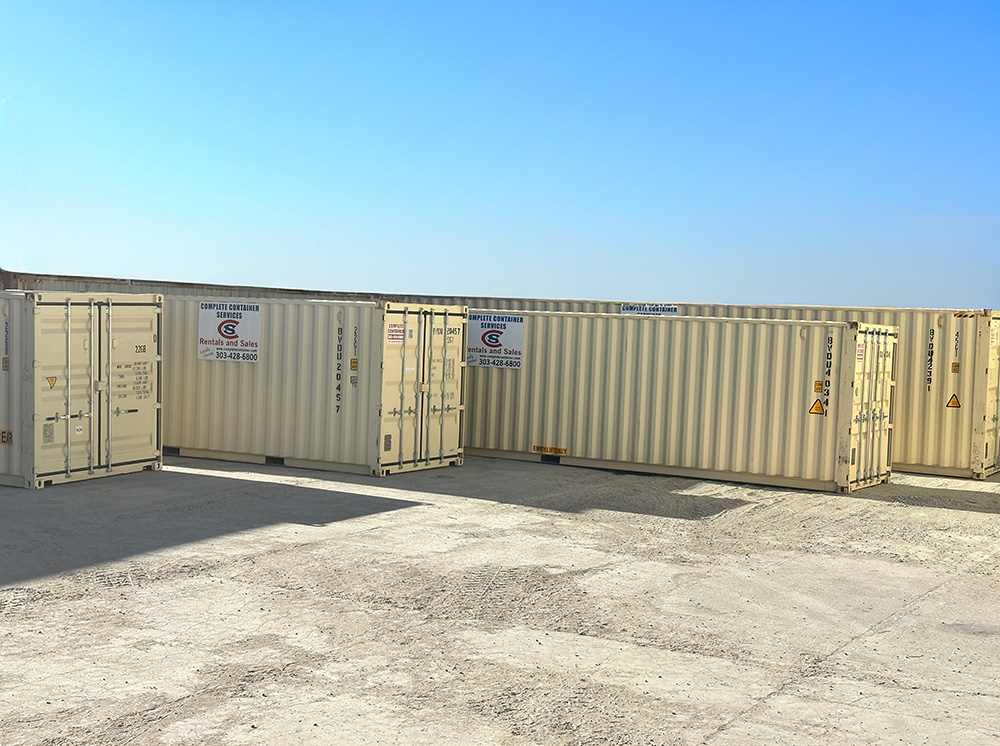
40-Foot High Cube Containers
A 40-foot high cube container is similar to a standard 40-foot container but provides additional interior height. The extra vertical space can be useful when storing tall equipment, shelving systems, or goods that need more room above.
High cube containers are often chosen when buyers want to maximize storage volume without increasing the container's length or width.
They can be especially useful for businesses that use shelving or need additional clearance for stored materials.
Double-Door Containers
Size is not the only factor to consider. Some containers are designed with doors at both ends, allowing access from two sides.
Double-door containers can make loading and unloading easier because items do not have to be moved around other stored materials to reach the back.
They can be useful for:
Organized inventory storage
Construction projects
Equipment access
Businesses with frequent loading and unloading
Storage areas where access from both ends is convenient
A double-door configuration can add flexibility even when the overall container size remains the same.
How Do You Choose the Right Container Size?
Start by making a list of everything you plan to store. Estimate the amount of floor space and consider the height of larger items.
Next, measure the available placement area. Remember that the container itself needs sufficient space, but the delivery truck and equipment may also require room to access the site.
You should also think about how often you will need to access the contents. If you expect frequent loading and unloading, a larger container or a configuration with easier access may be more practical.
For long-term storage, leave some room for future items. Choosing a container that is completely full from day one can make it difficult to organize or retrieve stored materials.
New vs. Used Containers
Buyers can generally choose between new or used containers depending on their requirements and budget.
Newer containers may have cleaner interiors and fewer signs of previous use. Used containers can provide a practical storage solution when appearance is less important than functionality and value.
Before purchasing a used container, check the doors, flooring, roof, walls, locking mechanisms, and overall condition. A proper inspection can help you understand what you are getting before the purchase.
Consider Delivery Before Buying
The container size should match not only your storage needs but also your property. Before ordering, check the available access route, overhead clearance, ground conditions, and placement area.
Ask the supplier about delivery requirements and how the container will be unloaded. Planning these details in advance can help prevent problems on delivery day.
Conclusion
Choosing the right container size starts with understanding what you need to store, how much space you have available, and how frequently you will access your items. A 10-foot container can work for smaller needs, while 20-foot and 40-foot options provide progressively more storage capacity. High cube and double-door configurations can add useful flexibility for specific applications.
Taking time to compare dimensions, condition, access, delivery requirements, and intended use can help you select a container that fits your project. Whether you need a compact storage solution or additional space for business inventory, carefully comparing shipping containers for sale can help you make a more practical purchasing decision.
Frequently Asked Questions
What is the most common shipping container size?
The 20-foot container is one of the most commonly used sizes because it offers a practical balance between storage capacity, footprint, and handling.
Is a 40-foot container bigger than a 20-foot container?
Yes. A standard 40-foot container is approximately twice the length of a 20-foot container and provides substantially more storage capacity.
What is a 40-foot high cube container?
A 40-foot high cube container has the same general length and width as a standard 40-foot container but offers additional interior height.
Which container size is best for small storage needs?
A 10-foot container can be suitable when you have limited storage requirements or restricted placement space. A 20-foot container may be more appropriate if you expect your storage needs to grow.
Do container dimensions vary?
Yes. Exact interior and exterior dimensions can vary slightly depending on the manufacturer, container type, and configuration. Always confirm the specifications with the supplier before purchasing.
What should I check before buying a container?
Check the container's doors, floor, roof, walls, locking system, and overall condition. You should also confirm the delivery requirements and make sure the available space can accommodate the container.
Comments
Log in or sign up to join the conversation.