

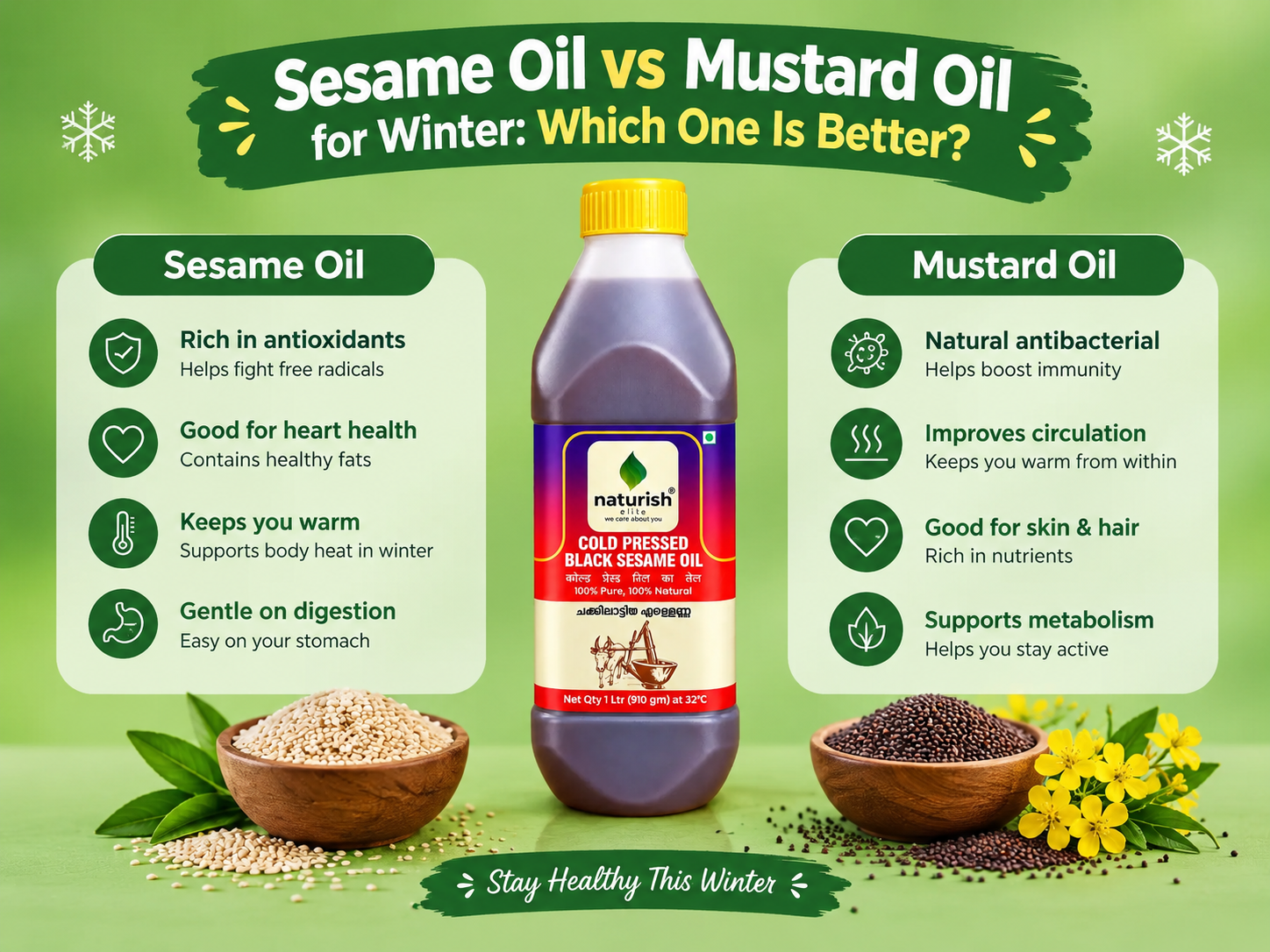
Winter often brings dry skin, roughness and a greater need for nourishing body care. Oil massage is a traditional part of winter routines, and two commonly used options are sesame oil and mustard oil. Both oils have their own texture, aroma and skin feel, so the right choice depends on personal comfort and how you plan to use the oil.
When comparing Sesame Oil vs Mustard Oil for Winter sesame oil is generally known for its smooth texture and mild feel, while mustard oil is traditionally preferred by people who enjoy a stronger warming sensation. Understanding these differences can help you choose an oil that fits your winter routine.
Sesame Oil vs Mustard Oil: What Is the Difference?
Sesame oil is made from sesame seeds and has a smooth consistency that spreads easily over the skin. It is traditionally used for cooking, massage and personal care. Pure sesame oil can be especially useful for people who prefer a gentle and nourishing oil during colder months.
Mustard oil is extracted from mustard seeds and has a stronger aroma and more noticeable warming sensation. This is one reason it has traditionally been used for winter body massage.
The main difference is not simply about which oil feels warmer. Texture, fragrance, skin sensitivity and personal preference also matter when selecting an oil for regular use.
Why Use Sesame Oil During Winter?
Cold weather can make the skin feel dry and tight. Lower humidity and frequent exposure to cold air may contribute to rough-feeling skin. Applying oil to the skin can help create a protective layer that reduces moisture loss.
Sesame oil has a smooth texture that makes it easy to massage over the body. It can be applied to areas such as the arms, legs, shoulders and back where the skin feels particularly dry.
For people who do not prefer strong-smelling oils, sesame oil can provide a milder massage experience. A small quantity can be applied after bathing while the skin is still slightly damp.
What Makes Mustard Oil Popular in Winter?
Mustard oil has a stronger aroma and produces a more noticeable warming sensation when massaged onto the skin. Because of this traditional warming feel, many people associate mustard oil with winter body massage.
However, the feeling of warmth does not necessarily mean that the oil increases body temperature. It is mainly a sensory effect associated with the oil and massage.
Mustard oil may suit people who enjoy a stronger traditional massage experience. Those who prefer a smoother texture and milder aroma may find sesame oil more comfortable.
Sesame Seed Oil for Winter Body Massage
Sesame seed oil can be included in a simple winter body-care routine. Its smooth consistency allows the hands to move comfortably across the skin during massage.
For a relaxing routine, take a small amount of oil and gently massage it onto the body using circular movements. The oil can be slightly warmed before application, but it should always be comfortably warm rather than hot.
People with sensitive skin should test a small amount first. If irritation or discomfort occurs, discontinue use.
Sesame Oil vs Mustard Oil for Dry Skin
When the main concern is dry winter skin, sesame oil may be preferred because of its smooth and nourishing feel. Oils do not add water to the skin, but they can help reduce moisture loss by forming a layer over the skin.
Mustard oil can also be used for massage, but its stronger sensation may not be comfortable for everyone. Skin type and individual tolerance should therefore be considered before making it part of a regular routine.
The best option is ultimately the one that feels comfortable and suits your personal winter-care needs.
Can Sesame Oil Be Used for Cooking in Winter?
Sesame oil is also used as a cooking oil, depending on the product and its intended use. It has a naturally nutty flavour that can complement different dishes.
Some sesame oils are specifically produced for both culinary and topical use, while others may be intended only for one purpose. Always check the product instructions before using an oil for cooking or body care.
Sesame oil also contains unsaturated fats, although its exact nutritional composition depends on the seeds and processing method. Research has examined the potential health benefits of sesame oil, including its possible role in heart-health-related dietary patterns.
How to Choose Between Sesame Oil and Mustard Oil?
The choice becomes easier when you consider what you want from your winter oil. If you prefer a smooth texture, mild aroma and comfortable massage experience, sesame oil may fit well into your routine.
If you enjoy a stronger aroma and a more noticeable warming sensation, mustard oil may be more suitable for your preference.
Rather than focusing only on which oil feels warmer, consider your skin type, fragrance preference, intended use and how your skin responds after application.
Final Thoughts
Both sesame oil and mustard oil have a long history of traditional use during winter. Mustard oil generally provides a stronger warming sensation, while sesame oil offers a smoother and milder experience for body massage.
For people looking for a simple oil-based winter-care routine, Naturish Elite offers sesame oil options that can be considered according to individual preferences and intended use. The important factor is to choose an oil that feels comfortable and suits your regular routine.
Naturish Elite sesame oil can be a practical option for those who prefer a smooth and nourishing oil during colder months.
FAQs
Is sesame oil better than mustard oil for winter?
There is no single option that is better for everyone. Sesame oil may suit people who prefer a smooth, mild and nourishing massage, while mustard oil may be preferred by those who enjoy a stronger warming sensation.
Can sesame oil be used for winter body massage?
Yes, sesame oil can be used for winter body massage. Its smooth texture makes it easy to spread over the skin, and it can be applied after bathing to help reduce the feeling of dryness.
Is mustard oil warmer than sesame oil?
Mustard oil generally creates a stronger warming sensation on the skin than sesame oil. This is mainly a sensory effect and should not be confused with an increase in body temperature.
Is sesame oil good for dry winter skin?
Sesame oil can be useful for dry-feeling skin because it forms an oily layer over the surface that can help reduce moisture loss. Individual skin sensitivity should still be considered.
Can sesame seed oil be used every day in winter?
Sesame seed oil can be included in a regular winter body-care routine if your skin tolerates it well. Using a small amount and checking for any irritation is a sensible approach.
Comments
Log in or sign up to join the conversation.