

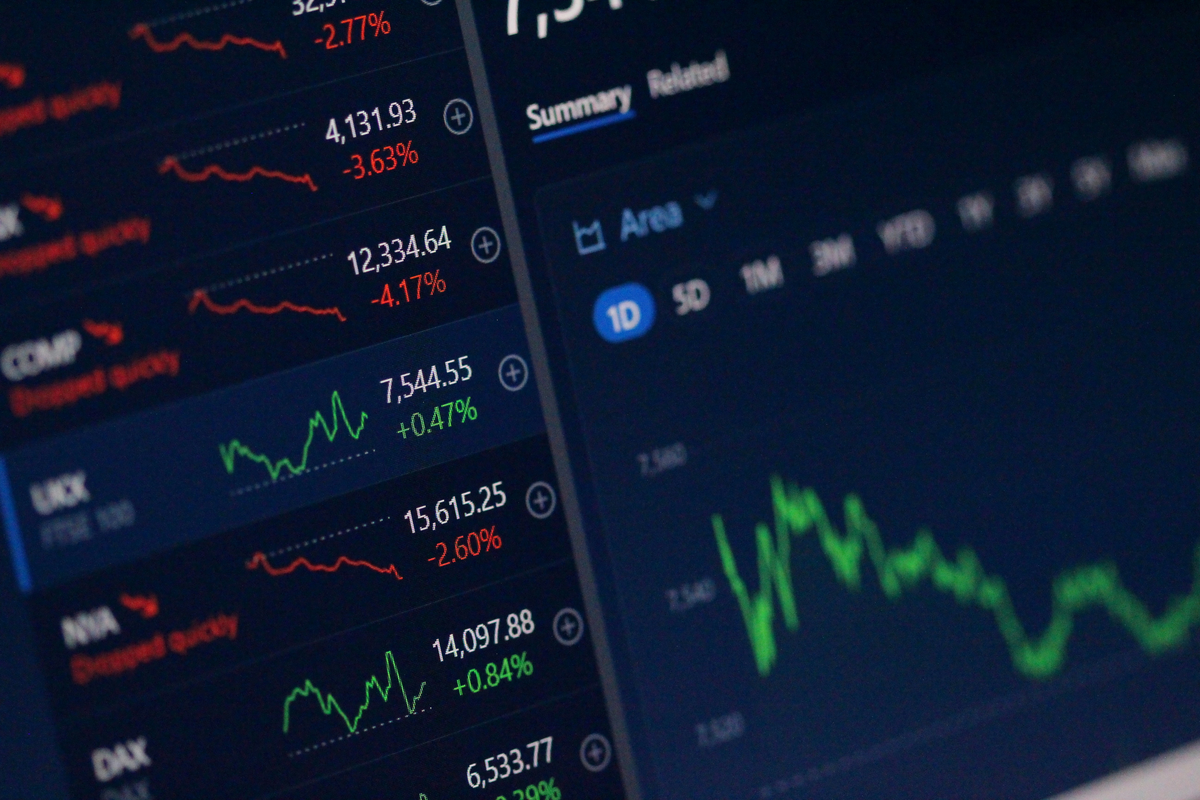
Asian share markets are lower today as Japanese and Hong Kong shares fall. The Nikkei 225 is off 0.4% while the Hang Seng is down 0.5%. The Shanghai Composite is trading down by 0.6%. US stocks found their footing on Tuesday, helped by gains in the energy, technology and consumer discretionary sectors after a sharp sell-off a day earlier on spiraling global trade tensions.
Back home, India share markets opened the day on a flat note. The BSE Sensex is trading up by 18 points while the NSE Nifty is trading down by 16 points. The BSE Mid Cap index opened down by 0.1% while BSE Small Cap index flat
Sectoral indices have opened the day on a mixed note with energy stocks and PSU stocks witnessing maximum selling pressure. While healthcare stocks & IT stocks opened the day in green. The rupee is trading at 68.17 to the US$.
In the news from the bank sector. As per an article in a leading financial daily, IndusInd Bank Ltd has signed a share purchase agreement with Infrastructure Leasing and Financial Services Limited, (IL&FS) and other minority shareholders to acquire 100% of IL&FS Securities Services Limited, (ISSL), a subsidiary of IL&FS.
The bank has received Reserve Bank of India's approval for the proposed transaction.
ISSL, incorporated in July 2006, is a capital markets intermediary for professional clearing, depository and custodial services.
It services both retail and institutional clients, including over 1,000 brokers, foreign portfolio investors and foreign institutional investors.
IndusInd Bank share price opened the day up by 0.3%. Reportedly, the proposed transaction is subject to regulatory approvals. Further, the acquisition aligns well with the bank's strategy of focusing on differentiated businesses with strong domain leadership.
Meanwhile, according to EY India IPO Readiness Survey Report, globally, Indian exchanges recorded the highest IPO activity as the country saw 90 IPO launches that raised US$3.9 billion in the first half of this year.
Indian exchanges recorded the highest IPO activity in terms of a number of deals accounting for 16% of the total issues in the first half of this year (January-June).
Data includes effective IPOs as of 31 May 2018 and expected IPOs as of 30 June 2018.
In terms of proceeds, Indian exchanges accounted for 5% of global proceeds in the January-June period.
As per the report, the January-June period saw 90 IPOs raising US$3.9 billion, registering a 27% jump in a number of deals and 28% rise in value terms over the same period last year.
Out of 90 deals that listed in the first half of this year, 15 listed both on NSE and BSE, accounted for 93% of the total proceeds.
National SME recorded 42 listing accounting, contributing a mere 5% to the country's proceeds in the January-June period, while Bombay SME recorded 37% of all deals listed, contributing 2% to the total proceeds.
Meanwhile, the amount raised by SME IPOs in 2017 stood at 17.85 billion, more than three times the amount raised in 2016. The number of SME IPOs launched also doubled from 66 to 132.
SME IPO Boom in 2017

With big-ticket IPOs in the limelight in 2017, SMEs have also joined in to get a share of the pie. If past history is anything to go by, the IPO wave has generally been followed by a market correction. We've seen stocks debut just before the 2000-01 dotcom bubble. Then the IPO euphoria in 2008 was followed by the sub-prime crisis.
As per the report, the factors that are encouraging a healthy pipeline across sectors include steady investor confidence and the rise in the domestic capital in the equity markets.
Besides, brighter earnings outlook, stability in equity markets and macroeconomic conditions and a high investor appetite also fueled IPO activity.
However, issuer not having the right management experience and overpricing of stock in the IPO are the biggest concerns for respondents.
For the first half of this year, the top five sectors in terms of deals were - industrials (27), consumer staples (18), materials (14), consumer products (10) and technology (5).
As regards to proceeds, top sectors were - industrials (US$1.5 billion), financial sector (US$1.5 billion), consumer staples (US$279 million), media and entertainment (US$ 160 million) and healthcare (US$158 million).
Comments
Log in or sign up to join the conversation.