

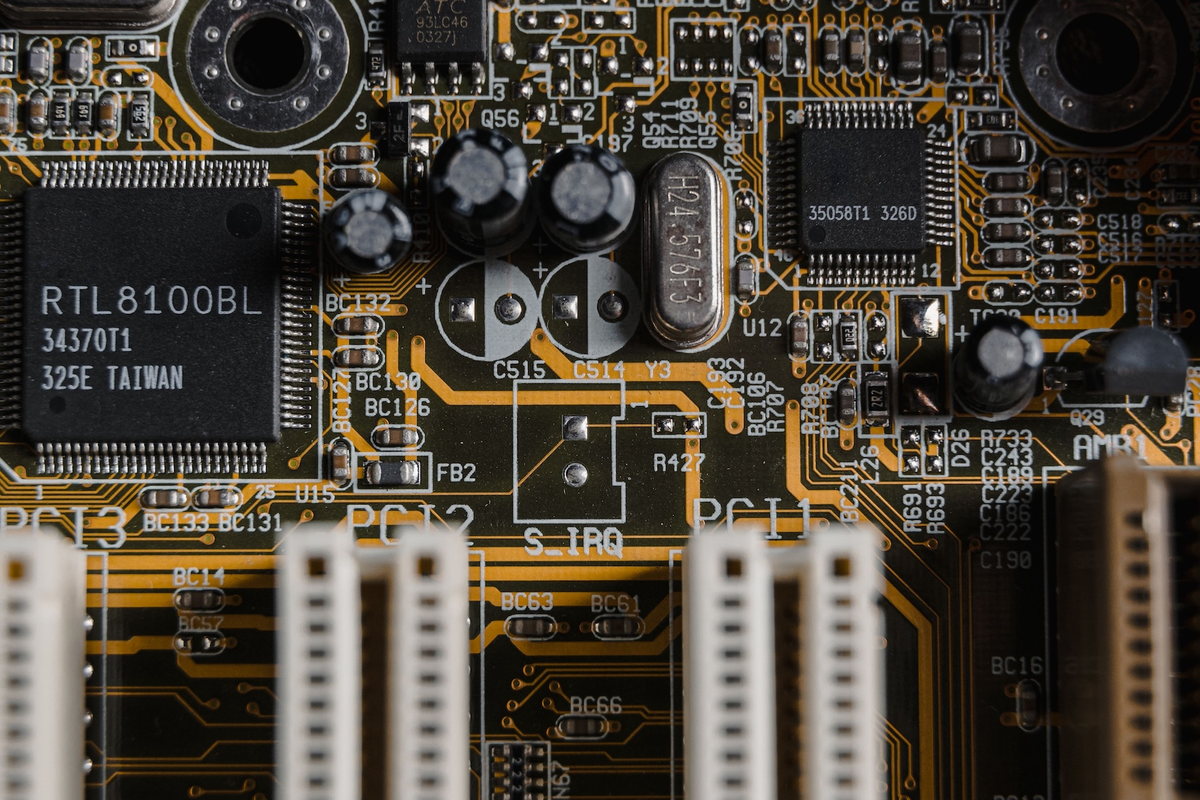
The fourth quarter of 2026 is shaping up to be one of the AI boom’s most challenging periods as macroeconomic headwinds grow and competition from China intensifies. But semiconductor stocks still remain a smart play for investors looking for value.
Global artificial intelligence stocks have taken a battering since the beginning of October, owing in no small part to the uncertain interest rate environment in the United States and the significantly high capex of Wall Street hyperscalers.
By mid-October, the Global X Artificial Intelligence & Technology (AIQ) ETF had sunk 5.56% compared to the beginning of the month, before staging a small resurgence.
Semiconductor stocks took even more of a beating, with the VanEck Semiconductor (SMH) ETF tumbling 12.63% over the same period.
There are many different contributing factors to the industry's struggles, and a distinct lack of clarity surrounding the Federal Reserve’s outlook for the economy is a major source of bearish sentiment among investors.
While the recent news that the US economy added just 29,000 jobs in September provided more optimism for a Fed rate hold in its upcoming October meeting, there remains an expectation that one more rate hike will be on the way before the end of the year.
One of the biggest contributing factors is the state of inflation throughout the United States, which has increased to 3.7% in September, up from 3.4% in the 12 months to August.
For highly speculative stocks in the artificial intelligence sector, the uncertain economic outlook has had a major impact that has spread all the way to semiconductor firms. But for those focused on long-term strategies, recent losses may present themselves as a strong opportunity to buy high-potential equities at a discount rate.
Semiconductor Resilience
Although earnings season for the third quarter is still taking shape, early indications suggest that semiconductor demand remains as strong as ever.
Reporting in mid-October, Swiss semiconductor firm VAT Group AG (SWX: VACN) recorded a record order intake of CHF 697 million ($843 million), representing growth of 39% on the previous quarter and 193% year-over-year.
The firm also expects order momentum to remain strong into 2027 as investments into additional manufacturing capacities support more industry growth.
The story is the same for ASML (AMS: ASML), which is reportedly dealing with an order backlog that extends into 2029 and 2030, with CEO Christophe Fouquet suggesting that the company would struggle to meet demand despite plans to raise capacity by 30% in 2027 and a further 30% in 2028.
For Wall Street’s struggling semiconductor stocks, rising global demand is likely to ease investor fears despite short-term declines.
Competition as a Headwind
While there’s certainly a bright future in store for AI, it’s important that emerging competition from China is considered as a prospective headwind over the months and years ahead.
China was a contributing factor in recent declines on Wall Street, which saw the likes of Micron (MU) slip 3.9% as the news filtered through that ChangXin Memory Technologies had made progress on a new chip architecture designed to increase memory density by packing more data into its hardware.
The Chinese firm’s reported progress also saw the Nasdaq Composite slip 0.44%, with investors factoring in the implications on US stocks.
Although China has recently sought to introduce additional controls over AI-related exports, the nation has ramped up its credentials as a strong location for foreign direct investment (FDI), and the arrival of 23 Pilot Free Trade Zones captured $28.25 billion in actual FDI in 2024, representing 24.3% of all FDI into China.
Given that more mature chips and AI models are more freely available to global businesses, it could strengthen China’s position as a competitively priced market for adopters.
Are Semiconductors Oversold?
The coming days will provide stronger insight into the long-term prospects of semiconductor stocks, but early signs of a market recovery in both AIQ and SMH suggest that investors are already beginning to step back into their oversold AI and hardware stocks.
We’ve already seen a sustained period of sideways movements for semiconductor stocks despite clear indications of a sector that’s handling significant demand backlogs.
Throughout the remainder of Q4 2026, all eyes will be on how SMH deals with its recent two-week downward trend, which has seen the fund fall to new three-month lows.
Following its double-digit losses since the beginning of October, a recovery to $633.90 may seem ambitious for the quarter, given the headwinds that are continuing to pile on the pressure. But a return to resistance at $600 can be a key signal of intent that provides a platform to build on.
The high potential of the artificial intelligence boom suggests that the long-term outlook for semiconductor stocks remains bright. The question is more a case of when investors will feel emboldened to buy back into a technology with plenty to offer.



Comments
Log in or sign up to join the conversation.