

Industry Key Highlights
The Global Semiconductor Chip Market continues to stand as one of the most influential and strategically important industries in the modern world. As the foundational technology behind virtually every electronic device, semiconductor chips are driving innovation across consumer electronics, telecommunications, automotive, industrial automation, healthcare, defense, artificial intelligence, cloud computing, and countless other sectors.
According to TechSci Research report, “Global Semiconductor Chip Market - Global Industry Size, Share, Trends, Opportunity, and Forecast 2021-2031”, The Global Semiconductor Chip Market will grow from USD 718.84 Billion in 2025 to USD 1183.83 Billion by 2031 at a 8.67% CAGR.
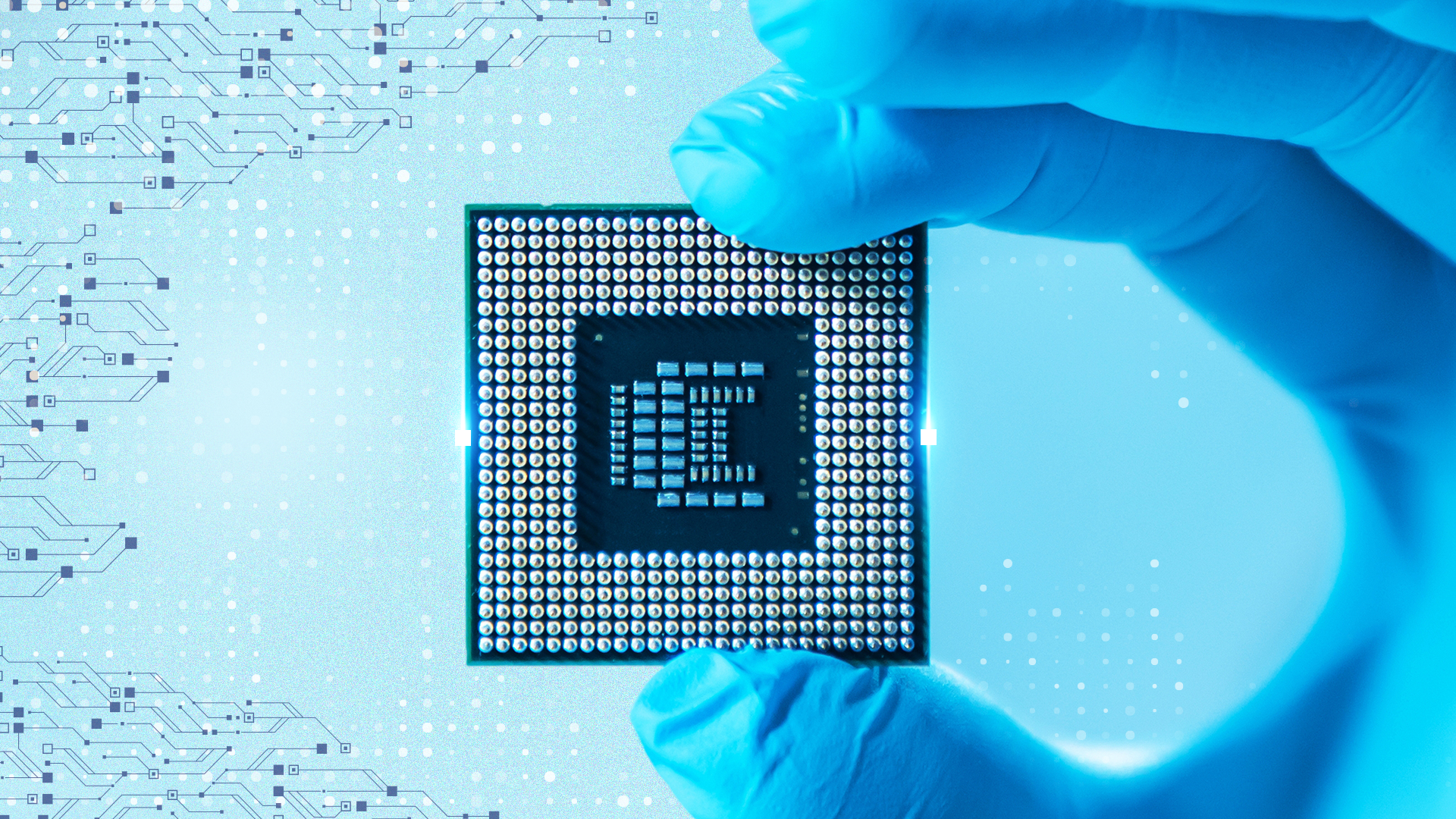
From enabling high-speed computing and data processing to supporting autonomous vehicles and smart cities, semiconductor chips are transforming how people live, work, communicate, and interact with technology. As organizations across industries accelerate their digital transformation initiatives, demand for advanced semiconductor solutions continues to surge.
The emergence of artificial intelligence, machine learning, edge computing, Internet of Things (IoT), 5G networks, electric vehicles (EVs), and cloud infrastructure has significantly expanded the scope of semiconductor applications. These technologies require increasingly sophisticated chips capable of delivering higher performance, lower power consumption, and enhanced computational efficiency.
The semiconductor industry remains at the center of global technological advancement, creating opportunities for innovation while serving as a critical pillar of economic growth worldwide.
Request For Sample Copy of Report For More Detailed Market insight: https://www.techsciresearch.com/sample-report.aspx?cid=20117#requestform
Key Market Drivers
Rapid Expansion of Artificial Intelligence and Machine Learning
Artificial Intelligence (AI) and Machine Learning (ML) have emerged as transformative technologies across industries. These advanced applications require enormous computational capabilities that can only be delivered through highly specialized semiconductor chips.
AI workloads involve processing massive datasets, performing complex calculations, and executing real-time decision-making algorithms. Traditional processors often struggle to meet these demands efficiently.
As a result, semiconductor manufacturers are developing dedicated AI accelerators, Graphics Processing Units (GPUs), Tensor Processing Units (TPUs), and Application-Specific Integrated Circuits (ASICs).
The increasing adoption of AI in healthcare, finance, manufacturing, retail, transportation, and cybersecurity is significantly driving semiconductor demand globally.
Proliferation of Internet of Things (IoT)
The rapid expansion of IoT ecosystems represents another major growth driver.
Billions of connected devices are being deployed across homes, factories, healthcare facilities, transportation networks, and urban infrastructure. These devices rely on semiconductor chips to process data, communicate with networks, and execute intelligent functions.
Smart thermostats, wearable fitness trackers, industrial sensors, connected vehicles, smart meters, and agricultural monitoring systems all depend on advanced semiconductor technologies.
As IoT adoption accelerates worldwide, demand for low-power, highly efficient, and connectivity-focused semiconductor chips continues to increase.
Global Rollout of 5G Networks
The deployment of 5G infrastructure is creating substantial opportunities for semiconductor manufacturers.
5G technology offers significantly higher data speeds, ultra-low latency, and enhanced connectivity capabilities compared to previous generations of wireless communication.
Supporting these capabilities requires sophisticated semiconductor solutions integrated into smartphones, base stations, network equipment, and connected devices.
The widespread adoption of 5G is expected to drive demand for radio frequency chips, processors, power management integrated circuits, and advanced networking semiconductors throughout the forecast period.
Growth of Cloud Computing and Data Centers
The expansion of cloud services and hyperscale data centers has significantly increased demand for high-performance semiconductor chips.
Organizations worldwide are migrating workloads to cloud environments, generating enormous requirements for processing power, storage, and networking capabilities.
Semiconductor chips are essential for powering servers, storage systems, networking infrastructure, and AI-driven cloud applications.
As digital transformation initiatives continue accelerating globally, cloud infrastructure investments will remain a critical growth driver for the semiconductor market.
Rising Demand for Consumer Electronics
Consumer electronics continue to be a dominant force in semiconductor demand.
The growing popularity of smartphones, tablets, laptops, gaming consoles, smart TVs, wearable devices, and smart home products has created sustained demand for advanced semiconductor solutions.
Consumers increasingly expect devices that are faster, more powerful, energy-efficient, and feature-rich. Semiconductor manufacturers continuously innovate to meet these expectations through enhanced processing capabilities and miniaturization technologies.
The ongoing evolution of consumer electronics will continue supporting market growth in the years ahead.
Emerging Trends in the Semiconductor Chip Market
Advanced Node Technology Development
One of the most significant trends shaping the semiconductor industry is the advancement of smaller process nodes.
Manufacturers are increasingly investing in 7nm, 5nm, 3nm, and next-generation fabrication technologies to improve performance and energy efficiency.
Smaller node sizes allow more transistors to be packed onto a chip, resulting in enhanced computational capabilities while reducing power consumption.
This trend is particularly important for AI applications, mobile devices, and high-performance computing systems.
Rise of Chiplet Architecture
Traditional monolithic chip designs are increasingly being complemented by chiplet-based architectures.
Chiplets enable manufacturers to combine multiple smaller chips into a single package, improving performance, flexibility, and production efficiency.
This approach reduces manufacturing complexity while allowing greater customization for specific applications.
Many leading semiconductor companies are investing heavily in chiplet technology as a strategy for overcoming scaling challenges and accelerating innovation.
Expansion of Edge Computing
Edge computing is rapidly emerging as a key technology trend.
Rather than sending all data to centralized cloud servers, edge computing processes information closer to where it is generated.
This approach reduces latency, improves efficiency, and enhances real-time decision-making.
The growth of edge computing is driving demand for specialized semiconductor chips capable of delivering powerful processing capabilities in compact and energy-efficient form factors.
Increased Focus on Semiconductor Sovereignty
Governments worldwide are prioritizing semiconductor self-sufficiency and supply chain resilience.
Recent geopolitical developments and supply chain disruptions have highlighted the strategic importance of semiconductor manufacturing.
Countries are investing heavily in domestic semiconductor production capabilities to reduce dependence on foreign suppliers.
This trend is expected to stimulate significant investments in fabrication facilities, research centers, and workforce development initiatives.
Sustainability and Green Semiconductor Manufacturing
Environmental sustainability is becoming an increasingly important priority for the semiconductor industry.
Manufacturers are implementing energy-efficient production processes, reducing water consumption, minimizing waste generation, and developing environmentally friendly materials.
Green manufacturing initiatives align with broader corporate sustainability goals while addressing growing regulatory and consumer expectations.
The industry's commitment to sustainable practices is expected to become a key differentiator in the coming years.
Regional Analysis
Asia-Pacific
Asia-Pacific dominates the global semiconductor chip market due to its extensive manufacturing ecosystem, strong electronics industry, and significant investments in semiconductor production.
Countries such as China, Taiwan, South Korea, Japan, and India play critical roles in the global semiconductor value chain.
The region is expected to maintain its leadership position throughout the forecast period.
North America
North America remains a major hub for semiconductor innovation, research, and design.
The presence of leading technology companies and strong demand for AI, cloud computing, and advanced electronics supports regional growth.
Europe
Europe continues investing in semiconductor capabilities to strengthen technological independence and support industrial modernization initiatives.
The automotive sector remains a major contributor to semiconductor demand in the region.
South America
Increasing digitalization and expanding consumer electronics adoption are driving semiconductor demand across South America.
Middle East & Africa
The region is witnessing growing investments in digital infrastructure, smart city projects, and advanced technologies, creating new opportunities for semiconductor suppliers.
Key Market Players
Intel Corporation
Samsung Electronics Co., Ltd.
Taiwan Semiconductor Manufacturing Company Limited (TSMC)
NVIDIA Corporation
QUALCOMM Incorporated
Advanced Micro Devices, Inc. (AMD)
Broadcom Inc.
Texas Instruments Incorporated
Customers can also request for 10% free customization on this report.
Challenges Facing the Market
Despite strong growth prospects, several challenges persist:
Supply chain disruptions and geopolitical uncertainties.
Rising fabrication costs associated with advanced node technologies.
Talent shortages in semiconductor engineering and manufacturing.
Increasing complexity of chip design.
Environmental and sustainability concerns.
Intensifying competition among global manufacturers.
Addressing these challenges will be essential for sustaining long-term market growth.
10 Benefits of the Research Report
1. Comprehensive Market Analysis
Provides detailed insights into market size, growth patterns, and future opportunities.
2. Accurate Forecasting
Offers reliable market projections to support strategic planning.
3. Competitive Intelligence
Analyzes major players, strategies, and market positioning.
4. Technology Trend Assessment
Identifies emerging innovations shaping the semiconductor industry.
5. Component-Level Insights
Examines performance and opportunities across key product categories.
6. Regional Market Evaluation
Highlights growth prospects and investment opportunities across regions.
7. Application-Based Analysis
Provides detailed understanding of end-user industries.
8. Risk Identification
Evaluates challenges and potential market constraints.
9. Investment Opportunity Assessment
Helps stakeholders identify lucrative market segments.
10. Strategic Decision-Making Support
Equips businesses with actionable intelligence for informed decisions.
Contact US:
Techsci Research LLC
420 Lexington Avenue, Suite 300,
New York, United States- 10170
Tel: +13322586602
Email: [email protected]
Web: https://www.techsciresearch.com/
Comments
Log in or sign up to join the conversation.