

Segmentation, Targeting, and Positioning in B2B Marketing
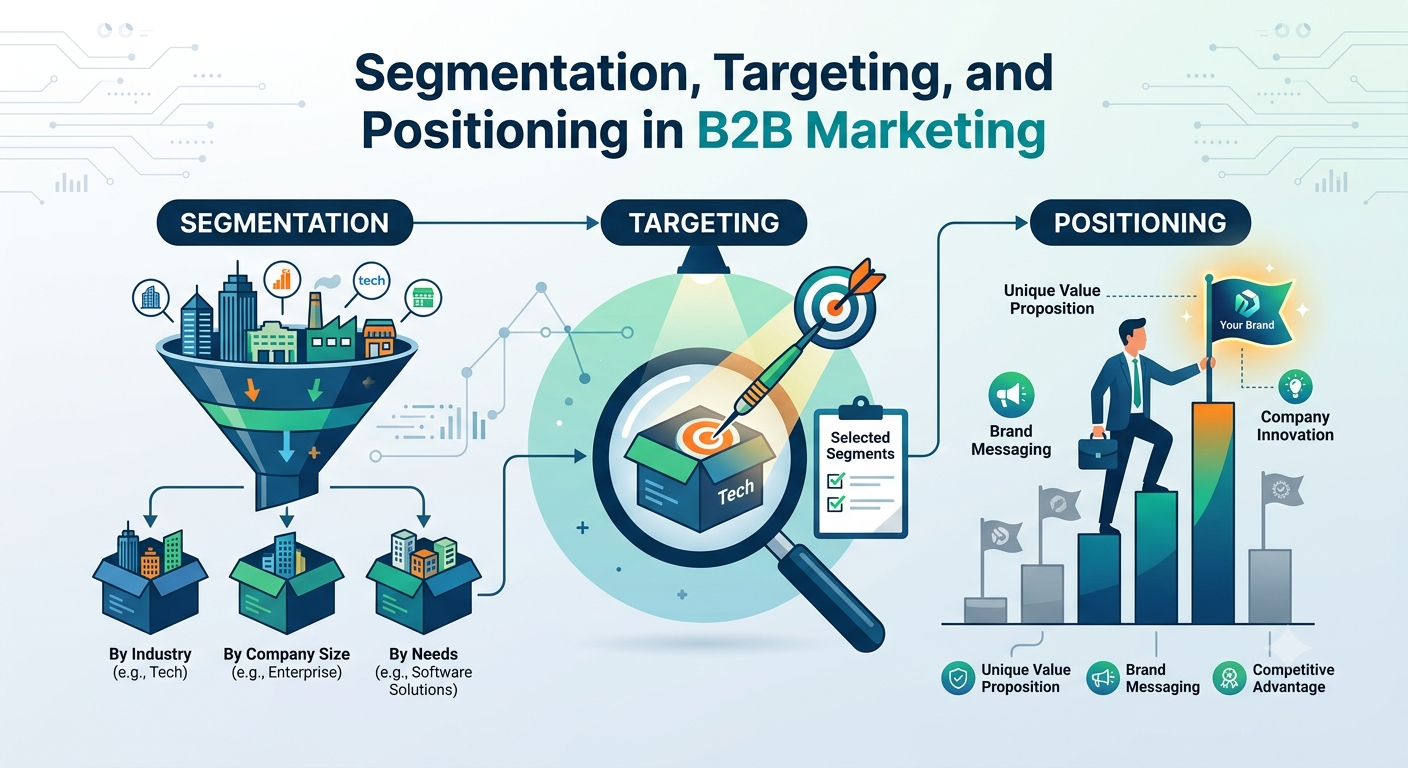
Successful b2b account based marketing begins with understanding who your ideal customers are and how your business can deliver value that addresses their needs. Segmentation, Targeting, and Positioning (STP) is a strategic framework that helps organizations identify the right audience, focus marketing efforts, and communicate a clear value proposition.
By applying the STP approach, businesses can improve campaign efficiency, generate higher-quality leads, and create stronger customer relationships.
Segment Your Market
Market segmentation involves dividing a broad audience into smaller groups based on shared characteristics. In B2B marketing, organizations commonly segment audiences by industry, company size, location, revenue, technology adoption, or business needs.
Effective segmentation enables marketers to better understand customer challenges and develop content that addresses specific business objectives.
Identify the Right Target Audience
After creating market segments, businesses must identify the groups that offer the greatest growth potential. Targeting focuses marketing resources on accounts that closely match the organization's Ideal Customer Profile (ICP).
By prioritizing high-value accounts, businesses can improve campaign performance, reduce wasted marketing spend, and generate more qualified opportunities.
Build a Strong Market Position
Positioning defines how a business wants its products or services to be perceived by its target audience. A clear positioning strategy communicates unique value, competitive advantages, and the specific problems a solution helps solve.
Consistent positioning across websites, advertising, content, email campaigns, and sales conversations strengthens brand recognition and builds trust with decision-makers.
Support Personalization with Data
First-party data and customer insights play an important role in improving segmentation and targeting. Information collected from website activity, content engagement, CRM systems, and marketing campaigns helps businesses understand audience behavior and personalize future interactions.
Data-driven personalization increases relevance and improves engagement throughout the buyer journey.
Measure and Refine Your Strategy
Customer needs and market conditions continue to evolve, making regular evaluation essential. Businesses should monitor campaign performance, audience engagement, conversion rates, and pipeline contribution to identify opportunities for improvement.
Continuous optimization ensures segmentation, targeting, and positioning strategies remain aligned with changing buyer expectations.
Creating More Effective B2B Marketing
Segmentation, Targeting, and Positioning provide the foundation for successful B2B marketing. By understanding customer groups, focusing on high-value audiences, and communicating a clear value proposition, organizations can improve marketing efficiency and generate stronger business outcomes.
A well-executed STP strategy helps businesses build meaningful customer relationships, improve demand generation, and achieve sustainable long-term growth.
Comments
Log in or sign up to join the conversation.