
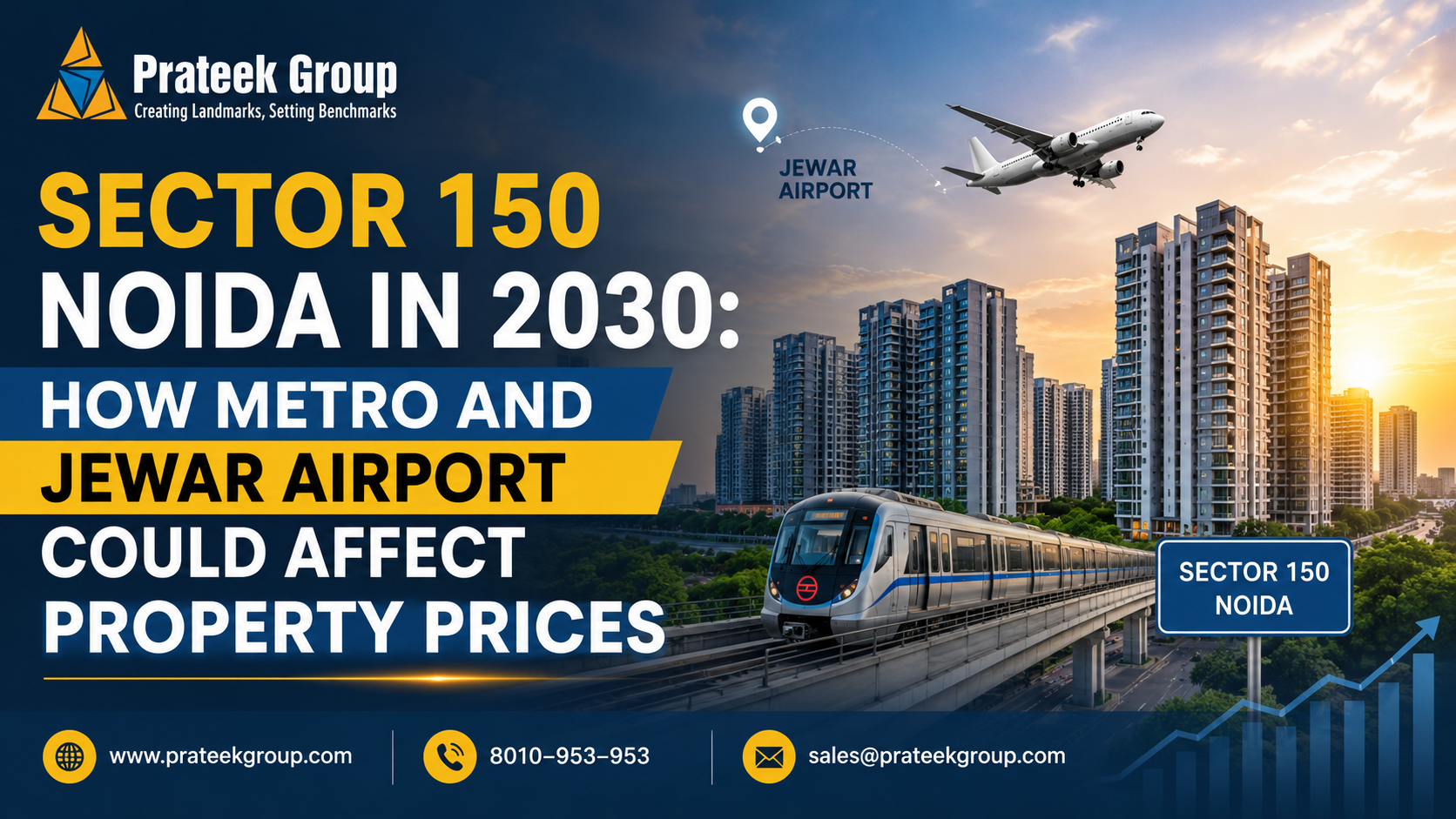
A location can price an approval years before residents can use the asset. That gap matters in Sector 150 because the area’s investment case depends on several public and private systems reaching everyday use, including sports facilities, airport access, metro connections, utilities, road links, and project handovers. When implementation becomes an afterthought, buyers may pay for future convenience while carrying today’s delay, documentation, and maintenance risk.
The warning is already documented. The Comptroller and Auditor General found that sports activity had not started on 22 of 24 subdivided plots in one Sector 150 Sports City allotment, while no sports work had begun on 3 approved plots in another allotment. The audit also recorded 45,959 proposed homes across 4 Sports City plots, but completion certificates had been issued for only 1,875 homes by March 2021. The CAG Sports City audit shows why buyers must track execution rather than treat an approval as delivery.
Preparation starts with the exact delivery chain
The first task is to separate the sector story from the individual property file. A buyer studying Sector 150 Noida should map each promised benefit to the body responsible for delivering it. The developer controls the apartment, common areas, and some internal facilities. Noida Authority controls planning permissions and several civic handoffs, while transport agencies and airport operators control projects outside the housing site.
This division makes several problems predictable. Registry restrictions, unpaid dues, unapproved layout changes, incomplete approach roads, or unclear utility handovers can be checked before payment. Local judgment is still needed for matters such as peak-hour traffic, construction dust, last-mile transport, and the actual time required to reach schools or offices. A site visit at 11 a.m. can’t answer questions that appear at 8:30 a.m. or after heavy rain.
Ownership must survive every handoff
Large urban projects fail at the seams between organisations. A master plan can be accepted while a tower still lacks a usable registry path, and a finished road can remain inconvenient when the feeder route or junction design is weak. Buyers evaluating Sector 150 Noida property need a handoff record covering approvals, dues, completion status, utility connections, maintenance responsibility, and access rights.
The Sports City revival illustrates this point. A Noida Authority public notice issued in 2026 confirmed that a revised master plan for SC-02, Sector 150 had been submitted under the Supreme Court proceedings. Submission starts a control process. Usable results still depend on review, approval, payment compliance, construction sequencing, inspections, and later maintenance. Each step needs an owner and a dated record.
Airport use depends on operations and local access
Noida International Airport moved into commercial operation on 15 June 2026 after operational-readiness trials covering systems, processes, and teams. Phase 1 is designed for 12 million passengers a year, which gives the airport real regional weight. The airport’s first commercial flight announcement also makes an important distinction: opening day begins adoption, while route growth, ground transport, staffing, and reliable onward travel determine daily value.
For a Sector 150 Noida investment, the useful measure is door-to-terminal performance rather than map distance. Buyers should test travel time on working days and check how tolls, junction queues, cab availability, and roadworks affect the trip. Airport-led housing demand will also vary by occupation and travel frequency. A family using the airport 4 times a year values the connection differently from aviation staff or a frequent business traveller.
Metro value arrives through integration
The metro case needs the same discipline. NMRC’s 2026 tender covers a 12.513 km extension from Sector 142 to Botanical Garden with 8 elevated stations, plus a separate 2.6 km section to Boraki. The NMRC general-consultant tender gave the consulting work a 4-year term and an estimated value of ₹75.56 crore. That procurement stage confirms organised implementation activity, though it doesn’t mean residents can already use the new corridor.
The operational question is how residents reach the network. Buyers comparing Luxury apartments in Sector 150 Noida should measure the full trip to the nearest practical station, including parking or feeder time and interchange effort. Adoption will depend on service frequency, station access, first-mile safety, and the reliability of the interchange. These details decide whether households change commuting behaviour after the corridor opens.
Rollout should be judged in stages
Each catalyst should pass through a visible sequence: lawful authority, funded work, testing, and routine operation. Buyers can usually verify the first 3 stages through documents and site progress, while routine operation needs observation over time. The sequence prevents an early approval from carrying the same weight as a working service. It also shows where delay sits, which helps separate a policy problem from a contractor, staffing, or maintenance problem.
User behaviour provides the final test. A park adds value when residents can enter it, feel safe there, and rely on upkeep across seasons. A metro line changes demand when households use it often enough to alter commuting choices. Local judgment is needed here because adoption depends on household schedules, feeder options, weather exposure, and the quality of nearby public space.
Controls and measurement protect the price case
Price expectations should be tied to observable milestones. Useful controls include approved plans, registry availability, completed access work, live utility connections, functioning facilities, and published transport progress. Buyers should record these checks with dates because implementation status can change between booking, loan approval, registration, and possession. A claim made during a sales meeting has little control value unless it can be matched to a document or a physical result.
Measurement must continue after possession. Resident associations need clear budgets, maintenance staffing, asset registers, complaint records, and service standards for lifts, power backup, water systems, fire equipment, and landscaped areas. Training matters because new equipment fails early when operators don’t understand inspection cycles or escalation steps. Correction should follow measured failures, with named responsibility and a deadline, rather than repeated temporary repairs.
The start condition is proof of usable delivery
Sector 150’s case rests on real assets moving from approval to operation. The airport has crossed that line, while the metro and Sports City work still require further handoffs before every expected benefit reaches residents. A purchase process should begin only after the buyer confirms the exact property’s approvals and registry path, then verifies who owns each access, utility, and maintenance obligation.
Frequently asked questions
Is Sector 150 Noida ready for end users in 2026?
Parts of the sector are occupied and usable, while readiness varies by project and route. Buyers should verify the exact tower, registry status, road access, utilities, and nearby daily services. Sector-level progress can’t replace project-level checks.
Does the airport guarantee property appreciation?
The airport strengthens regional access, but it can’t guarantee a property return. Value depends on route growth, local travel time, employment effects, housing supply, and the price paid at entry. Buyers should test the case against conservative assumptions.
How should buyers judge the Sports City revival?
Buyers should follow approved layouts, construction activity, inspection records, and the 70% sports-use requirement. A court or authority action can restart work, while physical delivery still requires funding and site execution. The safest judgment combines documents with repeated site checks.
Will the metro extension directly serve Sector 150?
The current NMRC work concerns the Sector 142 to Botanical Garden corridor and other Aqua Line extensions. Residents will still need a practical connection from Sector 150 to the network. The benefit will depend on total commute time and the quality of that connection.
What should an investor measure after purchase?
Track registry progress, possession dates, occupancy, maintenance charges, facility uptime, and real travel times. Compare each result with the assumption used when buying. A weak assumption should be corrected before it becomes the basis for another payment or purchase.
For more info Contact Us + 91- 9654–88–66–22 or send mail :- [email protected] to get a quote.
Comments
Log in or sign up to join the conversation.