

You use AI to write an email. I use AI to summarize your email and suggest a response. You use AI to summarize my response. My AI extracts the action items, your AI puts them on your calendar, and my AI negotiates with your AI about when we should meet. Eventually, two actual humans (us) appear on a Zoom call, each armed with AI-generated briefing notes about a conversation neither of us really participated in. Then somebody turns on the meeting bot. It records the meeting, transcribes it, summarizes it, identifies the decisions, generates the follow-up emails, and feeds that back to AI. “Absurd,” you say! Maybe. But at some point, you have to ask: Do I need to be in this meeting?
We are passing through an evolutionary phase from Homo sapiens to Homo vicarius (person who stands in place of another). In August, developer Niklas Gruhn coined the term “meat proxy” for the coworker who forwards questions to an AI and forwards the answers back without reading them. We are all becoming meat proxies, the physical and legal embodiment of activities increasingly conceived, mediated, summarized, negotiated, and documented by AI.
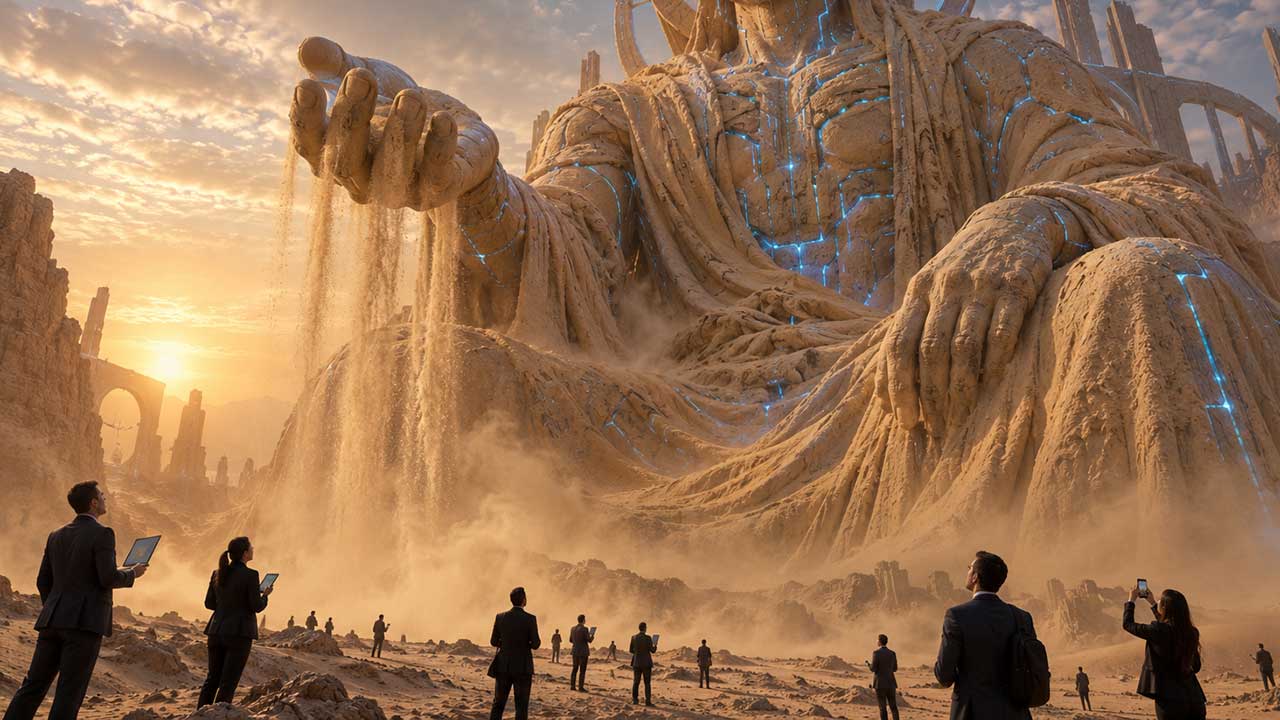
AI platforms already have a slang term too. The AI tech bros call them “sand gods.” Chips are made of sand. Add a little electricity, some code and behold… a manufactured god that knows our wishes, grants the ones we’ve given it permission to grant (and, problematically, some that we didn’t).
In May, I wrote that AI is shifting the atomic unit of business from deliverables to decisions. When AI can manufacture the proposal, the presentation, the spreadsheet, the analysis, the email, the response, the meeting summary, and the follow-up almost instantly, those artifacts lose their old evidentiary value. Producing them no longer proves that anyone worked, thought, or understood. What remains scarce is human judgment and accountability. Who decided? Who authorized? Who understood the consequences? Who owns the outcome?
Which brings me to the thesis: we are automating workflows faster than we organize around them. In a very short time from now, machines will perform a remarkable amount of the knowledge work, while a human remains legally, socially, and economically responsible for an inhuman volume and velocity of interactions.
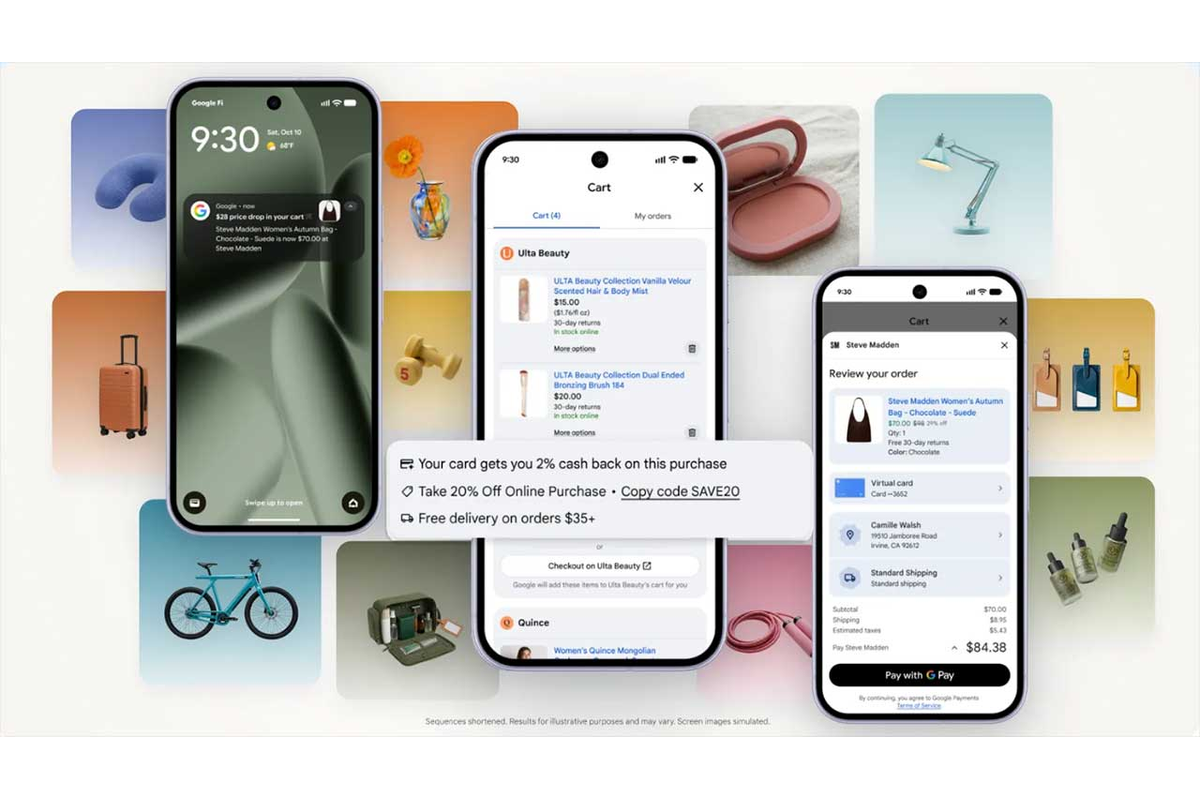
Pick a department. This is starting to happen everywhere. A brand uses AI to generate 50,000 personalized pieces of content. An advertising platform uses AI to decide which ones to distribute. A consumer’s AI agent filters the messages and summarizes three offers. Another agent negotiates price and terms. The consumer approves the purchase. We are on our way to spending billions of dollars creating machine-generated persuasion intended primarily for machine consumption.
This process will evolve into AI talking to AI about what humans might want. The journey from SEO to AEO/GEO includes the art of designing content with AI hoping that search engines and AI systems will find or ingest it, so that other AI systems will cite it and summarize it for humans. Sand gods writing scripture for other sand gods.
There is an economic question buried in the absurdity: what happens when synthetic supply meets synthetic demand? AI collapses the marginal cost of producing communication, analysis, software, images, video, advertising, and administrative work. AI simultaneously collapses the human capacity required to consume those things, because AI can summarize, filter, and respond to all of it.
So, we create vastly more information precisely because nobody needs to read it. A company produces a 70-page AI-generated report. The recipient asks AI for five bullets. The sender could have sent five bullets, except the sender’s AI needed to produce 70 pages to demonstrate diligence, while the recipient’s AI needed to compress them to preserve attention. Two computers could have exchanged 800 bytes. Instead, corporations perform an elaborate ceremonial dance of PowerPoints, PDFs, emails, meetings, transcripts, and summaries, because our institutions still require human-readable artifacts even as fewer humans actually read them.
Set aside my sophomoric humor for a second, because something profound is happening to us that is more like the proverbial frog in the pot of water on the stove. We’ve built gods out of sand. They’re not really gods. But compared to us, they have superhuman, god-like skills. It takes a special kind of narcissism to believe that you can enslave a god, and a special kind of frog to call it a warm bath.
Comments
Log in or sign up to join the conversation.