

Workplace safety is a major priority in industries where employees work at elevated heights, rooftops, maintenance areas, and industrial structures. Falls from height remain one of the most serious workplace hazards, making reliable fall protection solutions essential for protecting workers and maintaining safe operations.
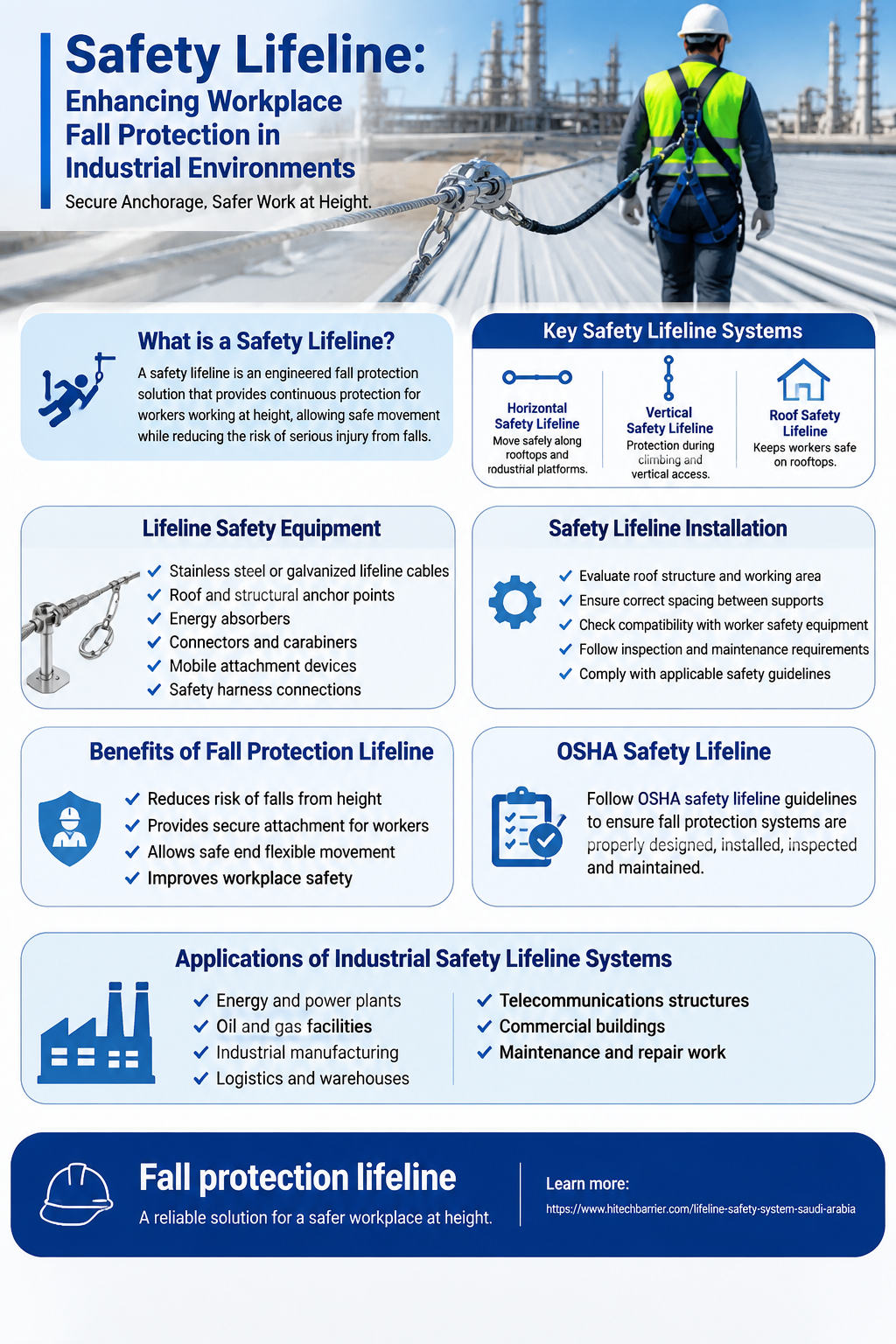
A safety lifeline is an engineered fall protection solution designed to provide continuous protection for workers who need to move safely while performing tasks at height. These systems allow workers to connect their personal protective equipment (PPE) and reduce the risk of severe injuries caused by accidental falls.
Understanding Safety Lifeline Systems
A safety lifeline system is a protective arrangement that includes lifeline cables, anchors, connectors, and compatible safety equipment. It creates a secure attachment point for workers while allowing movement along rooftops, platforms, and industrial structures.
These systems are commonly used in:
Industrial facilities
Oil and gas sites
Construction projects
Warehouses
Manufacturing plants
Commercial buildings
Maintenance areas
Rooftop work zones
A properly designed system helps workers perform their duties safely without restricting necessary movement.
Types of Safety Lifeline Systems
Different working environments require different fall protection solutions. The most common types include:
Horizontal Safety Lifeline
A horizontal safety lifeline allows workers to move along a horizontal path while remaining connected to a secure anchorage system. These systems are widely used on roofs, walkways, and industrial platforms where workers need mobility.
Vertical Safety Lifeline
A vertical safety lifeline is designed for climbing applications such as ladders, towers, and access structures. It provides continuous protection during vertical movement.
Roof Safety Lifeline
A roof safety lifeline helps protect maintenance workers operating on rooftops where fall hazards exist. These systems are commonly installed on commercial and industrial buildings to improve roof access safety.
Importance of Lifeline Fall Protection
A reliable fall protection lifeline plays an important role in reducing workplace risks. It provides workers with a secure connection point and supports safer working practices at height.
Industries that depend on height-related activities require proper planning, equipment selection, and installation to ensure maximum protection.
A professionally designed Fall protection lifeline system helps organizations improve worker safety and create safer working conditions. More information about engineered solutions can be found.
Key Components of Lifeline Safety Equipment
A complete system may include:
Stainless steel or galvanized lifeline cables
Roof and structural anchor points
Energy absorbers
Connectors and carabiners
Mobile attachment devices
Safety harness connections
The quality and compatibility of each component are important factors in ensuring effective protection.
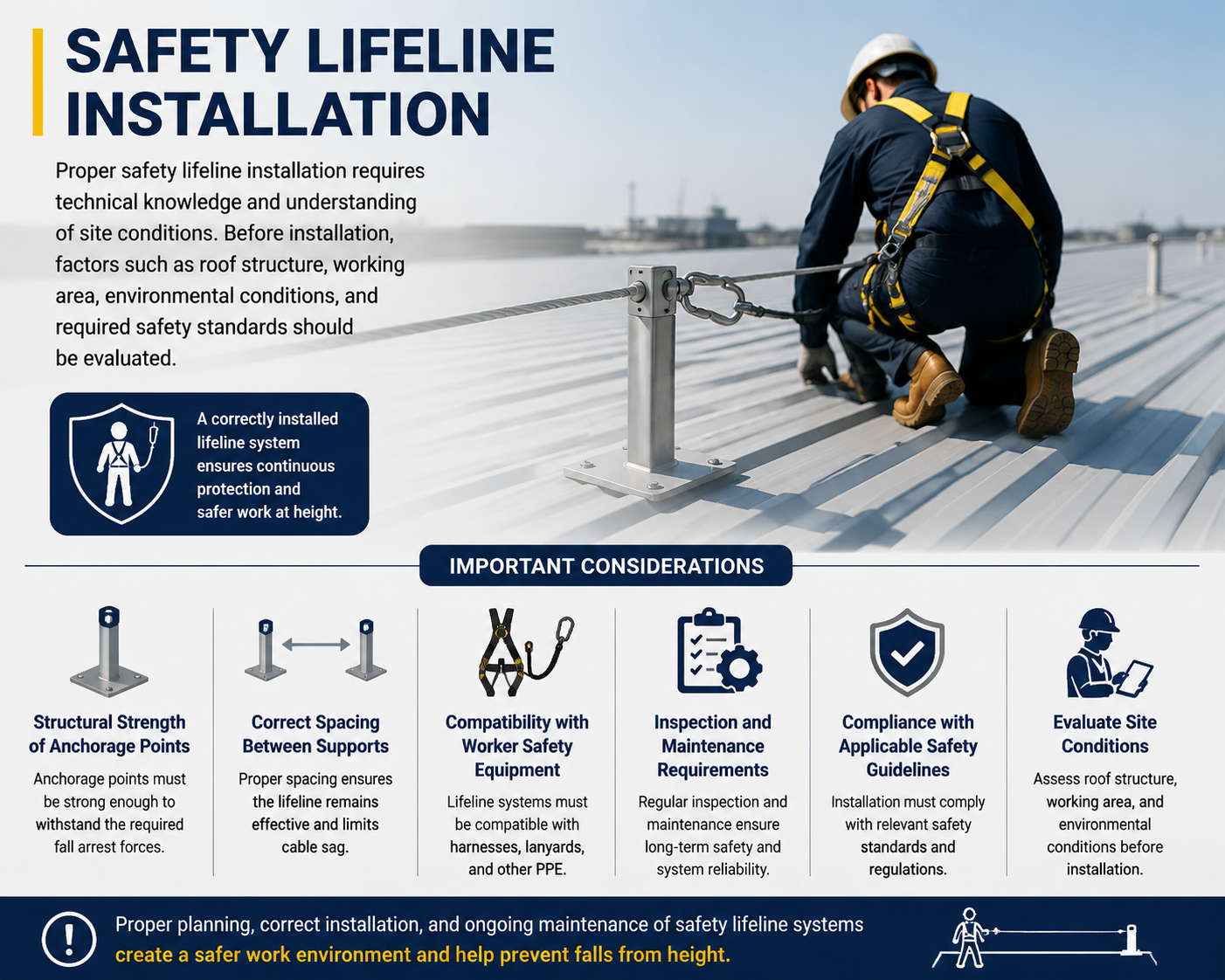
Safety Lifeline Installation Considerations
OSHA Safety Lifeline Requirements
Many industries follow recognized safety practices, including OSHA safety lifeline guidelines, to reduce workplace fall hazards. Organizations should ensure that their fall protection systems are properly designed, installed, inspected, and maintained.
Following safety standards helps companies protect employees and improve overall workplace safety performance.
Applications of Industrial Safety Lifeline Systems
An industrial safety lifeline can be used across various sectors, including:
Energy and power plants
Oil and gas facilities
Industrial manufacturing
Logistics and warehouses
Telecommunications structures
Commercial buildings
These systems provide workers with safer access during inspection, maintenance, and repair activities.
Choosing the Right Roof Lifeline System
Selecting the correct roof lifeline system depends on several factors, including building design, roof type, frequency of maintenance work, and required protection level.
A suitable solution should provide:
Reliable fall protection
Easy worker movement
Durable construction
Proper anchorage support
Long-term performance
Conclusion
A professionally designed safety lifeline system is an essential part of modern workplace safety strategies. Whether used on rooftops, industrial platforms, or vertical access points, these systems help reduce fall risks and provide workers with greater confidence while working at height.
By selecting suitable lifeline safety equipment, following proper installation practices, and maintaining compliance with safety standards, organizations can create safer and more productive working environments.
Comments
Log in or sign up to join the conversation.