

Industrial workplaces often include elevated platforms, ladders, roof access points, walkways, machinery zones, and other areas where uncontrolled access can create safety risks. A properly designed Safety Gate System helps manage these access points while supporting safer movement for employees, maintenance teams, and authorized personnel.
Safety gates are commonly installed as part of industrial access-control and fall-protection arrangements. Depending on the application, businesses may use Self Closing Safety Gates, Industrial Safety Gates, rooftop gates, guardrail gates, and restricted-access solutions to create a controlled physical barrier around potentially hazardous areas.
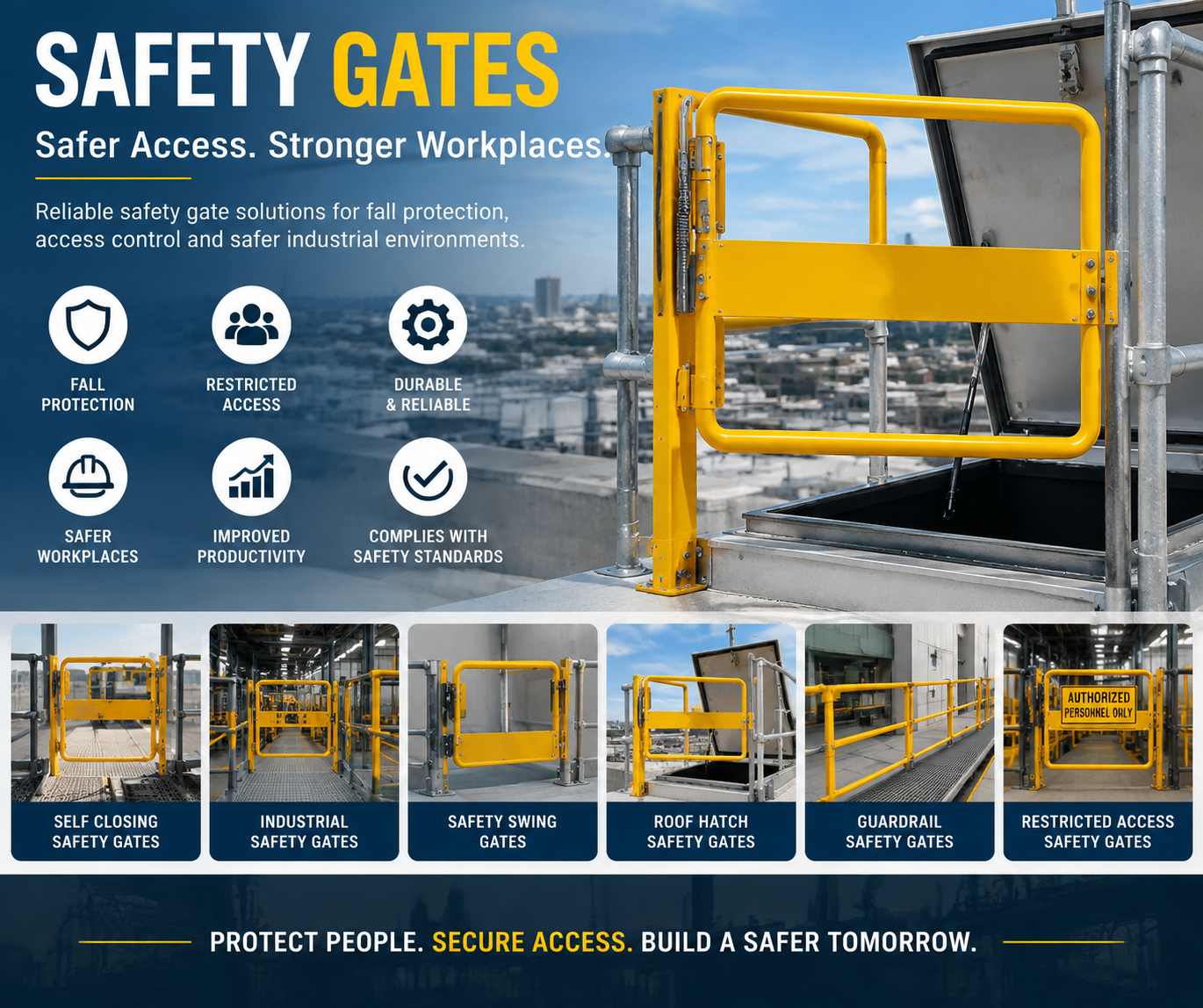
Why Safety Gates Are Important in Industrial Facilities
Openings around ladders, platforms, elevated walkways, roof hatches, and restricted zones can expose workers to unnecessary hazards. Workplace safety systems therefore need to consider not only perimeter protection but also how people enter and leave protected areas.
Workplace Safety Gates provide a practical way to control these openings. When integrated with guardrails or other protective structures, they can help maintain a continuous barrier while still allowing authorized access.
A properly selected gate can support:
Controlled access to elevated areas
Better protection around ladder openings
Safer rooftop access
Improved separation of restricted areas
More organized worker movement
Reduced dependence on manually closing access points
Integration with existing guardrail systems
Self Closing Safety Gates for Everyday Access
One of the most practical options for frequently used access points is the Self Closing Safety Gate.
Unlike a conventional gate that may remain open after someone passes through, a self-closing design is intended to return automatically toward its closed position. This is particularly useful in industrial environments where employees may frequently move between platforms, ladders, maintenance areas, or production zones.
Self Closing Safety Swing Gates can therefore help reduce situations where an access opening is unintentionally left exposed.
Typical applications include:
Access ladders
Elevated platforms
Industrial walkways
Maintenance zones
Warehouse mezzanines
Machine-access locations
Roof access areas
Industrial Safety Gates for Access Protection
Industrial Safety Gates are designed for demanding environments where durability and dependable operation are important.
Manufacturing plants, warehouses, utility facilities, logistics centers, and maintenance areas often have multiple access points requiring controlled movement. An Industrial Access Protection Gate can be incorporated into these locations to complement other protective systems.
When selecting a gate, facility managers should consider the location, opening width, operating environment, installation method, surrounding guardrail arrangement, frequency of use, and required level of access control.
Safety Gates for Fall Protection
Elevated working areas require careful attention because an unprotected access opening may increase the risk of falls.
Fall Protection Gates and Safety Gates for Fall Protection are commonly used around areas such as:
Fixed ladder openings
Raised platforms
Roof access points
Mezzanine floors
Elevated maintenance zones
Industrial equipment platforms
A safety gate does not replace the need for a complete fall-protection assessment. Instead, it can form one component of a wider safety arrangement that may include guardrails, handrails, access ladders, warning systems, and appropriate work procedures.
Rooftop and Roof Hatch Access Protection
Rooftops frequently contain HVAC equipment, solar installations, communication systems, water tanks, and other equipment that requires periodic inspection or maintenance. Workers may access these areas through fixed ladders or roof hatches.
An exposed roof hatch or ladder opening can become a potential hazard when personnel are working nearby. Installing suitable Roof Hatch Safety Gates can help provide controlled access while maintaining a protective barrier around the opening.
Rooftop Safety Gates are particularly useful where access needs to remain available for technicians but the opening should not remain unnecessarily exposed after use.
Guardrail Safety Gates
Guardrails are widely used around elevated platforms and restricted industrial areas. However, any access opening within a guardrail system should also be considered during safety planning.
Guardrail Safety Gates can provide an access point while helping preserve the protective function of the surrounding barrier.
They may be installed at:
Platform entrances
Walkways
Ladder access points
Loading areas
Maintenance platforms
Rooftop service zones
The gate configuration should be compatible with the existing guardrail layout and the operational requirements of the facility.
Restricted Access Safety Gates
Not every safety gate is installed solely for fall protection. Some locations require physical separation to discourage unauthorized entry.
Restricted Access Safety Gates may be suitable for areas containing machinery, electrical equipment, maintenance zones, storage areas, or operational spaces where only trained or authorized personnel should enter.
They provide a visible physical boundary while still allowing controlled access when necessary.
Key Considerations When Selecting a Safety Gate System
Selecting the correct Safety Gate System is important because every workplace has different access requirements, operating conditions, and safety risks. A gate designed for a rooftop hatch may not be suitable for a factory platform or restricted industrial area. Proper evaluation ensures that the safety gate provides effective protection while allowing convenient and controlled access.
Opening Dimensions
The size and configuration of the access opening are among the first factors to consider when selecting a safety gate.
The gate should match the width, height, and layout of the opening to ensure proper coverage and smooth operation. An incorrectly sized gate may create unsafe gaps, interfere with movement, or fail to provide complete protection.
For example, ladder openings, roof hatches, walkways, and maintenance platforms may require different gate dimensions depending on their design and usage requirements.
Installation Location
The installation environment plays a major role in determining the right type of safety gate.
A gate installed inside a controlled factory environment may have different requirements compared with one installed on an exposed rooftop or outdoor industrial facility.
Factors such as:
Weather exposure
Temperature changes
Dust and moisture
Chemical surroundings
Frequency of use
should be considered during selection. Rooftop applications, for example, may require durable materials and finishes suitable for outdoor conditions.
Gate Operation
The operating mechanism of a safety gate should match the frequency and purpose of access.
For locations where workers frequently pass through, Self Closing Safety Gates provide an advantage by automatically returning to the closed position after use. This helps reduce the possibility of an access point being unintentionally left open.
Self-closing operation is especially beneficial for:
Roof access points
Ladder exits
Elevated platforms
Maintenance areas
Industrial walkways
A smooth and reliable closing mechanism improves both safety and user convenience.
Existing Safety Structures
A safety gate should work together with the existing protection system rather than operate as a separate component.
The gate must be properly integrated with:
Guardrails
Handrails
Platforms
Fixed ladders
Roof hatch protection systems
Walkway barriers
A properly integrated Guardrail Safety Gate helps maintain continuous protection while still allowing authorized personnel to enter and exit the area safely.
Material and Durability
Industrial environments can expose safety equipment to challenging conditions, including heavy usage, weather exposure, corrosion risks, and accidental impacts.
Therefore, the selected safety gate should be manufactured using suitable materials and protective finishes to provide long-term performance.
Important durability factors include:
Corrosion resistance
Structural strength
Quality of moving components
Resistance to environmental conditions
Low maintenance requirements
For outdoor and rooftop applications, selecting a durable safety gate system helps maintain reliable protection over an extended service life.
Access Frequency
The frequency of use is another important factor when choosing a safety gate.
A gate installed at a regularly accessed maintenance platform requires a different design approach compared with a gate used only occasionally for restricted access.
High-traffic areas require solutions that:
Allow quick and easy movement
Maintain continuous protection
Reduce manual handling
Support daily operational activities
For restricted areas, the priority may be controlling access and preventing unauthorized entry.
Selecting the Right Safety Gate System
A professionally planned Safety Gate System considers all these factors together to provide effective access protection for different industrial applications.
By evaluating opening dimensions, installation conditions, operating requirements, existing safety structures, durability needs, and access frequency, businesses can select a solution that improves workplace safety while maintaining efficient movement for authorized personnel.
Applications Across Different Industries
Safety gates are suitable for a broad range of sectors, including:
Manufacturing facilities
Warehouses
Logistics centers
Oil and gas facilities
Utilities
Construction sites
Industrial plants
Commercial buildings
Infrastructure projects
Maintenance facilities
Each environment presents different access and operational requirements, making proper gate selection and installation important.
Benefits of Self-Closing Access Protection
A well-designed safety gate arrangement can offer several operational advantages.
Automatic Closing
The gate can return toward its protective position after someone passes through, reducing reliance on workers manually closing it.
Continuous Access Protection
Safety gates can help maintain protection around openings within guardrail or platform systems.
Convenient Worker Movement
Personnel can pass through designated access points without permanently removing sections of protective barriers.
Versatile Installation
Different gate configurations may be used for ladders, platforms, rooftops, maintenance areas, and restricted-access zones.
Improved Workplace Organization
Clearly defined access points make it easier to manage worker movement around potentially hazardous or controlled areas.
Inspection and Maintenance
Safety gates should be periodically inspected as part of routine workplace safety checks.
Inspection may include checking:
Gate movement
Self-closing performance
Hinges and moving components
Mounting points
Fasteners
Structural damage
Corrosion or surface deterioration
Alignment with surrounding guardrails
Any damage or operating issue should be assessed and corrected promptly so that the access-protection system continues to function as intended.
Conclusion
Safety gates provide a practical way to strengthen access protection across industrial facilities, elevated work areas, rooftops, ladders, platforms, and restricted zones.
From Self Closing Safety Gates and Industrial Safety Gates to Access Protection Gates, rooftop gates, and guardrail systems, the correct solution depends on the location and operational requirements of the facility.
Comments
Log in or sign up to join the conversation.