
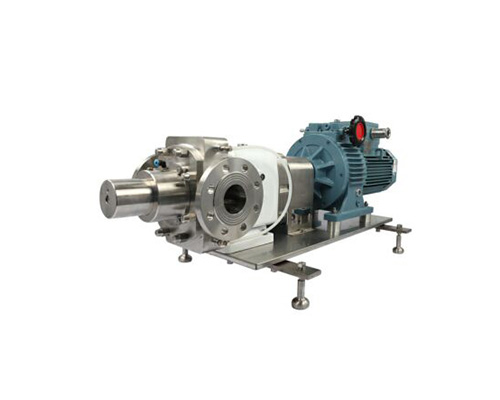
The Rotary Pumps Market represents an important segment of the industrial equipment industry, supporting fluid transfer requirements across manufacturing, chemical processing, food and beverage production, pharmaceuticals, oil and gas, water treatment, and other applications. Rotary pumps are positive displacement devices designed to move liquids by trapping a specific volume of fluid and transferring it from the inlet to the discharge side. Their ability to handle different viscosities, maintain consistent flow, and operate efficiently makes them suitable for demanding industrial environments.
Unlike many conventional pumping technologies, rotary pumps can provide controlled and relatively steady fluid movement even when operating conditions change. Their versatility has encouraged manufacturers to develop different pump configurations, materials, sealing arrangements, and control systems to meet increasingly specialized requirements.
Market Overview
Rotary pumps include several technologies, such as gear pumps, screw pumps, vane pumps, lobe pumps, and progressive cavity pumps. Each design offers distinct operating characteristics and is selected according to factors such as fluid viscosity, pressure requirements, temperature, flow rate, chemical compatibility, and operating environment.
Gear pumps are widely used for transferring oils, lubricants, fuels, and other viscous fluids. Screw pumps are valued for smooth, low-pulsation flow and are commonly applied in industrial processing and petroleum-related operations. Lobe pumps are frequently preferred in hygienic applications because they can handle sensitive fluids while supporting cleaning requirements. Vane pumps are used in hydraulic and industrial systems, while progressive cavity pumps are capable of handling thick, abrasive, or solids-containing fluids.
The broad selection of technologies allows rotary pumps to serve both standard and highly specialized applications. This diversity is one of the defining characteristics of the market.
Key Growth Drivers
Industrial automation and the increasing focus on process efficiency are significant factors influencing demand for rotary pumping systems. Manufacturers are looking for equipment that can provide reliable performance while minimizing energy consumption, downtime, and maintenance requirements. Rotary pumps can support these objectives when appropriately selected and integrated into automated production systems.
The expansion of chemical processing is another important demand factor. Chemical facilities often need pumps capable of transporting aggressive, corrosive, or high-viscosity substances. Manufacturers are therefore developing pumps using specialized alloys, coatings, elastomers, and sealing technologies to improve compatibility and service life.
Food and beverage processing also creates opportunities for rotary pump suppliers. Applications involving sauces, syrups, dairy products, oils, and other viscous ingredients require controlled movement with limited product damage. Hygienic pump designs with smooth internal surfaces and easy-clean configurations are becoming increasingly important in these environments.
Pharmaceutical manufacturing further increases the need for precision fluid handling. Production processes may involve expensive or sensitive materials where contamination control and accurate dosing are essential. Pump designs that support hygienic operation, controlled flow, and reliable cleaning can address these requirements.
Technological Development
Technology is reshaping the way rotary pumps are designed, monitored, and operated. Modern systems increasingly incorporate sensors and digital monitoring capabilities that can provide information about pressure, temperature, vibration, flow rate, and other operating parameters.
Condition monitoring can help operators identify abnormal conditions before they develop into major equipment failures. This approach can reduce unplanned downtime and support more efficient maintenance planning. Integration with industrial control systems can also enable operators to adjust pump operation according to production requirements.
Variable-speed drives are another important development. Instead of operating continuously at a fixed speed, pumps equipped with variable-speed control can adjust performance according to changing demand. This can improve process control and potentially reduce unnecessary energy consumption.
Manufacturers are also concentrating on improved sealing technologies, optimized internal geometries, corrosion-resistant materials, and more efficient drive systems. These improvements can increase operational reliability while extending equipment service intervals.
Application Landscape
The Rotary Pumps Market serves a broad range of industries. In oil and gas operations, rotary pumps can be used for fuel transfer, lubrication, crude oil handling, and other fluid movement processes. Their ability to handle viscous liquids makes them useful in various petroleum-related applications.
In the chemical industry, rotary pumps support the transfer of solvents, polymers, additives, oils, and specialty chemicals. Pump selection depends heavily on chemical compatibility and the operating conditions of each process.
Water and wastewater facilities can use rotary pumping technologies for sludge handling, chemical dosing, and other applications involving challenging fluids. Progressive cavity and lobe pump designs can be particularly useful where solids or high-viscosity materials are present.
In manufacturing, rotary pumps are used for lubricating systems, hydraulic equipment, cooling processes, fuel handling, and material transfer. Their compact configurations and controlled flow characteristics make them adaptable to different production environments.
Market Challenges
Despite their advantages, rotary pumps face several operational challenges. Improper pump selection can result in excessive wear, leakage, reduced efficiency, or premature component failure. Factors such as fluid properties, pressure, temperature, speed, and system design must therefore be carefully considered.
Maintenance is another important consideration. Components such as seals, bearings, gears, vanes, and other internal parts can experience wear depending on operating conditions. Abrasive particles, contamination, insufficient lubrication, and excessive operating speeds may shorten equipment life.
Initial equipment costs can also influence purchasing decisions, particularly for smaller industrial facilities. Buyers increasingly evaluate total ownership costs rather than focusing solely on the purchase price. Energy consumption, maintenance frequency, replacement parts, service requirements, and expected operating life are becoming important factors in equipment selection.
Competitive and Business Landscape
Pump manufacturers are focusing on product customization, engineering support, service capabilities, and application-specific solutions. Rather than offering standardized equipment alone, suppliers increasingly provide systems designed around particular fluid characteristics and operating environments.
After-sales services are also becoming an important area of competition. Maintenance programs, replacement components, technical assistance, monitoring solutions, and equipment upgrades can strengthen long-term relationships between manufacturers and industrial customers.
Sustainability is influencing product development as well. Companies are exploring more efficient pump designs, longer-lasting components, recyclable materials, and technologies that can reduce energy consumption and process losses.
Future Outlook
The future of the Rotary Pumps Market is closely connected with industrial modernization, process automation, energy efficiency, and the need for dependable fluid handling. Demand is expected to remain diverse because rotary pumps serve applications ranging from heavy industrial processing to hygienic manufacturing.
Digitalization will likely become increasingly integrated into pump systems. Smart sensors, remote monitoring, predictive maintenance, and automated controls can provide operators with greater visibility into equipment performance. At the same time, manufacturers are expected to continue improving pump efficiency, durability, material compatibility, and ease of maintenance.
Emerging industrial facilities in developing economies may also create opportunities as manufacturing capacity, infrastructure investment, chemical processing, food production, and water management activities expand.
Conclusion
The Rotary Pumps Market plays a critical role in modern fluid handling by providing dependable solutions for liquids with widely varying viscosities and operating requirements. Its applications span numerous industries, while technological improvements are making rotary pumps more efficient, connected, durable, and adaptable.
As industries prioritize productivity, automation, reliability, and resource efficiency, rotary pump manufacturers will continue to focus on application-specific designs and smarter operating systems. The combination of established industrial demand and ongoing technological development positions rotary pumps as an enduring component of fluid management infrastructure.
Comments
Log in or sign up to join the conversation.