

Working on rooftops is often necessary for maintenance, inspections, HVAC servicing, solar panel work, and other building operations. However, roofs can also expose workers to fall hazards, especially near unprotected edges, fragile roof areas, or elevated access points.
A properly planned rooftop lifeline system can form an important part of a wider fall protection strategy by giving workers a secure connection point while they move through designated work areas.
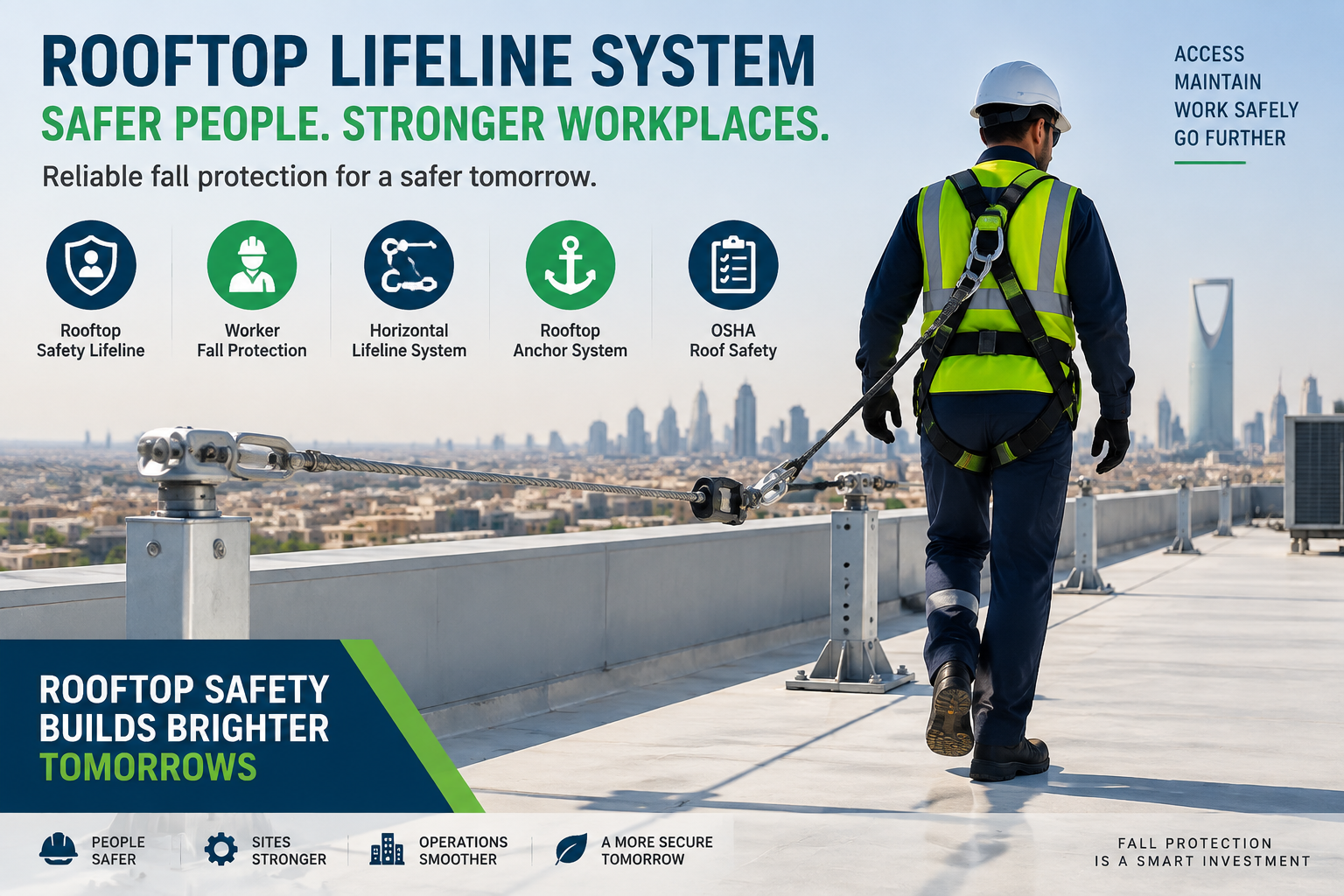
What Is a Rooftop Lifeline System?
A rooftop lifeline system is a type of fall protection system designed to help protect workers who perform tasks at height. Depending on the building and work activity, the system may include a horizontal cable, fixed anchors, connectors, harnesses, energy absorbers, and other compatible components.
One commonly used arrangement is a horizontal lifeline system, which allows a worker to remain connected while moving along a defined section of the roof.
Unlike a single fixed roof anchor system, a horizontal system can provide greater movement across larger rooftop areas while maintaining continuous connection when properly designed.
Why Rooftop Fall Protection Matters
Routine rooftop work may appear simple, but workers can encounter several hazards, including:
Open roof edges
Skylights and fragile roof surfaces
Changes in roof elevation
Sloped or uneven surfaces
Restricted roof access points
Maintenance areas located close to fall hazards
For this reason, rooftop fall protection should be considered during both the building design stage and ongoing facility safety planning.
A combination of guardrails, lifelines, access controls, warning systems, and other roof safety equipment may be required depending on the specific rooftop environment.
Horizontal Lifeline Systems and Worker Movement
One of the key advantages of a horizontal lifeline is mobility.
Instead of repeatedly disconnecting from individual anchor points, workers may be able to move along the lifeline while remaining attached through a suitable travelling connection device.
A properly designed rooftop safety lifeline system can therefore support safer movement during inspections, maintenance, cleaning, equipment servicing, and other routine rooftop activities.
The exact configuration should always reflect the roof layout, worker movement path, structural conditions, and expected number of users.
Key Components of a Roof Fall Protection System (Explanation)
A roof fall protection system is not a single product; it is a combination of different safety components that work together to reduce the risk of falls while workers perform tasks at height. Each component has a specific role in maintaining worker safety and controlling fall hazards.
1. Lifeline Cable
The lifeline cable is the main horizontal safety route that allows workers to move across the rooftop while staying connected to the fall protection system.
Usually made from high-strength stainless steel or galvanized cable, it runs between fixed anchor points along the roof. Workers connect their harness to the cable using a travelling device (shuttle), allowing them to move along the roof without repeatedly disconnecting.
Example applications:
HVAC maintenance areas
Solar panel servicing
Roof inspection paths
Industrial facility maintenance
The cable must be properly designed according to the expected load, roof layout, number of users, and required working distance.
2. Rooftop Anchor System
The rooftop anchor system provides the structural connection between the lifeline and the building.
Anchors are fixed to suitable structural elements such as steel frames, concrete structures, or approved roof support members. They transfer the forces generated during a fall event safely into the building structure.
A typical system may include:
End anchors: Installed at the beginning and end of the lifeline.
Intermediate anchors: Installed along longer lifeline routes to maintain stability and reduce cable movement.
Structural anchors: Designed specifically according to the roof structure and load requirements.
Proper anchor positioning is essential because incorrect installation can reduce the effectiveness of the entire fall protection system.
3. Personal Protective Equipment (PPE)
Personal protective equipment connects the worker directly to the safety system.
Common PPE components include:
Full-body safety harness: Distributes forces across the worker's body during a fall.
Shock-absorbing lanyard: Reduces impact forces during a fall arrest event.
Self-retracting lifeline (SRL): Allows worker movement while automatically adjusting the connection length.
Connectors and hooks: Provide secure attachment between the harness and lifeline system.
PPE selection depends on the work activity, required movement range, and type of fall protection arrangement.
4. Connection Devices (Travellers/Shuttles)
Connection devices, commonly called lifeline travellers or shuttles, allow workers to move along the horizontal lifeline while remaining attached.
The traveller moves smoothly along the cable as the worker changes position, helping maintain continuous connection during rooftop activities.
Benefits include:
Increased worker mobility
Reduced need for frequent disconnection
Better coverage of large roof areas
Improved efficiency during maintenance work
A compatible traveller must always be used with the specific lifeline system because different systems may have different cable sizes, designs, and load requirements.
Roof Access Safety Should Be Planned as a System
Effective roof access safety begins before a worker reaches the roof.
Building owners and safety planners should consider how workers will enter the rooftop area, how frequently access is required, where maintenance tasks take place, and how workers move between different equipment zones.
For example, rooftop HVAC systems, water tanks, telecommunications equipment, and solar installations may require workers to travel considerable distances across a roof.
A suitable rooftop lifeline system can be positioned to support these regular access routes while minimizing unnecessary exposure to roof edges.
OSHA Roof Safety Considerations
OSHA roof safety requirements emphasize protecting workers from fall hazards when working at elevated locations. The appropriate control method depends on the type of work, the workplace conditions, and the applicable regulations.
Fall protection planning may involve guardrail systems, personal fall arrest systems, travel restraint arrangements, safety nets, warning systems, or other approved measures.
Because every building is different, a rooftop safety system should be evaluated by competent professionals who understand structural loads, fall clearance, anchor positioning, worker movement, and rescue requirements.
Choosing the Right Rooftop Lifeline Arrangement
There is no universal lifeline layout suitable for every roof.
Before selecting a system, several factors should be reviewed:
Roof dimensions and geometry
Structural support locations
Distance from roof edges
Number of workers using the system
Required movement area
Available fall clearance
Location of rooftop equipment
Access and exit points
Inspection and maintenance requirements
The objective is not simply to install a lifeline, but to create a practical worker fall protection arrangement that matches how the roof is actually used.
Conclusion
A rooftop lifeline system can play an important role in protecting personnel who regularly access elevated work areas. When combined with suitable anchors, harnesses, connectors, access controls, and other safety measures, it can support safer movement across rooftops.
The most effective approach is to evaluate the complete working environment and select a system based on actual roof conditions, structural requirements, worker tasks, and applicable safety standards.
By treating rooftop safety as an integrated process rather than relying on a single piece of equipment, building operators can create safer and more practical conditions for routine work at height.
#RooftopLifelineSystem#RooftopSafety#FallProtection#WorkerSafety#RoofSafety#HorizontalLifelineSystem#RoofFallProtection#SafetyEquipment
Comments
Log in or sign up to join the conversation.