

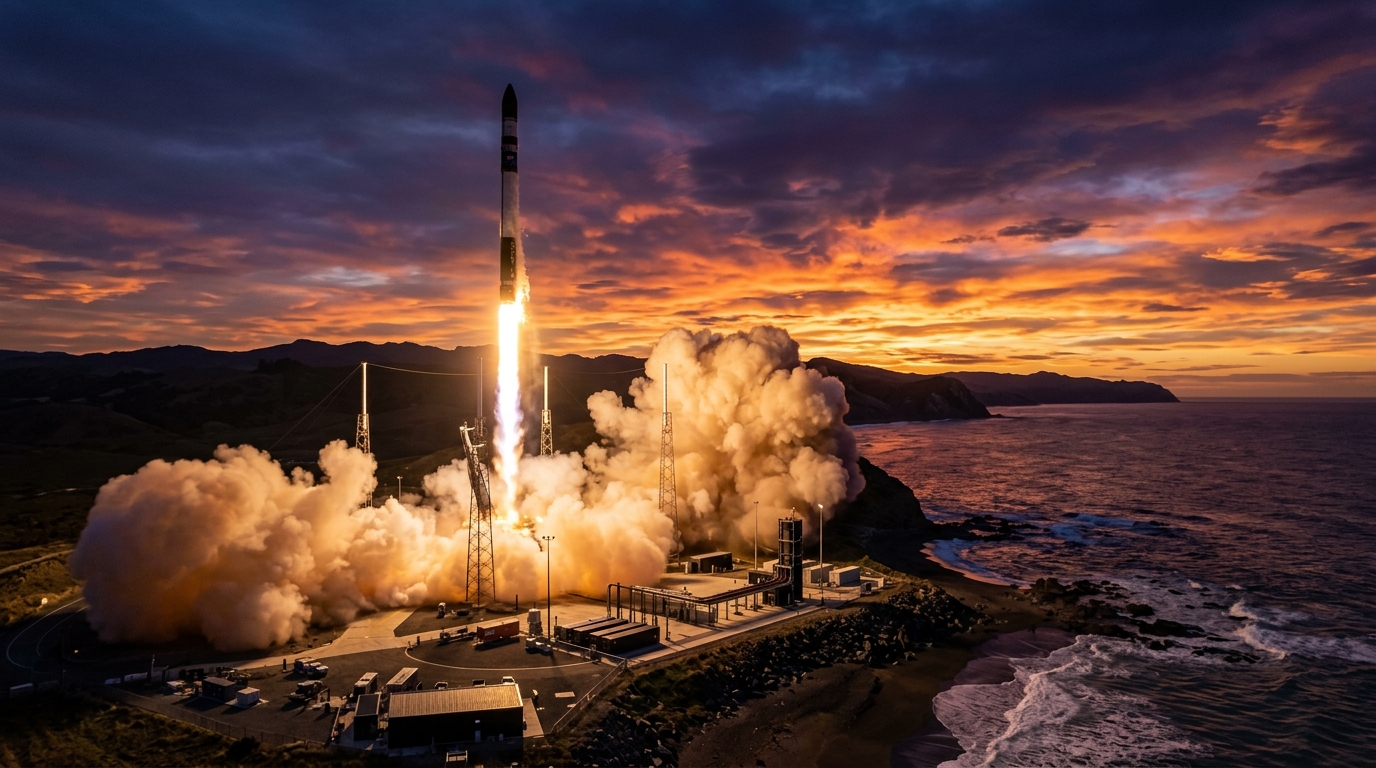
Rocket Lab USA (RKLB) just reported the best quarter in its history. Revenue hit $200.3 million in Q1 2026, up 63.5% from the same period last year. Its backlog crossed $2.2 billion after the company signed 31 launch contracts in the first three months of the year, surpassing its entire 2025 total.
Then on Monday, Needham raised its price target from $95 to $120. The stock was trading around $79 at the time. That is 52% implied upside from a single analyst. Five others have targets above $95.
Here is what drove the quarter and why Wall Street is suddenly paying close attention to a company most retail investors have never heard of.
The Pentagon Just Became Rocket Lab's Biggest Customer
The Department of War placed a $190 million block order for 20 hypersonic test flights using Rocket Lab's HASTE vehicle. That is not a small contract. That is a serious, multi-year commitment to an aerospace company still in growth mode.
Add a $30 million agreement with Anduril for three HASTE hypersonic launches and a confidential customer deal covering five Neutron and three Electron launches through 2029, and the picture changes. Rocket Lab is no longer selling individual launches. It is selling infrastructure. Q2 2026 guidance came in at $225 million to $240 million, another step up from an already strong Q1.
In May 2026, Rocket Lab also acquired Motiv Space Systems for $60 million, adding Mars-proven robotics capabilities and strengthening its position as a vertically integrated aerospace company. This is the M&A strategy of a company building for the long haul.
The Neutron Rocket Changes the Math
Rocket Lab's current workhorse, the Electron rocket, carries roughly 300 kilograms to orbit. Good for small payloads. Not for the bigger commercial and government missions that command real money.
The Neutron rocket changes that. Designed to carry approximately 13,000 kilograms to low Earth orbit, Neutron puts Rocket Lab in direct competition with SpaceX's Falcon 9 for medium-lift payloads. SpaceX is private and valued at roughly $350 billion. There is no publicly traded SpaceX. Rocket Lab is the closest thing to it.
Hold on. Let me stop here. That is the real story. For investors who believe the space economy is a multi-decade growth runway, Rocket Lab is the only publicly traded Western company building a Falcon 9 competitor. It is kinda like owning the only alternative to FedEx (FDX) before overnight shipping became a trillion-dollar market. The demand is already there. The question is whether the planes show up on time.
A successful Neutron maiden launch this year would dramatically expand Rocket Lab's addressable market and likely trigger another wave of analyst upgrades.
The Risks Are Real
Rocket Lab is not profitable. It is spending heavily to develop Neutron and expand manufacturing. Revenue is growing fast, but margins are still thin for a company at this scale.
The stock has also had a significant run. From under $10 in late 2023, it now trades near $80. A lot of the optimism is already priced in, which means any execution slip on Neutron or a contract miss could send shares sharply lower. Bears will also note that until Neutron proves itself, Rocket Lab remains a niche small-launch provider competing in a market SpaceX dominates.
Bottom Line
Rocket Lab is not a value stock. It is a growth story with real execution risk attached. But Q1 2026 shows the company building something durable: government contracts, a $2.2 billion backlog, and a clear path to competing in a much larger market.
Current price: approximately $79. Needham's target: $120. Analyst consensus: $87.56 with a Moderate Buy rating from Wall Street. Five separate analysts have set targets between $95 and $120.
You don't have to trust me. Trust the $190 million the Department of War just handed them.



Comments
Log in or sign up to join the conversation.