
By The Numbers
+280% — Rocket Lab (RKLB) stock gain over the past 12 months, closing at $109.25 on June 15
$200.3M — Record Q1 2026 revenue, up 63.5% year-over-year, first quarter above $200M
$2.2B — Record order backlog as of Q1, up 20% sequentially
$225M-$240M — Q2 2026 revenue guidance from Rocket Lab management
$102.76 — Average analyst 12-month price target across 21 analysts, below current trading price
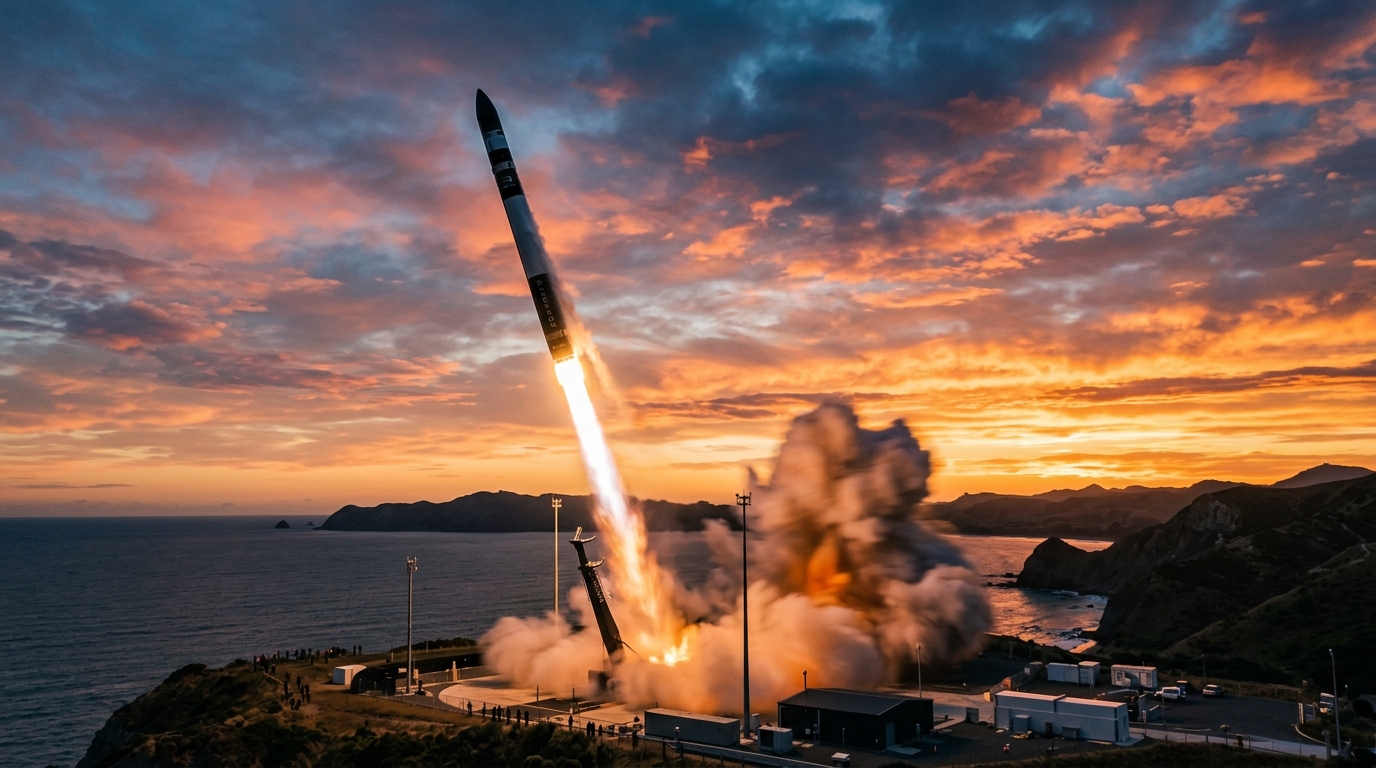
Rocket Lab closed at $109.25 on June 15, up 6.7% on the day and up 280% over the past 12 months. The all-time high was $151, hit just three weeks earlier on May 27. The market cap is approaching $60 billion. And on June 22, joins the Nasdaq-100. The stock is priced like a winner. Whether it can stay there is a different question.
The "90% of Nothing" Problem
Rocket Lab dominates the small satellite launch market. It commands a commanding share of commercial small launch capacity outside of SpaceX. That sounds impressive. The skeptic's counterpoint is that the small launch market is still a small market. You can lead a category and still be swimming in a very small pond.
Here is why that critique gets complicated. Q1 2026 revenue came in at $200.3 million, the first time RKLB has crossed $200 million in a single quarter. That is up 63.5% year-over-year. Space Systems, which covers satellite manufacturing and components, made up 68.2% of that revenue and carries higher margins than launch services. Launch itself was 31.8%. This is not a company dependent on counting rockets anymore. It is becoming a vertically integrated space hardware and services business.
The backlog tells a similar story. Order backlog hit a record $2.2 billion in Q1, up 20% from the prior quarter. There are 31 Electron and HASTE missions currently in that backlog. More importantly, there are 5 Neutron launch contracts in place, including one that was described as the largest multi-launch deal in the company's history. Q2 guidance is $225 million to $240 million, another record quarter if achieved.
The SpaceX Halo and Why It Matters
A significant driver of RKLB's valuation is the anticipation of a SpaceX IPO. SpaceX is not publicly traded. Investors who want exposure to the commercial space economy have to go elsewhere. Rocket Lab is the most credible alternative on a U.S. stock exchange. When SpaceX IPO speculation heats up, RKLB gets a tailwind. When SpaceX lands a headline contract or makes news, investors who cannot buy SpaceX buy RKLB instead.
KeyBanc upgraded RKLB to Overweight on June 15 with a $135 price target. Stifel raised its target to $132 from $110. Both moves came on the same day as the 6.7% rally. The upgrades reflect growing analyst conviction that Rocket Lab's backlog and Neutron development timeline are more credible than previously modeled.
The Nasdaq-100 addition effective June 22 adds another near-term catalyst. Same dynamic as CoreWeave: passive funds have to buy. Rocket Lab and CoreWeave were both named to the index in the same rebalancing. That is a lot of forced buying concentrated in the same week for both stocks.
The Valuation Problem Is Real
RKLB is trading at $109.25. The average analyst 12-month price target across 21 analysts is $102.76. The stock is already above consensus. That is not typical. Most stocks trading at a meaningful premium to analyst consensus face near-term headwinds simply because upgrades and target raises become the growth driver rather than the business itself.
The loss per share in Q1 was $0.07, narrower than analysts expected. That is progress. But RKLB is still losing money on each quarter's operations. The path to profitability runs through Neutron. The medium-lift rocket is the key growth catalyst. Five contracts are already signed. But Neutron has not flown commercially yet. Its debut is the event that analysts and investors are watching most closely. A successful first commercial launch would be a meaningful inflection point. A delay or failure would be equally significant in the other direction.
Bottom Line
RKLB at $109.25 is priced for perfection, or close to it. The stock already sits above the average analyst target of $102.76. KeyBanc at $135 and Stifel at $132 give the bulls room to run, but those targets assume Neutron executes and growth continues compounding at 60%+ annually. The Nasdaq-100 addition on June 22 creates a real near-term buying catalyst. The $2.2 billion backlog and record Q1 revenue of $200.3 million show this is a legitimate business, not just a story stock. For investors who missed the 280% move and are chasing now, the risk-reward is tighter than it looks. For investors already in, the Neutron commercial debut remains the single most important event to watch in the next 12 months.

Comments
Log in or sign up to join the conversation.