

According to TechSci Research report, “Global Robotic Arm Market By Payload Capacity, By Type, By End User Industry, By Application, By Region, Competition, Forecast & Opportunities, 2021–2031”, The Global Robotic Arm Market will grow from USD 37.24 Billion in 2025 to USD 93.78 Billion by 2031 at a 16.64% CAGR.
Request For Sample Copy of Report For More Detailed Market insight: https://www.techsciresearch.com/sample-report.aspx?cid=3769#requestform
Industry Key Highlights
The Global Robotic Arm Market is projected to grow from USD 37.24 Billion in 2025 to USD 93.78 Billion by 2031, registering an impressive CAGR of 16.64% during the forecast period.
Rapid industrial automation across manufacturing, automotive, electronics, logistics, healthcare, and food processing industries is significantly accelerating market expansion.
Growing labor shortages and rising labor costs are encouraging organizations to invest in robotic arm solutions to improve productivity and reduce operational expenses.
Articulated robotic arms continue to dominate the market due to their superior flexibility, speed, precision, and multi-axis movement capabilities.
The automotive sector remains the largest end-user industry, leveraging robotic arms for welding, painting, assembly, material handling, and quality inspection.
Industry 4.0 initiatives and smart factory deployments are driving increased integration of robotic arms with Artificial Intelligence (AI), Internet of Things (IoT), machine vision, and cloud-based monitoring systems.
Asia-Pacific leads the global market owing to strong manufacturing ecosystems in China, Japan, South Korea, and India.
Advancements in collaborative robots (cobots) are opening new opportunities for small and medium-sized enterprises.
Increasing demand for warehouse automation and logistics optimization is expanding robotic arm adoption beyond traditional manufacturing environments.
Technological innovations in sensors, machine learning, and predictive maintenance are improving robotic arm efficiency and return on investment.
Introduction
The global industrial landscape is undergoing a profound transformation as automation technologies reshape the way businesses operate. Among the most influential technologies driving this change are robotic arms, which have become indispensable tools in modern manufacturing and industrial environments. These advanced robotic systems are helping organizations improve productivity, enhance precision, reduce operational costs, and overcome workforce challenges.
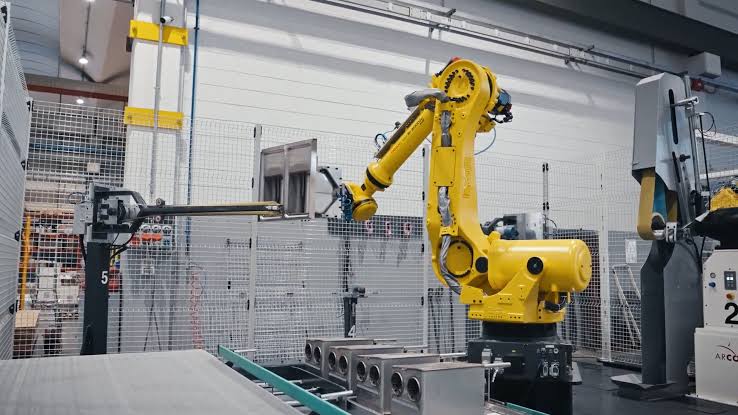
Robotic arms are programmable mechanical devices capable of performing a wide range of tasks including assembly, welding, painting, packaging, inspection, material handling, and machine tending. Their ability to execute repetitive tasks with exceptional accuracy and consistency has made them a cornerstone of industrial automation strategies worldwide.
As industries increasingly pursue efficiency, scalability, and quality enhancement, robotic arm technology is becoming more sophisticated. Modern robotic arms are equipped with advanced sensors, artificial intelligence, machine vision systems, and real-time analytics capabilities, enabling them to perform complex operations with minimal human intervention.
The growing adoption of Industry 4.0 technologies, coupled with increasing investments in smart manufacturing infrastructure, is creating significant growth opportunities for robotic arm manufacturers and solution providers. As organizations continue to embrace digital transformation, robotic arms are expected to play a critical role in shaping the future of industrial operations.
Market Overview
The Global Robotic Arm Market has evolved from a niche automation segment into a rapidly expanding industry that serves a diverse range of sectors. The market's growth is being driven by rising demand for operational efficiency, increased production requirements, labor shortages, and technological advancements.
Industries worldwide are recognizing the value proposition of robotic arms in improving manufacturing precision, reducing human error, and ensuring consistent product quality. Additionally, robotic arms help businesses optimize resource utilization, minimize waste, and maintain competitiveness in increasingly demanding markets.
The growing need for automation in sectors such as automotive, electronics, pharmaceuticals, aerospace, logistics, food processing, and healthcare has significantly expanded the application scope of robotic arms. As technological barriers continue to decrease and robotic solutions become more affordable, adoption rates are accelerating across organizations of all sizes.
The integration of AI-powered decision-making systems, machine learning algorithms, and advanced vision technologies is further enhancing robotic arm capabilities, enabling them to perform increasingly complex tasks that were previously impossible through traditional automation systems.
Key Market Drivers
Rising Industrial Automation Across Industries
Industrial automation remains one of the most powerful growth drivers for the robotic arm market. Manufacturers are under constant pressure to improve productivity, reduce production costs, and maintain product quality standards.
Robotic arms enable companies to automate repetitive and labor-intensive tasks, allowing human workers to focus on higher-value activities. This shift improves operational efficiency while reducing workplace injuries and production bottlenecks.
As global competition intensifies, businesses are increasingly investing in robotic automation solutions to maintain profitability and achieve sustainable growth.
Growing Labor Costs and Workforce Challenges
Many industries are facing significant workforce shortages and rising labor costs. Skilled labor has become increasingly difficult to recruit and retain, particularly in manufacturing sectors.
Robotic arms provide an effective solution by reducing dependence on manual labor while ensuring consistent operational performance. Unlike human workers, robotic arms can operate continuously without fatigue, breaks, or performance fluctuations.
The economic benefits associated with labor cost reduction and increased productivity continue to drive robotic arm adoption worldwide.
Expansion of Industry 4.0 Initiatives
Industry 4.0 represents the next phase of industrial transformation characterized by interconnected machines, smart factories, data analytics, and autonomous decision-making systems.
Robotic arms are central components of Industry 4.0 ecosystems. Modern robotic systems can communicate with production equipment, collect operational data, perform predictive maintenance, and adapt to changing manufacturing requirements in real time.
The increasing implementation of Industry 4.0 strategies across developed and emerging economies is significantly boosting demand for intelligent robotic arm solutions.
Increasing Demand for Precision Manufacturing
Modern consumers expect higher quality products with minimal defects. This expectation is driving manufacturers to adopt precision automation technologies.
Robotic arms offer unparalleled accuracy and repeatability, making them ideal for applications requiring exact positioning, consistent assembly, and precise quality control.
Industries such as electronics, aerospace, medical devices, and semiconductor manufacturing are particularly dependent on robotic arm technology to achieve stringent quality requirements.
Growing Logistics and Warehouse Automation
The rapid expansion of e-commerce and global supply chains has transformed logistics operations worldwide.
Warehouses are increasingly deploying robotic arms for sorting, picking, palletizing, packaging, and cargo handling applications. These systems help organizations process higher order volumes while reducing operational costs and minimizing handling errors.
As logistics providers seek greater efficiency and scalability, robotic arms are becoming critical components of modern warehouse automation strategies.
Emerging Trends in the Global Robotic Arm Market
Artificial Intelligence-Enabled Robotic Arms
Artificial Intelligence is revolutionizing robotic arm capabilities. AI-powered systems can analyze operational data, learn from experience, adapt to changing environments, and optimize performance over time.
Machine learning algorithms enable robotic arms to identify objects, predict maintenance requirements, improve motion planning, and make intelligent operational decisions.
The combination of AI and robotics is creating a new generation of autonomous systems capable of performing highly sophisticated industrial tasks.
Rise of Collaborative Robots (Cobots)
Collaborative robots are among the fastest-growing segments within the robotics industry.
Unlike traditional industrial robots that operate within isolated workspaces, cobots are designed to work safely alongside human workers. These systems offer flexibility, ease of programming, and lower implementation costs.
Small and medium-sized enterprises are increasingly adopting collaborative robotic arms due to their affordability and ability to enhance workforce productivity without extensive infrastructure modifications.
Integration of Machine Vision Technology
Machine vision is becoming an essential component of robotic arm systems.
Advanced cameras and imaging technologies enable robots to identify products, inspect quality, navigate dynamic environments, and perform complex assembly operations.
Machine vision significantly improves robotic accuracy and flexibility while enabling automation of tasks that previously required human judgment.
Adoption of Digital Twins
Digital twin technology is emerging as a valuable tool for robotic system optimization.
Manufacturers can create virtual replicas of robotic arms and production environments to simulate operations, identify inefficiencies, and predict performance outcomes before implementing physical changes.
Digital twins improve decision-making, reduce downtime, and enhance overall operational efficiency.
Sustainable and Energy-Efficient Robotics
Environmental sustainability is becoming increasingly important across industries.
Robotic arm manufacturers are developing energy-efficient systems that consume less power while maintaining high performance levels. Lightweight materials, intelligent power management systems, and optimized motion control technologies are helping organizations reduce their environmental footprint.
Sustainable robotics is expected to become a key competitive differentiator in the coming years.
Competitive Analysis
ABB Ltd.
FANUC Corporation
KUKA AG
Yaskawa Electric Corporation
Kawasaki Heavy Industries, Ltd.
Mitsubishi Electric Corporation
Universal Robots A/S
DENSO Corporation
Nachi-Fujikoshi Corporation
Omron Corporation
Customers can also request for 10% free customization on this report.
Future Outlook
The future of the Global Robotic Arm Market appears exceptionally promising as industries continue embracing automation and digital transformation initiatives.
Artificial Intelligence, machine vision, collaborative robotics, cloud computing, and advanced analytics will further enhance robotic arm capabilities. The emergence of fully autonomous manufacturing facilities and smart warehouses will generate substantial demand for next-generation robotic systems.
Growing investments in electric vehicles, semiconductor manufacturing, aerospace production, logistics automation, and healthcare robotics are expected to create new growth avenues.
As technology becomes more affordable and accessible, robotic arms will increasingly penetrate small and medium-sized enterprises, further expanding market opportunities.
With ongoing innovation and rising adoption across industries, the robotic arm market is poised to become one of the most influential segments within the global automation ecosystem over the next decade.
10 Benefits of the Research Report
1. Comprehensive Market Intelligence
Provides detailed insights into current and future market dynamics.
2. Growth Opportunity Assessment
Identifies high-growth segments and emerging investment areas.
3. Competitive Benchmarking
Analyzes major competitors and their strategic positioning.
4. Technology Trend Evaluation
Highlights emerging technologies shaping the market.
5. Regional Opportunity Analysis
Examines growth prospects across key geographic markets.
6. Investment Planning Support
Assists stakeholders in making informed investment decisions.
7. Risk Identification
Evaluates potential challenges and market uncertainties.
8. Strategic Business Planning
Supports long-term corporate strategy development.
9. Customer Demand Insights
Provides understanding of evolving end-user requirements.
10. Future Forecasting
Offers reliable projections for market growth and industry evolution.
Contact US:
Techsci Research LLC
420 Lexington Avenue, Suite 300,
New York, United States- 10170
Tel: +13322586602
Email: [email protected]
Web: https://www.techsciresearch.com/
Comments
Log in or sign up to join the conversation.