
In January 2021, two months before US inflation took off, a reporter asked Federal Reserve Chairman Jerome Powell how much inflation the Fed was willing to tolerate.
Powell acted like he’d never heard of inflation— like it was crazy to even ask. He dismissed the notion of inflation entirely and said it was “far away and unlikely.”
Then he doubled down. “Frankly,” the Fed Chairman bizarrely claimed, “we welcome slightly higher inflation.”
Yes, of course, the central economic problem of our time: too LITTLE inflation. What a joke.
A few months later prices started climbing faster than Americans had seen in years, and Powell found his new favorite word: “transitory.”
As inflation rose, he kept saying it was “transitory”, and it took inflation hitting 5% for Powell to finally admit that it was “probably a good time to retire that word.”
Prices finished 2021 up 7%, the most since 1982. The Fed still didn’t raise interest rates until March 2022, and by just a quarter of a point. Even with 7% inflation, the Fed wasn’t taking it seriously.
But then they suddenly panicked. Their attitude on inflation went from “huh?” to five alarm fire in a matter of months, prompting the Fed to jack interest rates up from near zero to 4.75%. It was the fastest pace of rate hikes since the 1980s.
By early 2023, Jerome Powell had a lot of explaining to do. So when he sat in front of the Senate Banking Committee on March 7 that year, plenty of people were asking if his abrupt, panicked rate hikes were going cause problems in the banking sector.
No, said a clearly unworried Powell. “I think nothing about the data suggests to me that we have [raised rates] too much,” he said.
Literally three days later, Silicon Valley Bank, the 16th-largest bank in America, collapsed… specifically because of those rising interest rates.
Remember, when you deposit money at a bank, they don’t just keep your cash sitting in a vault. They either loan it out to someone, or invest it in bonds— especially US government bonds.
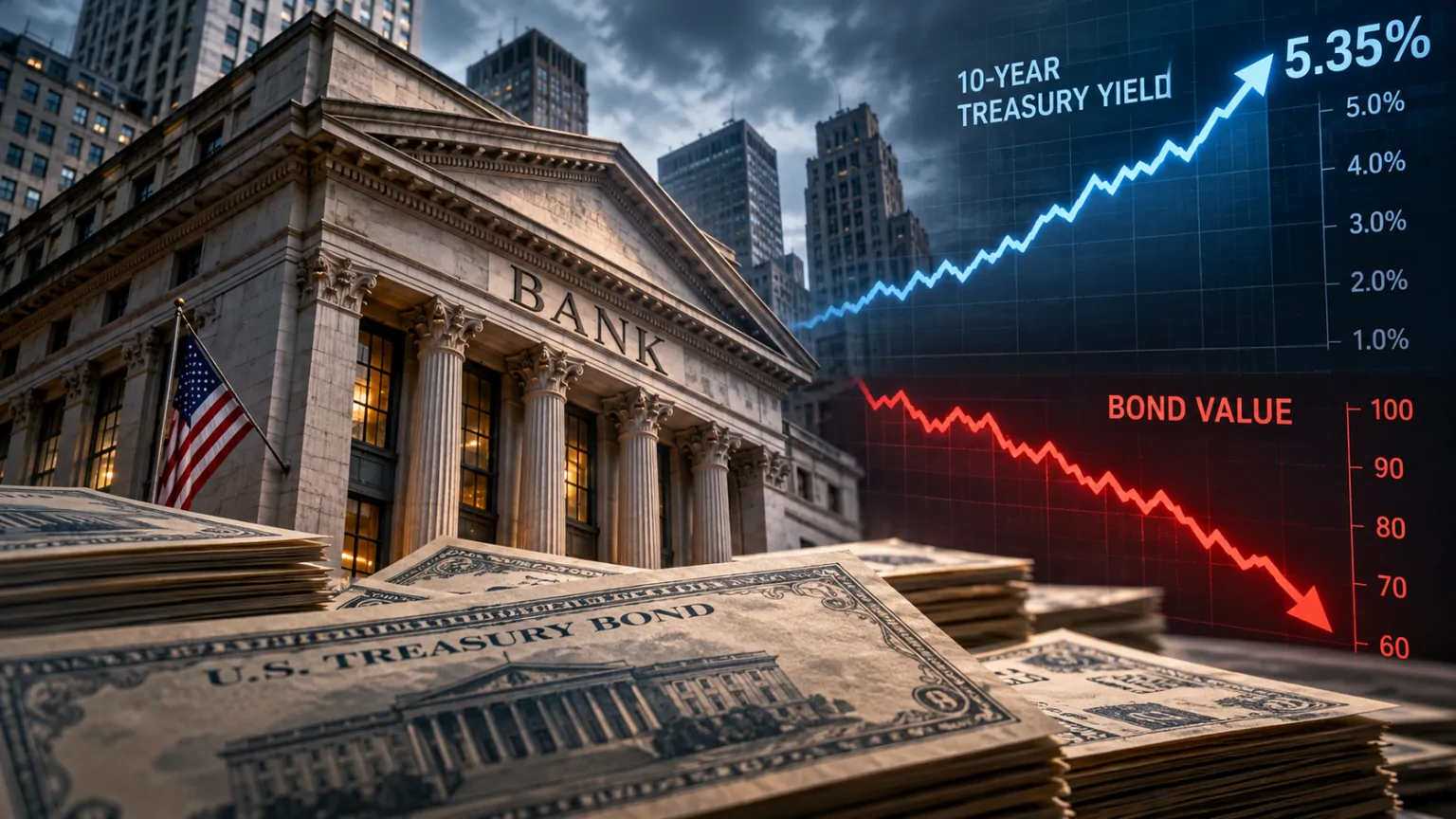
The thing about bonds is that they lose value when interest rates rise. So when Jerome Powell rapidly hiked interest rates, banks were sitting on big losses in their bond portfolios.
But it’s sort of like owning a stock that’s down: you haven’t actually LOST money unless you sell. In the meantime you’re just sitting on a paper loss, or what accountants call an “unrealized loss.”
Yet that’s what killed Silicon Valley Bank.
By the end of 2022, SVB was sitting on about $15 billion of unrealized losses— which made it technically insolvent.
Customers figured that out and panicked. They pulled more than $40 billion out in a single day (nearly a quarter of its deposits), and regulators shut the bank down the next day.
Two more banks went under shortly after… all because rising interest rates caused banks to suffer huge unrealized bond losses.
But rates are MUCH higher today, so banks’ unrealized losses are growing.
According to the FDIC, the federal agency that insures bank deposits, those losses added up to $327 billion as of June 30. The next quarterly report for Q3 (which ended September 30) hasn’t come out yet. But it will almost certainly be MUCH worse.
The yield on the 10-year Treasury hit 5.35% recently. That’s up from 4.4% back in June, when the last FDIC report came out.
To be clear, I’m not suggesting this is going to bring down the banking system. In fact, at the moment, it will NOT. Banks as a whole have enough equity to absorb those losses.
But a rapid increase in unrealized losses will likely drag down bank stocks and force executives to cut costs, and the interest banks pay you is always one of the first things to go.
Once these unrealized losses hit the banks’ Q3 and Q4 financial statements, I’m betting you’re probably going to see a cut in the interest rate your savings account as banks shore up more capital.
So it’s worth considering other options for your cash deposits.
For one, the federal government likely pays more than your bank does: a 90-day T-bill, which is a three-month loan to the US Treasury, pays about 4.1% right now. Even the 28-day T-bill pays almost 4%.
Then there’s the option of moving some money overseas.
I don’t mean a secret Swiss bank account from a spy movie. Foreign banks report their American customers to the IRS, and having a foreign account is not about hiding money.
The real reason to have a foreign bank account is far more practical: it puts a portion of your savings in another jurisdiction. It’s a useful asset protection measure… with the added benefits of better service and higher interest rates.
Comments
Log in or sign up to join the conversation.