

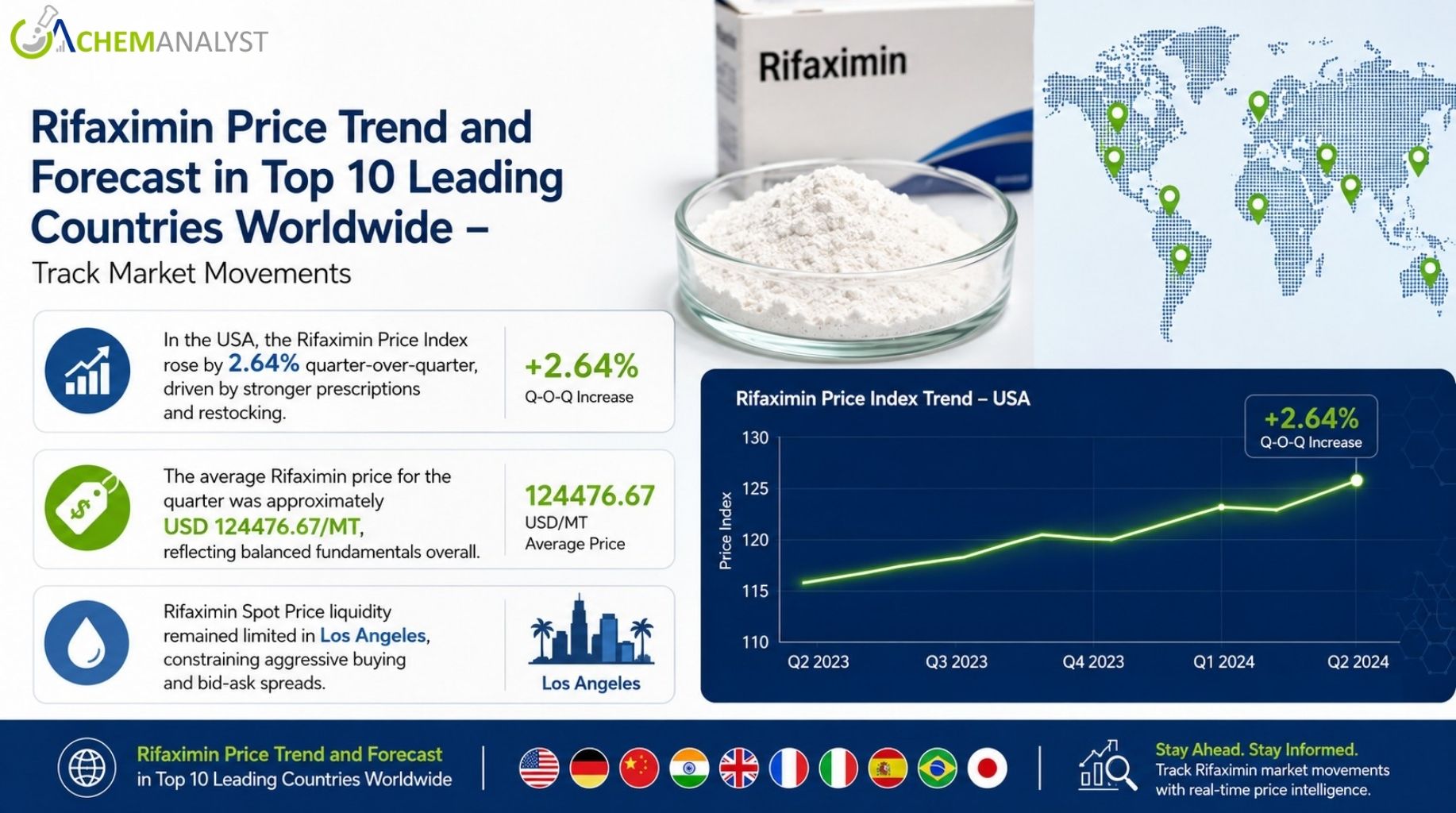
The global Rifaximin Price trend in 2026 is reflecting a complex interplay of pharmaceutical demand, export activity, supply chain constraints, and healthcare procurement patterns. Across major regional markets including APAC, Europe, and North America, rifaximin prices moved upward during the latest quarter as manufacturers navigated tighter inventories, increased prescription demand, and fluctuating trade dynamics.
According to ChemAnalyst Rifaximin Price: - https://www.chemanalyst.com/Pricing-data/rifaximin-1644
Rifaximin, a broad-spectrum antibiotic widely used for gastrointestinal disorders such as irritable bowel syndrome with diarrhea (IBS-D), traveler’s diarrhea, and hepatic encephalopathy, continues to witness steady global demand. As healthcare systems normalize post-pandemic procurement cycles and pharmaceutical supply chains rebalance, the market is showing signs of measured but persistent pricing strength.
APAC Rifaximin Price Trend
China Witnesses Higher Rifaximin Prices Amid Export Pressure
In the Asia-Pacific region, China remained one of the most influential contributors to the global Rifaximin Price movement during Q1 2026. The Chinese Rifaximin Price Index increased by approximately 2.64% quarter-over-quarter as production availability tightened and export activity accelerated.
The average Rifaximin price in China during the quarter reached nearly USD 124,366.67 per metric ton, indicating a firm pricing environment despite uneven domestic hospital procurement.
Several factors contributed to this upward movement:
Reduced manufacturing flexibility among active pharmaceutical ingredient (API) producers
Higher export commitments to Europe and North America
Controlled inventory replenishment among distributors
Stable but mixed hospital procurement demand
China remains a major pharmaceutical manufacturing hub for antibiotic intermediates and APIs. Any reduction in local production capacity or changes in export flows tends to influence global pharmaceutical pricing patterns rapidly.
Additionally, stricter environmental compliance measures and energy-related operational costs continued to pressure production economics in several Chinese chemical manufacturing clusters. This created moderate supply-side tightness during the quarter.
Despite weaker spot buying from some domestic healthcare institutions, export-oriented demand helped maintain positive pricing momentum. International buyers increasingly relied on Chinese pharmaceutical suppliers due to competitive manufacturing advantages and established supply reliability.
Pharmaceutical Export Activity Continues Supporting Asian Market Sentiment
Another major contributor to the rising Rifaximin Price trend across Asia was the continuation of export-led procurement activity. Global pharmaceutical companies maintained steady import programs from Asia-Pacific suppliers to secure inventories amid ongoing geopolitical and logistics uncertainties.
Market participants also observed:
Improved overseas inquiry volumes
Longer procurement cycles from multinational buyers
Strategic inventory building among traders
Stable feedstock cost conditions
While the broader pharmaceutical sector did not experience extreme volatility, rifaximin remained supported by its essential therapeutic applications and resilient healthcare demand profile.
Europe Rifaximin Price Trend
Germany Records Price Increase Due to Tight Import Availability
The European Rifaximin Price market also moved upward during Q1 2026. In Germany, the Rifaximin Price Index rose by approximately 2.66% quarter-over-quarter, reflecting tighter import availability and cautious inventory management among pharmaceutical distributors.
Average Rifaximin prices in Germany reached around USD 124,473.33 per metric ton during the quarter.
Europe’s pharmaceutical supply chain remains heavily dependent on imported APIs and intermediates from Asia, especially China and India. As import availability tightened during the quarter, buyers in Germany faced higher procurement costs and slower replenishment cycles.
Several regional factors shaped the market:
Delayed pharmaceutical shipments
Controlled distributor inventories
Moderate healthcare demand recovery
Rising logistics and compliance costs
German pharmaceutical wholesalers responded by adopting more measured purchasing strategies rather than aggressive stock accumulation. This balanced procurement approach helped prevent sharper price spikes while still supporting gradual market gains.
Read the LinkedIn Article: - https://www.linkedin.com/pulse/rifaximin-price-analysis-2026-market-volatility-fueled-kishan-singh-uoqfc/
European Healthcare Demand Maintains Market Stability
Demand fundamentals for rifaximin in Europe remained relatively stable due to consistent prescription rates and strong healthcare infrastructure support. Gastrointestinal treatment demand continued to underpin pharmaceutical consumption across hospitals, retail pharmacies, and specialty clinics.
At the same time, inflationary pressures in Europe influenced pharmaceutical operating expenses, including:
Transportation costs
Cold-chain logistics expenses
Warehousing charges
Regulatory compliance expenditures
These cost-side pressures indirectly contributed to the higher regional Rifaximin Price environment.
Market analysts also noted that healthcare procurement agencies across Europe remained cautious regarding antibiotic inventory planning. Buyers focused on maintaining stable supply availability while avoiding excessive purchasing during periods of uncertain import flows.
North America Rifaximin Price Trend
United States Market Supported by Stronger Prescriptions and Restocking
In North America, the United States experienced a similar upward trend in the Rifaximin Price market during Q1 2026. The Rifaximin Price Index increased by around 2.64% quarter-over-quarter, supported primarily by stronger prescription demand and healthcare restocking activity.
The average Rifaximin price in the U.S. market reached approximately USD 124,476.67 per metric ton during the quarter.
Several market drivers influenced pricing momentum:
Increased prescription activity for gastrointestinal treatments
Hospital and pharmacy inventory replenishment
Balanced pharmaceutical supply conditions
Stable domestic healthcare consumption
The U.S. pharmaceutical market continues to demonstrate resilient demand fundamentals for specialty antibiotics and gastrointestinal therapeutics. Healthcare providers maintained steady procurement activity as patient treatment volumes normalized across multiple therapeutic segments.
Inventory Rebuilding Supports U.S. Pharmaceutical Prices
A key factor supporting the American Rifaximin Price trend was the continuation of inventory rebuilding programs among pharmaceutical distributors and healthcare institutions.
Following earlier supply chain disruptions and inventory adjustments, many buyers prioritized:
Supply security
Multi-quarter procurement planning
Strategic pharmaceutical stock management
Supplier diversification initiatives
Although domestic supply fundamentals remained generally balanced, cautious replenishment programs contributed to upward pricing pressure during the quarter.
In addition, healthcare spending stability and sustained insurance-backed prescription demand helped maintain positive market sentiment.
Key Factors Influencing Global Rifaximin Price Trends
Pharmaceutical Supply Tightness
One of the primary drivers of the global Rifaximin Price increase in 2026 has been tighter pharmaceutical production availability. Manufacturing constraints, export prioritization, and operational cost pressures limited overall supply flexibility.
Even modest supply restrictions can significantly impact pricing within specialized antibiotic markets where production capacity is concentrated among limited manufacturers.
Rising Export Activity
Export demand remained a critical support factor for rifaximin prices worldwide. Major producing countries continued supplying pharmaceutical buyers across Europe and North America, helping sustain firm international market sentiment.
Export-oriented procurement also increased competition for available inventories, especially in Asian markets.
Stable Healthcare Demand
Healthcare consumption patterns for rifaximin remained stable across major economies. Demand from:
Hospitals
Gastroenterology clinics
Retail pharmacies
Specialty healthcare providers
continued supporting consistent purchasing activity throughout the quarter.
The essential therapeutic role of rifaximin in managing gastrointestinal disorders helped insulate the market from broader economic fluctuations.
Logistics and Compliance Costs
Pharmaceutical logistics and regulatory compliance costs continued affecting pricing structures globally. Market participants faced elevated expenses related to:
Freight transportation
Regulatory approvals
Pharmaceutical quality assurance
Warehousing and cold-chain systems
These operational costs contributed to higher overall procurement prices.
Global Rifaximin Price Forecast for 2026
The outlook for the global Rifaximin Price market remains cautiously bullish for the remainder of 2026. Industry analysts expect moderate pricing support to continue as pharmaceutical demand remains resilient and international supply chains stay relatively tight.
Key trends expected to influence the market include:
Continued export demand from Asia
Stable prescription growth in developed markets
Healthcare inventory normalization
Pharmaceutical manufacturing cost pressures
Regulatory compliance investments
However, the market could also experience periods of stabilization if production availability improves or if downstream healthcare procurement slows in major consuming regions.
Future Outlook for Buyers and Pharmaceutical Stakeholders
For pharmaceutical companies, healthcare distributors, and procurement managers, monitoring the evolving Rifaximin Price trend will remain essential throughout 2026.
Buyers are increasingly focusing on:
Diversified sourcing strategies
Long-term supplier partnerships
Inventory optimization
Risk management in pharmaceutical procurement
At the same time, producers may continue prioritizing export markets and higher-margin regions, potentially sustaining firm global price conditions.
As healthcare demand remains stable and supply-side constraints persist, the rifaximin market is expected to remain fundamentally supported over the coming quarters.
Conclusion
The global Rifaximin Price trend in 2026 reflects a pharmaceutical market balancing tighter supply conditions with resilient healthcare demand. China, Germany, and the United States all reported moderate quarter-over-quarter price increases driven by export activity, prescription growth, and cautious inventory management.
With average prices surpassing USD 124,000 per metric ton across major regions, rifaximin continues to demonstrate pricing resilience amid evolving pharmaceutical market dynamics.
As international trade flows, healthcare procurement patterns, and manufacturing conditions continue shaping the sector, stakeholders across the pharmaceutical value chain will remain focused on supply security, operational efficiency, and strategic sourcing throughout the year.
Contact US:
Email-Id: - [email protected]
Contact No: - +1 (332) 258-6602
Address: - 420 Lexington Avenue, Suite 300
New York, NY
United States, 10170
Comments
Log in or sign up to join the conversation.