

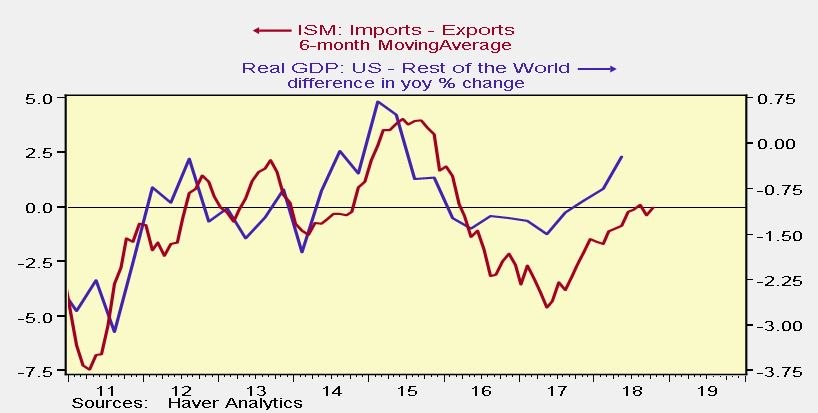
Before we review the preliminary Q3 GDP growth report, it’s important to recognize America’s relative outperformance in the rate of change terms over the global economy. 2018 has been a fantastic year of the rate of change outperformance for America as growth accelerated partially due to the fiscal stimulus while growth slowed in the rest of the world. The chart below is a great depiction of this.
Source: Haver Analytics
Real GDP growth in America is almost the same as the rest of the world. This is after growth was about 1.5% slower in America in mid-2017. The US has underperformed since early 2015. The 6-month moving average of the ISM imports shows similar information. It’s important to avoid the negative talk about how the manufacturing PMI fell from September to October because there are random vacillations from month to month. This survey has a small sample size. The October PMI was still consistent with 4.5% GDP growth, so it was far from a bad report.
Very Long, But Subdued Economic Recovery
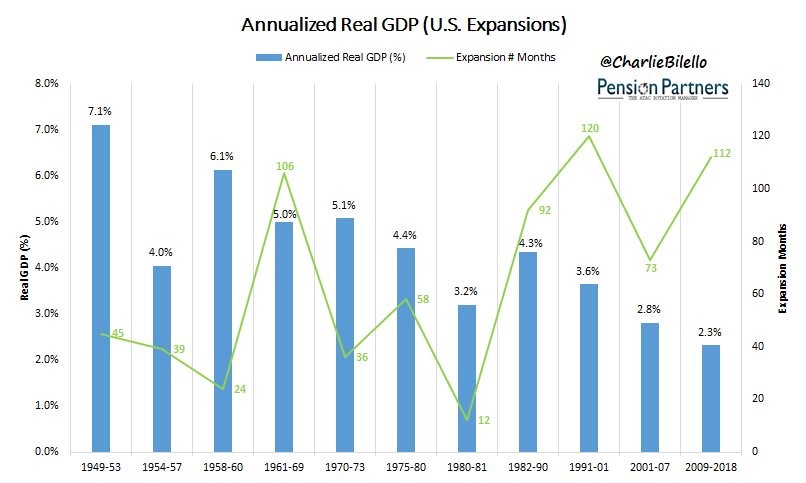
The negative chatter about the economy has gotten strong because of the correction in stocks. The same prognosticators who didn’t predict the correction are claiming it proves a recession is coming. That’s unlikely to be true in the intermediate term as the truck tonnage index recently hit a record high and the employment cost index is at a 10- year high. Both historically peak more than 6 months before the S&P 500. As you can see from the chart below, this is about to be the longest expansion since the 1800s (chart only demonstrates up until 1949). However, annualized real GDP growth is the lowest out of the expansions listed.
Source: Twitter @CharlieBilello
Total growth is only middling despite the length of this expansion. The September PCE report showed both headline and core inflation are at the Fed’s target of 2% which suggests the economy isn’t running hot.
Q3 GDP Growth Beats Estimates
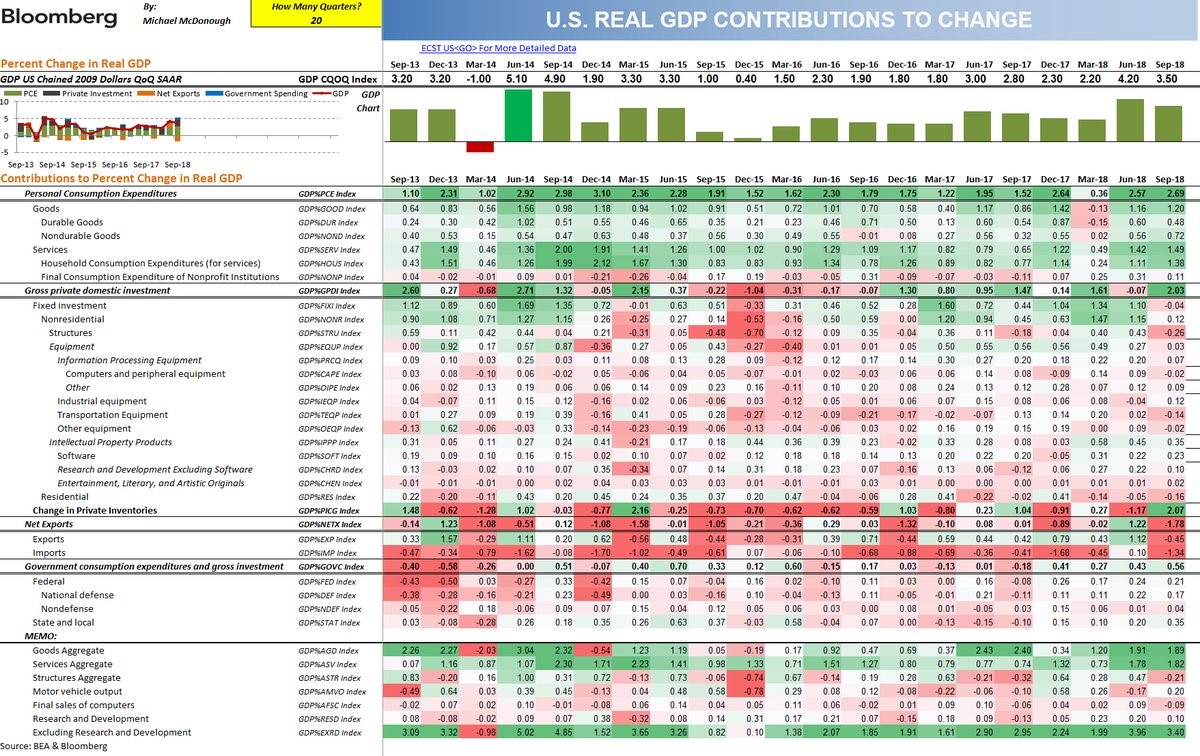
The preliminary Q3 GDP report will be revised, which means the final results won’t be exactly what we discuss here. However, it’s still an important report to review because, by the time the final results are out, everyone is focused on the next quarter. Real quarter over quarter GDP growth was 3.5% which beat estimates for 3.3% but slowed from 4.2% last quarter. The price index was up 1.7% which missed estimates for 2% and last quarter’s increase of 3%. Real consumer spending growth was the star of this report as it was 4% which beat estimates for 3.3% and last quarter’s growth of 3.8%.
Strong Consumer Spending Growth & Government Spending
(Click on image to enlarge)
Source: Bloomberg
The table above is a complete summary of the Q3 GDP report. We’ll be highlighting the most important parts. The biggest positive was consumer spending growth as it added 2.69% to GDP growth. This was the best figure since Q4 2014 where consumption added 3.1% to GDP growth. These past two quarters are like a slightly weaker version of Q2 and Q3 2014. That was the peak of the last mini cycle. There have been a few mini cycles in this expansion.
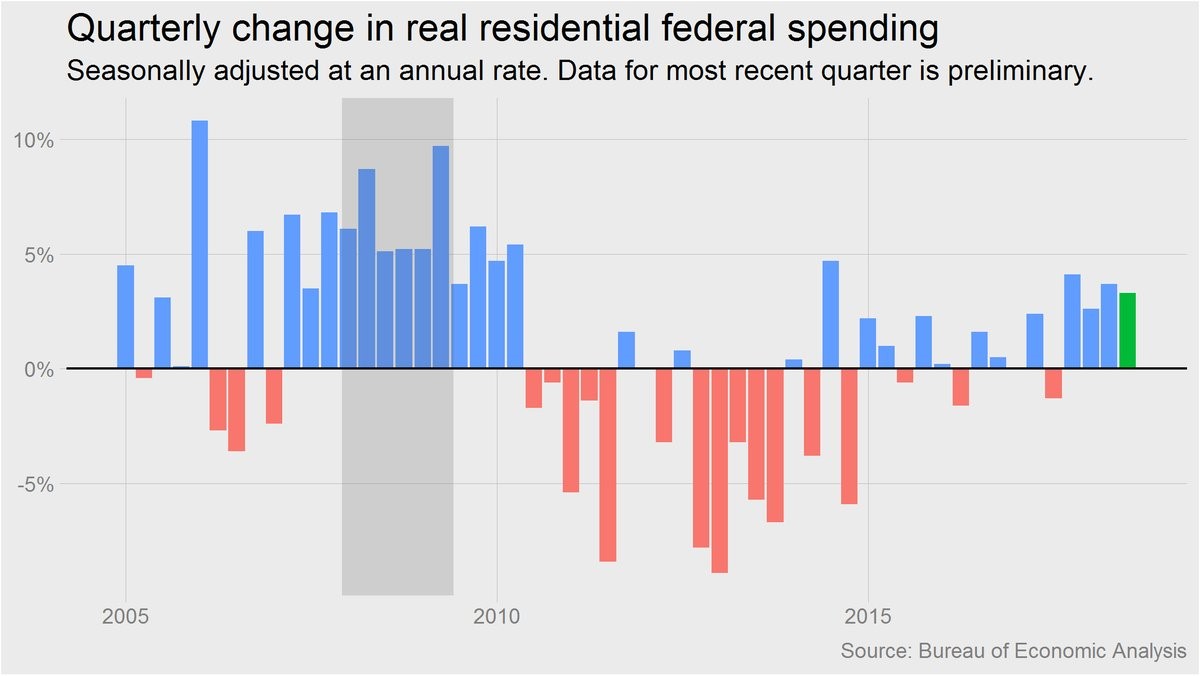
Government spending also was strong as it increased by 3.3%. The chart below shows this is the 4th straight quarter of spending growth.
Source: NY Times
This shows the recent fiscal expansion as increased spending was paired with tax cuts. Generally, it makes sense for the government to increase spending during recessions and pullback during expansions to smooth growth. The chart shows this happened up until this latest run. It’s not ideal to increase spending and the deficit when the economy is nearing full employment. Full employment is when the government generates cycle peak revenue. Government expenditures added 0.56% to GDP which is the biggest addition since Q1 2016 when it added 0.6% to growth. This level of help to GDP growth explains why investors are worried about what will happen when the fiscal stimulus runs its course.

Comments
Log in or sign up to join the conversation.