


Besides affordability being of great importance for potential homebuyers, housing also forms about 1/3rd of the entire CPI. House prices are not a component of the CPI, but historically their trend has led the official component, “Owners’ Equivalent Rent,” by about 12 to 18 months. And for about the last year, I have been beating the drum that housing prices have ceased being an engine of inflation. In fact, changes in repeat home sales prices as measured by both the Case-Shiller National Index and the FHFA Purchase Only Index are at levels that, with only one exception, have been at levels typically only seen during or after recessions.
This month’s report for April continued that trend.
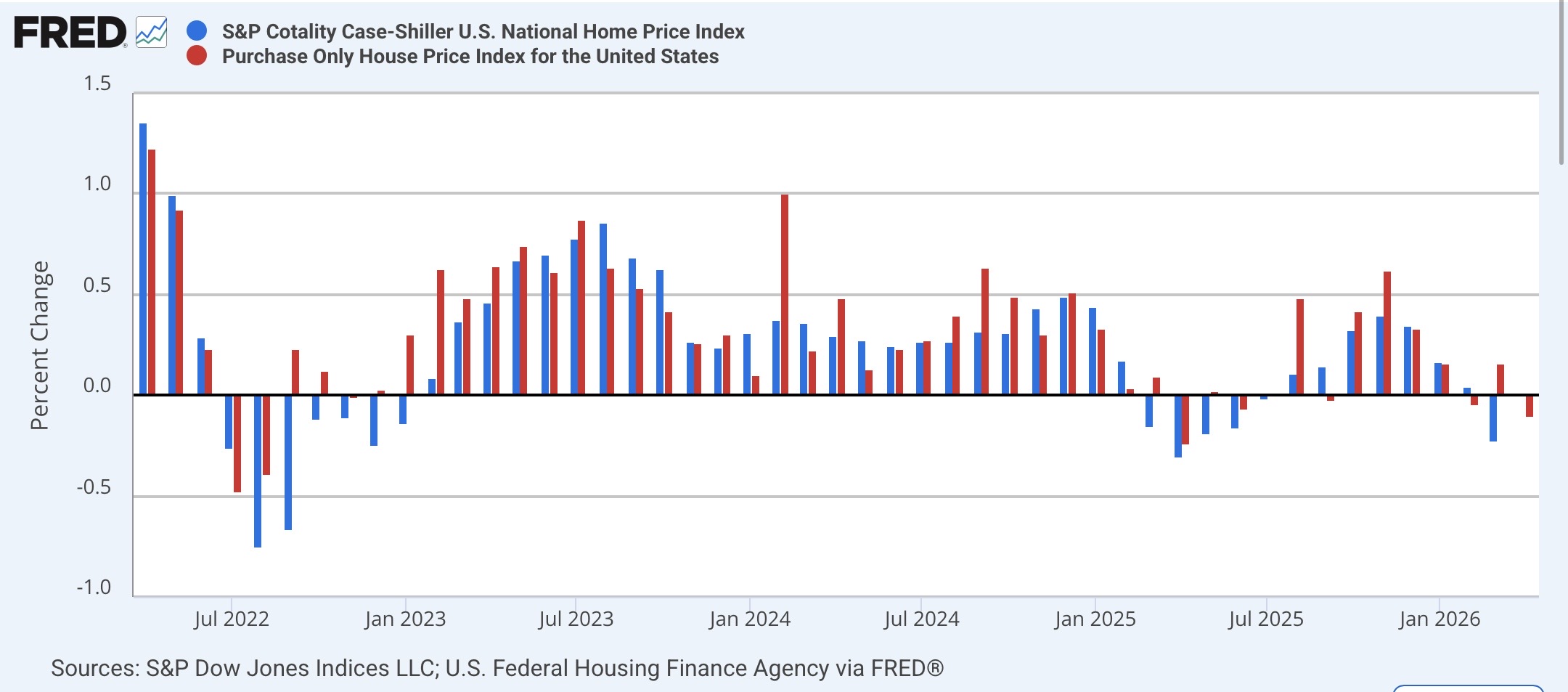
The seasonally adjusted Case-Shiller National index (blue in the graphs below) declined once again, this month by -0.1% for the three-month period ending in April, and the FHFA index (red) had the identical -0.1% decline [Note: FRED has not yet updated the Case-Shiller data]:
There is something of a divergence showing in the YoY comparisons of the two national indexes, however. The Case-Shiller national index increased only 0.8% YoY, slightly more than the 0.7% YoY gain last month, while the FHFA Index rose 0.3% on a YoY basis to a 2.0% increase. Either way, as the graph below shows, outside of the Great Recession’s housing bust, the 1991 recession, and briefly in 2022, these remain among the lowest readings ever:
Given the lead time between house prices and the official CPI shelter component, here is an update on the historical comparison [Note: CPI*2.5 for scale]:
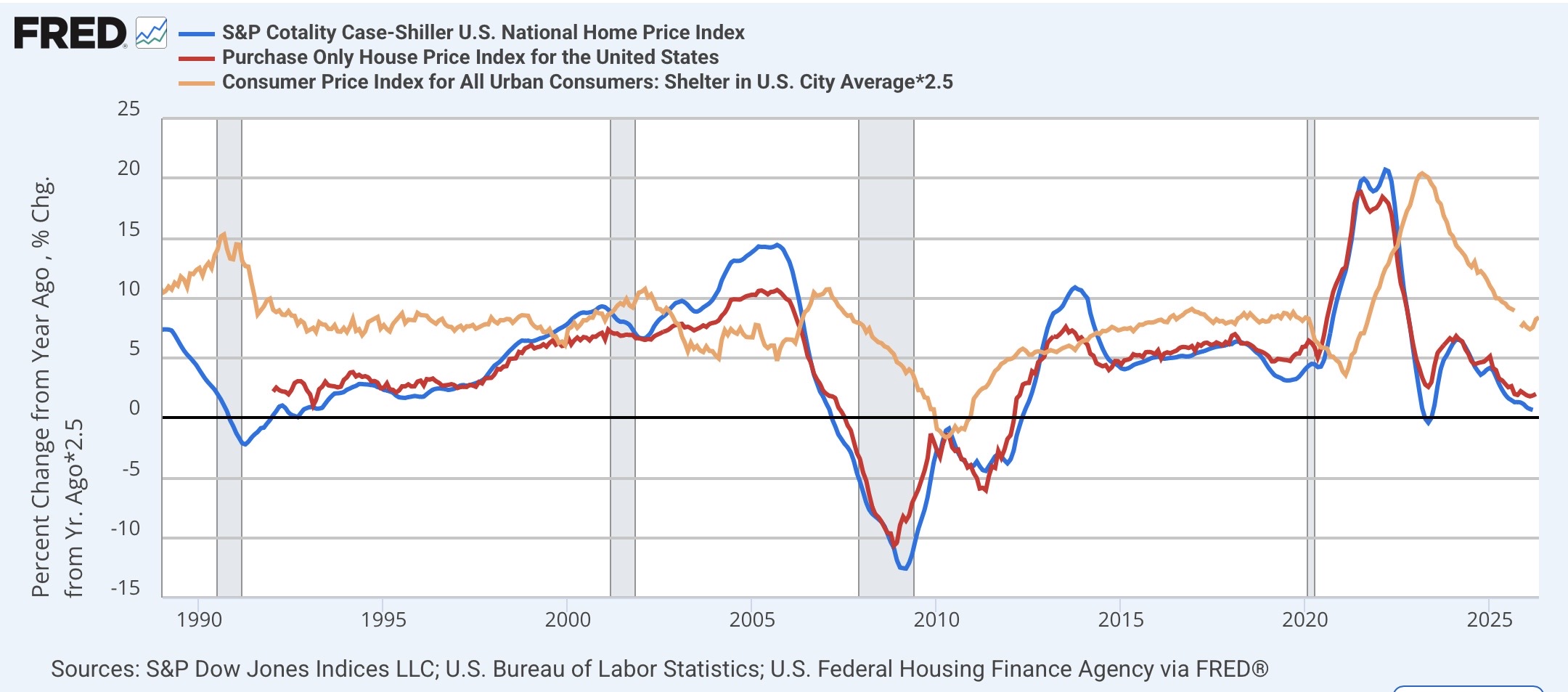
Just as in a similar episode back in 1991, the trend in house prices has continued slow disinflation. This has been complicated by the “shelter kludge” that the Census Bureau performed last November as a result of the government shutdown. Thus, I suspect the CPI shelter readings from November through March may have been artificially low, and the April and May readings of +3.3% and +3.4% may be closer to the ground truth. Nevertheless, this continues to show disinflation from the 3.6% reading immediately before the shutdown. Thus, I continue to believe that the repeat sales indexes point to continued slow deceleration in shelter inflation in the CPI.
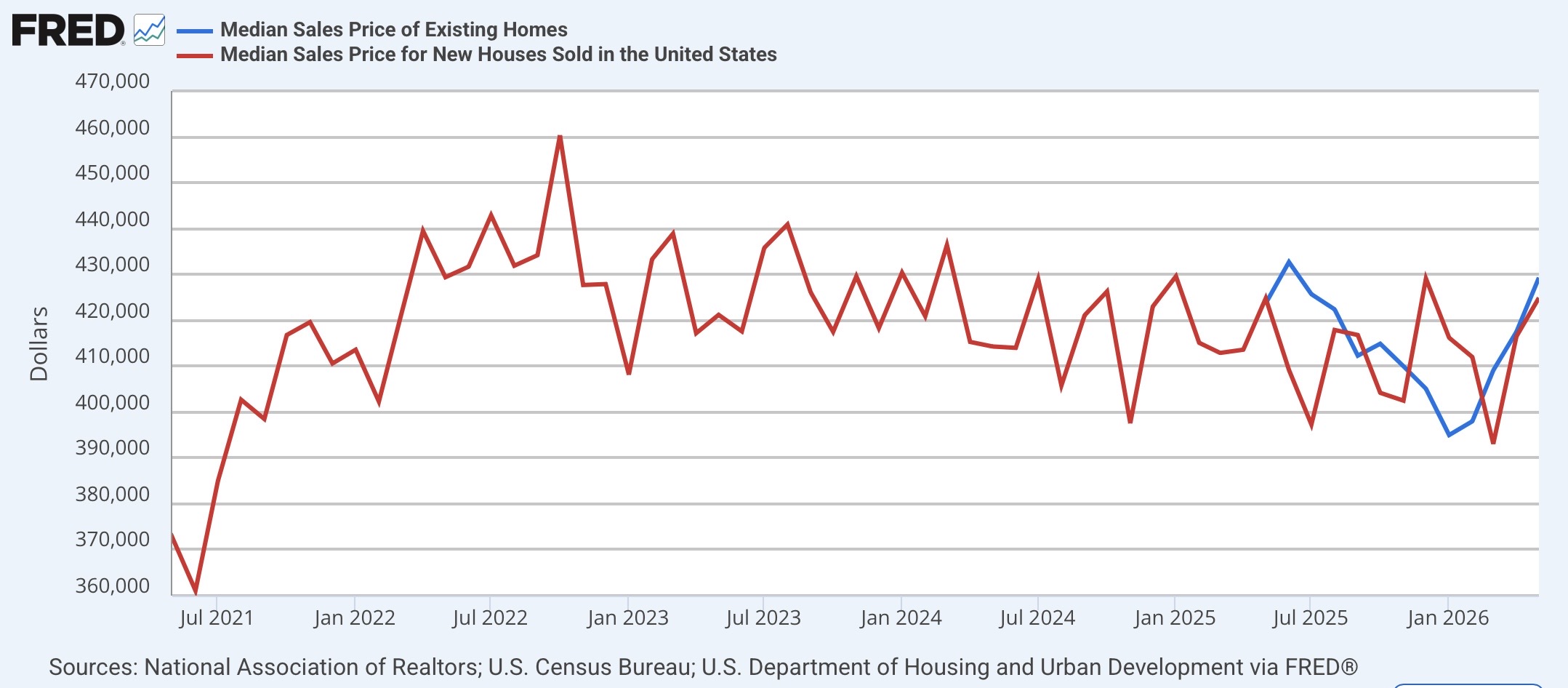
In this regard, it’s worth noting that the median price for an existing home, as most recently reported by Realtor.com, was only higher by 1.3% YoY, and for new single-family houses, as reported by the Census Bureau, there was no change whatsoever [Note: Realtor.com only allows FRED to post the last year of data]:
The good news is that in the real world, housing is barely contributing to inflation at all. The bad news, as shown in this final graph below, is that measured by prices, housing continues to be more unaffordable than at any time before the pandemic, including during the bubble of 2001-05, currently 2.6% above that peak:
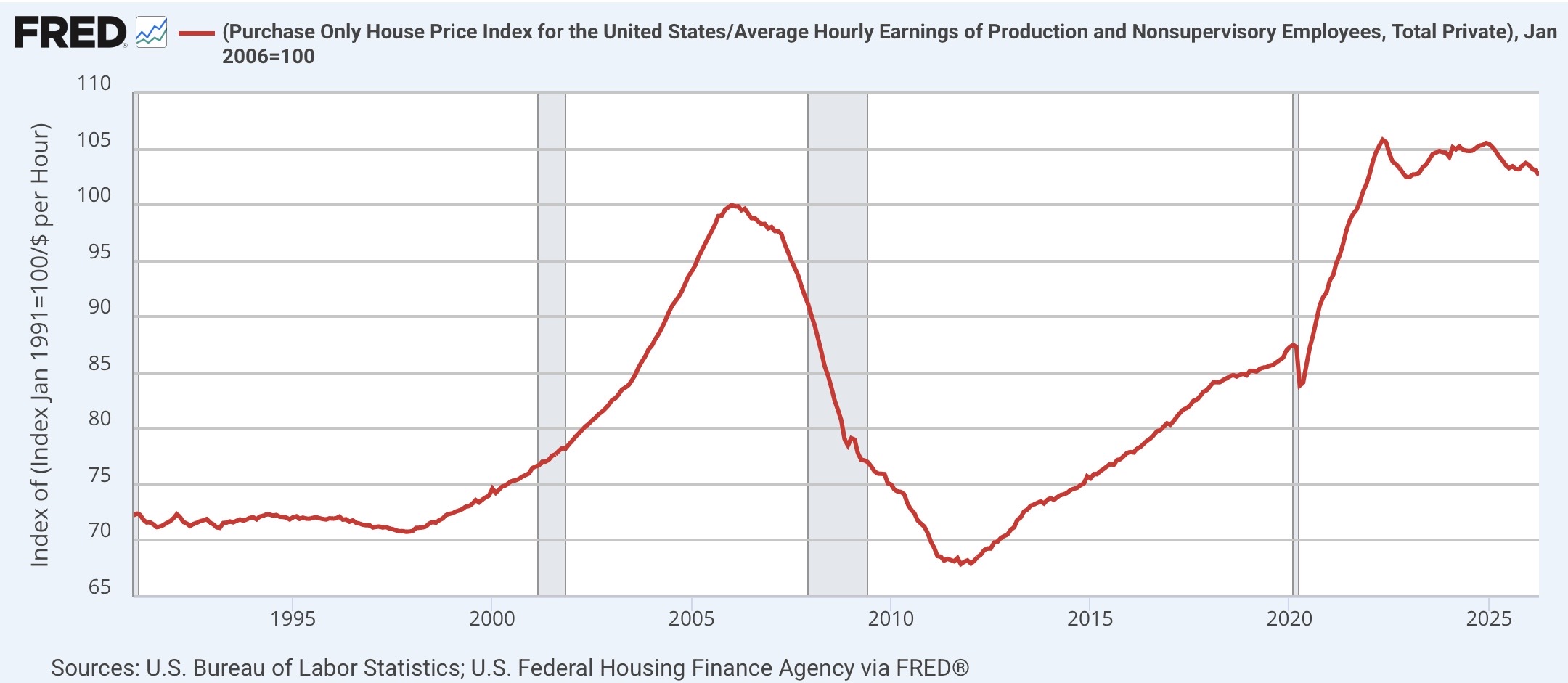
And that doesn’t even take into account the increase in mortgage rates from 3% right after the pandemic to over 6% now.



Comments
Log in or sign up to join the conversation.