

Modern underwater equipment is becoming smaller, more capable, and increasingly dependent on reliable electrical connections. Compact ROVs, AUVs, underwater sensors, cameras, lighting systems, and marine research instruments often need electrical interfaces that can operate in demanding environments without occupying excessive installation space. In these applications, a connector must balance compact dimensions with electrical reliability, environmental protection, and practical installation. HYSF Subsea develops specialized subsea connection solutions for marine and underwater equipment.
The Round Compact 2-8 Core Watertight Connectors are designed to provide compact multi-core connectivity for systems where installation space is limited but dependable underwater performance remains essential.
Compact Design for Space-Constrained Equipment
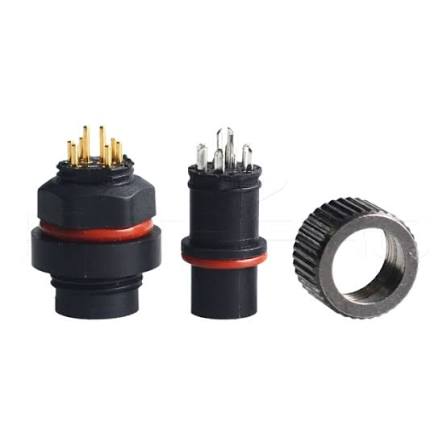
Available space is a major consideration when designing underwater equipment. Small ROVs and AUVs often contain cameras, sensors, lights, communication equipment, and control electronics inside compact housings. Using oversized connection components can make cable routing more difficult and increase the overall equipment footprint.
The round compact design provides an alternative for applications that require a smaller connection interface. HYSF Subsea offers configurations from 2 through 8 cores, allowing engineers to choose a suitable contact arrangement according to the electrical requirements of their equipment.
A compact connector can also contribute to cleaner cable management, particularly when several electrical components need to be integrated within a limited area.
Multiple Core Configurations
The series is available in 2-, 3-, 4-, 5-, 6-, and 8-core configurations. Each option is designed for different electrical requirements, giving equipment manufacturers greater flexibility during system design.
The 2-, 3-, and 4-pin versions are rated up to 5A, while the 5-, 6-, and 8-pin configurations are rated up to 2A according to the manufacturer's specifications. This makes it important to select the appropriate configuration based on the required current and number of electrical circuits.
For simpler systems, a lower core count can provide an efficient connection without unnecessary contacts. Equipment requiring additional circuits can use the higher-core configurations while maintaining the compact connector concept.
Watertight Construction for Underwater Environments
Marine equipment must operate in environments where water exposure and hydrostatic pressure can place significant demands on electrical components. A connector used underwater therefore needs to provide suitable environmental protection while maintaining dependable electrical contact.
HYSF Subsea uses HTV-molded construction with gold-plated copper contacts for this connector family. The neoprene rubber body is designed to provide protection around the electrical connection, while the plated copper contacts support electrical conductivity.
The manufacturer specifies hydrostatic pressure performance up to 60MPa and an operating temperature range of approximately -60°C to +80°C. Under the manufacturer's stated conditions, the product is associated with underwater depths of approximately 6000 meters.
These specifications make the series suitable for a wide range of marine and subsea applications when the connector is correctly selected and installed.
Wet-Mateable Connectivity
For many underwater systems, bringing equipment to the surface every time a connection needs to be changed is not practical. Wet-mateable connectors can provide additional flexibility by allowing appropriate connection and disconnection operations in submerged environments.
The Round Compact series is designed for wet-mate applications, making it relevant to equipment that may require underwater servicing, modular replacement, or repeated deployment. This feature can be particularly useful for ROV and AUV systems as well as underwater instrumentation.
HYSF Subsea specifies a mating life of more than 500 cycles for the series. This can be beneficial for equipment that is repeatedly assembled, tested, deployed, recovered, or serviced throughout its operational life.
Electrical Contact Performance
Reliable electrical contact is essential for underwater sensors, cameras, lighting systems, and other electronic equipment. Connection resistance and insulation performance can affect the stability and reliability of an entire subsea system.
The connector family uses gold-plated copper contacts and is specified with contact resistance below 0.01Ω. HYSF also specifies insulation resistance of at least 200MΩ at 1000V DC. The series is rated for applications up to 550V AC/DC, subject to the selected configuration and system requirements.
These characteristics give engineers important reference points when evaluating the connector for power and signal applications.
Applications in Compact ROV and AUV Systems
ROVs and AUVs need to balance functionality with strict size and weight requirements. Their electrical architecture may include cameras, lights, navigation equipment, sensors, communication components, and other instruments.
The compact dimensions of the Round Compact series can help designers integrate electrical connections into areas where larger connector families may be difficult to accommodate. Different core counts also make it possible to select a configuration based on the number of circuits required.
For small underwater vehicles, this can contribute to more organized cable routing and a more efficient use of internal equipment space.
Visit HYSF Subsea – https://hysfsubsea.com/
Suitable for Underwater Sensors
Underwater sensors often require compact electrical interfaces because the sensor housing itself may be relatively small. Marine research, environmental monitoring, oceanographic measurement, and subsea instrumentation systems can all benefit from appropriately sized connection components.
The availability of multiple core configurations allows engineers to select a connection according to the electrical architecture of the sensor. Lower-core options can be useful for simple power or signal connections, while higher-core versions can support systems with several electrical circuits.
The pressure and temperature specifications also make the series relevant to demanding marine environments when the complete system is designed within the specified operating limits.
Underwater Cameras and Lighting Equipment
Cameras and lighting systems are widely used for underwater inspection, scientific research, ROV operations, and marine observation. These systems require dependable electrical connections because interruptions can affect visibility, recording, inspection, and vehicle operation.
A compact multi-core connector can help integrate cameras and lights into small underwater housings while maintaining practical cable routing. The round form factor can also simplify integration into equipment where a compact circular mounting arrangement is preferred.
Selecting the appropriate number of cores and electrical rating ensures that the connection matches the requirements of the camera or lighting system.
Construction and Material Options
Mechanical durability is another important factor when selecting a subsea connector. HYSF Subsea specifies POM as the standard material for this connector family, with 316L stainless steel available as an option for applicable configurations.
The HTV-molded neoprene body provides the external structure around the connection, while gold-plated copper contacts form the electrical interface. This combination is intended to provide a balance between compact construction and the requirements of underwater operation.
Material selection should be based on the equipment's operating environment, mechanical requirements, pressure exposure, and expected service conditions.
Simple Installation in Compact Equipment
The Round Compact series uses a 3/8-24UNF-2A mounting thread, with a specified thread length of approximately 15mm and a base mounting radius of around 9.3mm.
These compact mounting dimensions can be useful when designing small underwater housings and equipment panels. Engineers should always verify the exact dimensional drawing for the selected connector before manufacturing the corresponding mounting interface.
Proper installation is important to maintain the intended environmental and mechanical performance of the connection.
Different Connection Formats
The product family includes male and female cable assemblies, receptacles, and plugs. This range gives equipment manufacturers flexibility when developing different connection arrangements.
Different connector formats can be selected according to whether the component is mounted directly into an equipment housing or used as part of a cable assembly. This allows the same general connector family to be incorporated into different subsea system architectures.
Such flexibility can simplify equipment design when manufacturers need similar compact connection solutions across multiple products.
Compatibility with Established Subsea Connectors
Compatibility can be an important factor when upgrading existing underwater equipment or developing replacement components. HYSF Subsea states compatibility and interchangeability with established subsea connector systems for applicable configurations.
This can provide additional flexibility to equipment manufacturers and system integrators working with established designs. However, exact compatibility should always be verified by comparing the pin configuration, dimensions, electrical ratings, mating components, and mechanical interface before installation.
How to Select the Correct Core Configuration
Choosing the right connector should begin with the electrical requirements of the equipment. Engineers should consider the number of required circuits, current per contact, voltage, cable specifications, mounting dimensions, available space, and environmental conditions.
The 2-, 3-, and 4-core configurations provide options for systems requiring up to 5A per contact, while the 5-, 6-, and 8-core versions offer additional contacts with ratings up to 2A per contact. The best choice depends on the complete electrical design rather than the core count alone.
It is also important to consider whether wet-mating capability is required, how frequently the connector will be serviced, and what pressure and temperature conditions it will experience.
A Practical Solution for Compact Subsea Connectivity
Compact underwater equipment needs connection solutions that can provide reliable electrical performance without creating unnecessary installation challenges. A well-designed connector can help equipment manufacturers manage limited space while supporting the electrical and environmental requirements of marine systems.
The Round Compact 2-8 Core Watertight Connectors from HYSF Subsea offer multiple core configurations, compact mounting dimensions, wet-mate capability, HTV-molded neoprene construction, and gold-plated copper contacts. Their specified pressure, temperature, insulation, and contact-resistance characteristics make them suitable for a variety of underwater applications.
For ROVs, AUVs, marine sensors, underwater cameras, lighting systems, and research equipment, selecting the appropriate configuration can provide a practical and space-efficient approach to dependable subsea connectivity.
Comments
Log in or sign up to join the conversation.