
Managing transportation between multiple office locations can become a significant challenge as businesses expand. Employees may need to travel between headquarters, branch offices, training centers, conference facilities, and other company properties throughout the workday. Relying on personal vehicles or arranging individual rides can lead to inconsistent travel times, parking difficulties, and unnecessary transportation expenses. A coordinated transportation strategy can provide a more reliable solution for businesses with multiple facilities. Companies considering corporate transportation services can also benefit from this guide to coordinating transportation between multiple office buildings when developing an organized employee travel program.
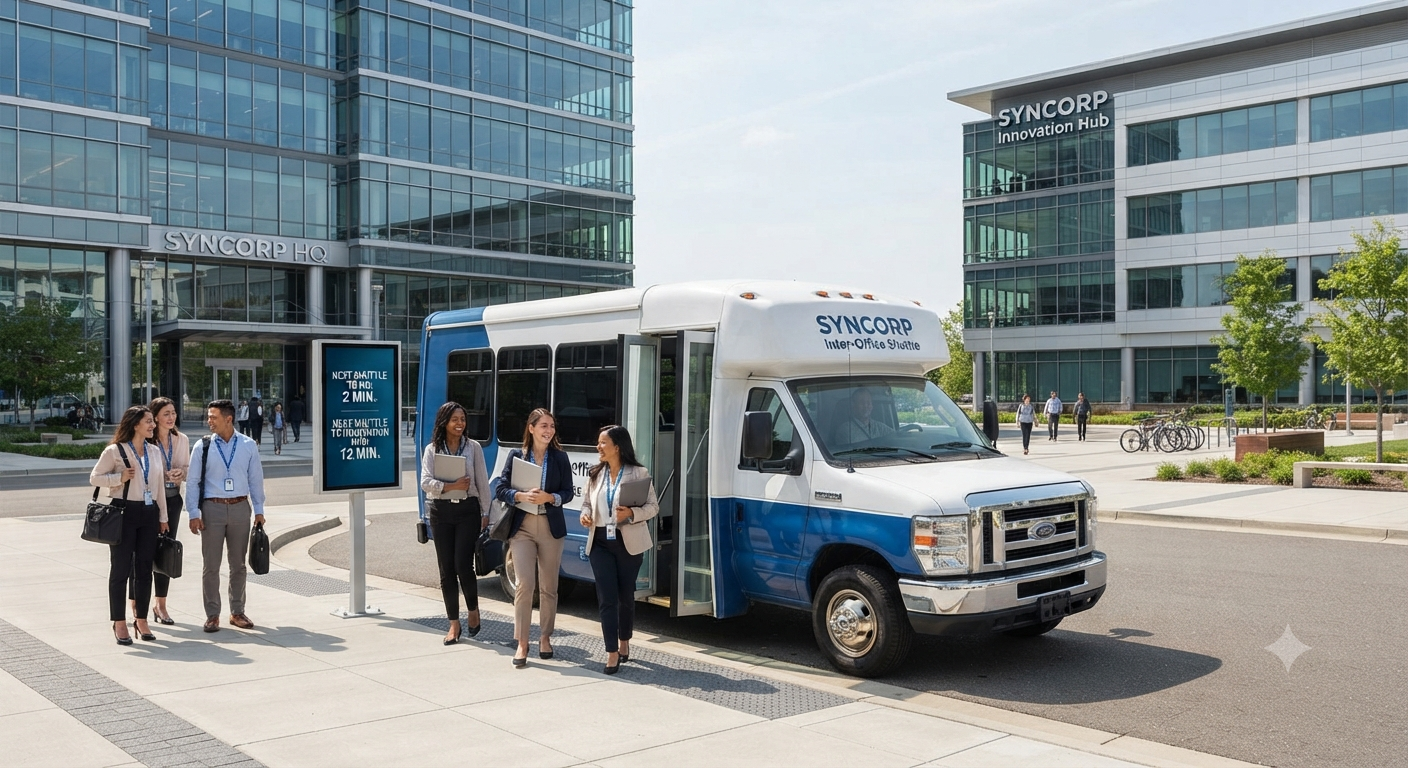
Why Reliable Corporate Transportation Matters
A company with several office locations needs a transportation system that supports employees without interfering with productivity. Traveling between buildings may be necessary for meetings, training programs, client presentations, department collaboration, or access to shared workplace resources.
When employees arrange transportation independently, travel times can vary significantly. Traffic, parking availability, and unfamiliar routes may cause employees to arrive late or spend valuable work time managing transportation. A centralized transportation solution provides greater consistency and gives businesses more control over how employees move between facilities.
Reliable transportation can also improve employee convenience. Instead of worrying about driving, parking, or finding a rideshare during the workday, employees can use a scheduled transportation service designed around the company's operating requirements.
Assess Transportation Needs Before Planning Routes
A successful corporate transportation program starts with understanding the company's actual travel requirements. Every business has different office locations, employee schedules, and transportation patterns.
Office managers should identify which buildings employees travel between most frequently. They should also examine when those trips occur and why employees need to move between facilities. Daily meetings may create steady transportation demand, while training sessions and company events may create temporary spikes.
Analyzing these patterns can help businesses determine which routes deserve regular service and which transportation needs can be handled on a more occasional basis. This prevents companies from creating an overly complicated system that does not reflect actual employee demand.
Choose the Appropriate Transportation Model
Different office networks may require different transportation approaches. A fixed-route shuttle can be effective when employees regularly travel between several nearby office buildings. The vehicle can operate according to a predictable schedule, allowing employees to plan their day with greater confidence.
A point-to-point service may be more suitable when employees primarily move between two major facilities. Direct transportation can reduce unnecessary stops and help employees reach their destinations more efficiently.
Businesses with changing or unpredictable requirements may prefer flexible transportation arrangements. Vehicles can be scheduled for specific meetings, training programs, or other business activities rather than operating throughout the entire day.
Choosing a transportation model based on actual employee needs can improve efficiency while providing a better experience for passengers.
Develop a Schedule That Supports Business Operations
Scheduling is one of the most important parts of corporate transportation planning. Employees should have enough time to travel between buildings without arriving late for meetings or losing excessive productive time while waiting for transportation.
The schedule should take normal business activities into account. If employees frequently attend meetings at another office in the morning, departures should be coordinated to allow sufficient travel time and a comfortable arrival buffer.
Transportation demand may change throughout the day. Morning and afternoon periods may require more frequent service, while quieter periods may not need the same level of coverage. Lunch schedules can also affect passenger demand when employees travel between buildings for shared dining or other amenities.
Traffic should be considered when establishing travel times. A schedule that looks efficient on paper may not work during peak congestion, so realistic buffers can make the service more dependable.
Select Vehicles That Match Passenger Demand
Choosing the right vehicle is essential for balancing employee comfort and transportation efficiency. Businesses should consider the number of passengers who normally use each route as well as the distances involved.
A minibus may work well for smaller employee groups and routes with limited passenger demand. Medium-sized groups may benefit from larger shuttle vehicles, while high-volume routes can require full-size charter buses.
Businesses should generally plan around normal passenger volume rather than selecting the largest vehicle simply because demand occasionally increases. For major company meetings, training programs, or corporate events, additional vehicles can be arranged to accommodate temporary increases.
Vehicle accessibility is another important consideration. Businesses should ensure that transportation options can accommodate employees with mobility needs and provide convenient boarding arrangements.
Make Pickup and Drop-Off Locations Convenient
Even a reliable vehicle and schedule may not be effective if pickup locations are inconvenient. Employees should be able to find shuttle stops easily and reach them without unnecessary walking.
Whenever possible, pickup and drop-off areas should be close to office entrances and positioned where vehicles can operate safely. Clearly marked stops can make the system easier for employees to understand.
Office managers should also coordinate with property management and security teams when planning transportation. Certain buildings may have restricted access, designated loading zones, or specific requirements for commercial vehicles.
Because office properties change over time, pickup points should be reviewed when construction, parking changes, or renovations affect accessibility.
Work With an Experienced Transportation Provider
A professional transportation provider can simplify the management of recurring corporate travel. Businesses should look for a provider that can offer dependable vehicles, experienced drivers, flexible scheduling, and responsive support.
Before starting service, office managers should discuss route requirements, passenger capacity, driver availability, maintenance procedures, insurance coverage, and contingency plans. It is also useful to establish how unexpected delays, vehicle problems, and last-minute transportation changes will be handled.
A flexible provider can adjust service as the business grows. If a company opens another office, changes working hours, or experiences an increase in employee travel, transportation should be able to adapt without requiring a complete redesign of the program.
Keep Employees Informed
Clear communication is essential for a successful transportation program. Employees need to know where to board, when vehicles depart, where they stop, and whether reservations are necessary.
Businesses can share transportation information through email, internal communication platforms, employee portals, digital calendars, or workplace applications. Providing the same information through multiple channels can make it easier for employees to access updates.
When transportation schedules or routes change, employees should be notified promptly. Clear communication reduces confusion and helps employees incorporate transportation into their regular work routines.
New employees should also receive information about available transportation during onboarding when inter-office travel is part of their responsibilities.
Plan for Traffic and Unexpected Disruptions
Corporate transportation must account for factors that can affect travel times. Traffic congestion, road construction, weather, accidents, and special events can all create unexpected delays.
Businesses can reduce the effect of minor disruptions by allowing reasonable travel buffers within the schedule. For important meetings or training sessions, it may be appropriate to schedule transportation earlier so employees have additional time to reach their destination.
A clear delay-notification process should also be established. Employees should know how updates will be communicated when a vehicle is delayed or a route needs to be modified.
Having a contingency plan can further protect operations if a vehicle becomes unavailable or a major road disruption affects the normal route.
Measure Transportation Performance
A reliable transportation program should be reviewed regularly. Businesses can evaluate passenger numbers, travel times, route utilization, employee feedback, and transportation expenses to determine whether the current system remains effective.
If a route consistently carries more passengers than expected, the business may need additional departures or a larger vehicle. If another route has low usage, the schedule may be adjusted to improve efficiency.
Employee feedback is particularly useful for identifying practical concerns. Workers may have suggestions about pickup locations, departure times, communication, or vehicle comfort that can help improve the program.
Regular evaluation ensures that transportation remains aligned with the company's changing requirements.
Build a Dependable Multi-Office Transportation Strategy
Reliable corporate transportation can make a significant difference for businesses operating across multiple office locations. By analyzing employee travel patterns and creating routes around actual demand, companies can provide a transportation system that supports productivity and convenience.
An effective program combines practical schedules, suitable vehicles, accessible pickup locations, clear communication, and dependable transportation support. It should also remain flexible enough to adapt when employee numbers, office locations, and business operations change.
For growing companies, professional corporate transportation can transform the way employees move between facilities. Instead of dealing with individual travel arrangements, parking challenges, and inconsistent arrival times, employees can rely on a structured transportation system designed around their workday.
With careful planning and ongoing evaluation, businesses can create a dependable multi-office transportation solution that improves employee convenience, supports punctuality, and helps different company locations operate as one connected organization.
Comments
Log in or sign up to join the conversation.