

Hand a spreadsheet of nine-digit codes to three different people and you will get three different reactions. The logistics specialist sees inventory. The engineer sees a bill of materials. The new buyer sees a wall of numbers with no obvious way in.
The third reaction is fair. A list of NIIN codes looks deliberately opaque, because most of the characters are intentionally meaningless. But there is real information in there, and knowing where to find it changes how you approach the search.
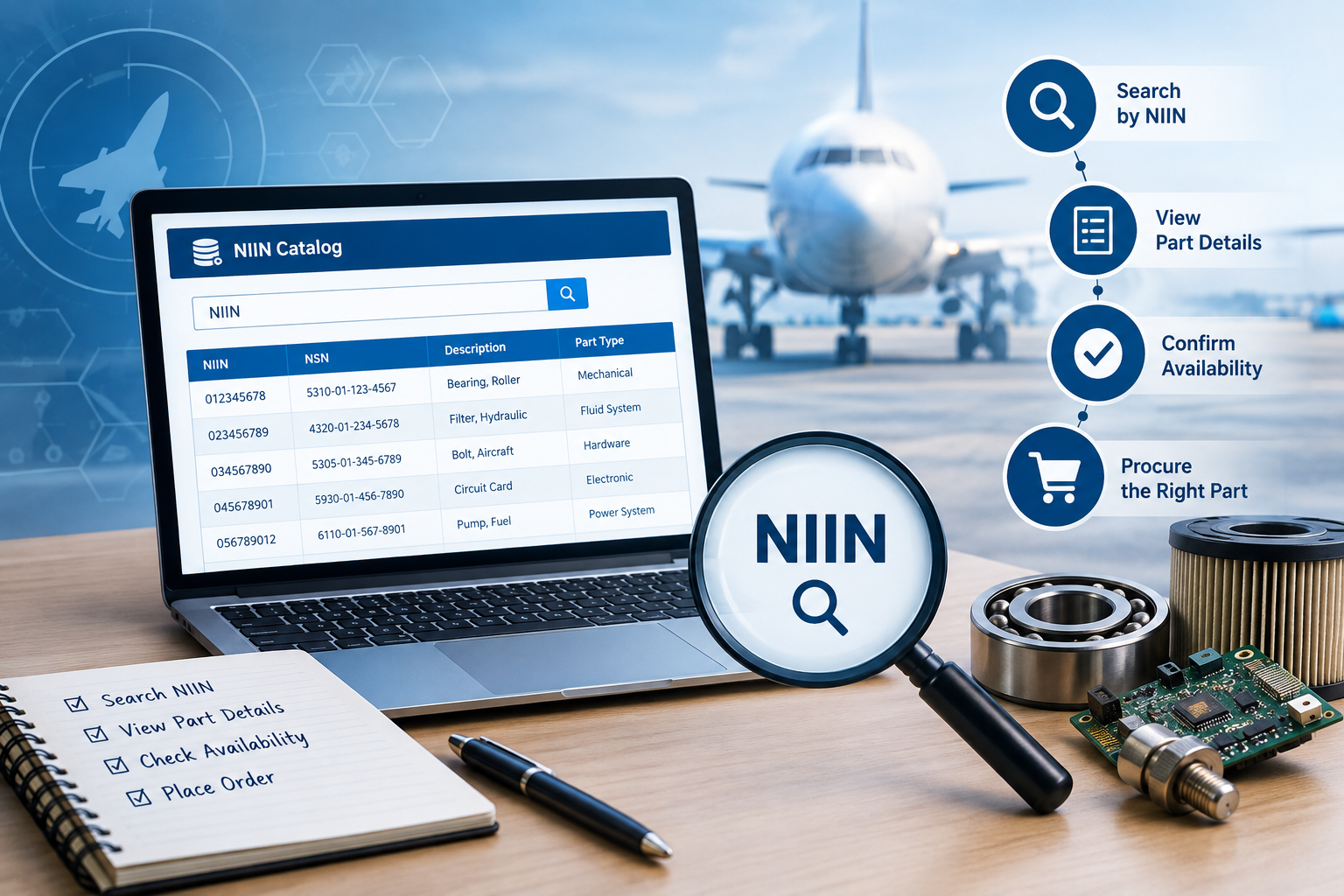
The Part That Means Something
A NIIN is nine characters. Only the first two carry information.
Those two characters are the National Codification Bureau code, and they record which country first cataloged the item. The United States uses 00 and 01. Other NATO and partner nations have their own assignments. Everything after those two characters is a non-significant serial value, assigned in sequence with no embedded meaning at all.
So when you scan a column of NIINs and see a mix of 00 and 01 prefixes, you are looking at items cataloged at different points in the system's history rather than at any difference in the items themselves. It is a useful signal for traceability paperwork and almost nothing else.
The genuinely useful classification lives one step up.
Where the Category Information Hides
If your list holds full NSNs rather than bare NIINs, you have four extra characters in front, and those four are worth reading.
A National Stock Number is thirteen characters, written as 9999-00-999-9999. The first four are the Federal Supply Classification Group. The first two of those identify the broad supply group, and the second two narrow it to a class. The remaining nine characters are the NIIN.
A few classes you will run into constantly:
Code Covers
1560 Airframe structural components
1620 Landing gear components
2915 Engine fuel system components
3110 Bearings, antifriction
4730 Fittings for hose, pipe, and tube
5305 Screws
5935 Connectors, electrical
5961 Semiconductor devices
6105 Motors, electrical
Sorting a mixed list by supply class before you start searching groups similar items together and makes the verification step far faster, because you are checking the same kinds of attributes repeatedly instead of context-switching every line.
One caution: the classification can be revised over time, which changes the NSN. The NIIN never changes and is never reused. That is why the NIIN is the identifier worth storing in your own systems, and the NSN is the one worth treating as a snapshot.
How the Search Changes by Sector
The mechanics of a NIIN lookup are identical whatever the item is. What differs is which attributes you verify before committing.
Aviation Parts
Traceability tends to matter more than price. When you resolve a line for aviation parts, the questions are about documentation as much as specification: what paperwork accompanies the item, what the approved manufacturer list looks like, and whether the cataloged item matches the effectivity called out for your specific tail number or configuration.
Airframe hardware, actuators, hydraulic fittings, and landing gear components all sit in classes where visually similar items differ in load rating or material. The catalog record will tell you. The photograph will not.
Electronic Components
Obsolescence dominates. Electronic components cycle out of commercial production far faster than the platforms that use them, so a meaningful share of any list of NIIN codes in this category will return items no longer made by the original manufacturer.
This is where NIIN-based searching earns its keep. Because the NIIN identifies the item rather than a manufacturer's part number, one search surfaces every approved source that has ever supplied it. Connectors, relays, semiconductors, and circuit card assemblies frequently have alternates that a part-number search would never reveal.
Industrial Parts
Volume and interchangeability are the drivers. Pumps, valves, seals, gaskets, hose assemblies, and power transmission hardware often have commercial equivalents sitting alongside the cataloged item.
The temptation is to substitute freely. The discipline is to verify form, fit, and function first, because two items being functionally similar is exactly why they were assigned separate NIINs rather than one.
Cleaning a List Before You Search
Four checks catch most problems.
Format the column as text. Spreadsheet software converts 015277582 into 15277582 by dropping the leading zero, and the truncated value returns nothing. This is the most common failure in the entire process and the easiest to miss, because the cell still looks populated.
Standardize the punctuation. Dashes are optional in a NIIN. Most search tools accept 01-527-7582 and 015277582 equally, but bulk uploads are cleaner without them. Pick one convention and apply it to the whole column.
Treat the field as alphanumeric. NIINs were purely numeric until around 2000. After that, certain positions could take uppercase letters. Any system that validates the field as an integer will reject perfectly valid newer codes.
Check character count. Nine characters, every time. A row with eight is almost certainly a dropped leading zero. A row with thirteen is a full NSN that never got trimmed.
Turning the List Into an Order
Once the list is clean and resolved, the remaining work is consolidation.
Splitting a list of NIIN codes across multiple suppliers multiplies the paperwork, the shipments, and the number of places a schedule can slip. A catalog with enough depth to cover aviation parts, electronic components, and industrial parts in one place lets the whole bill of materials ride on a single request.
Send the spreadsheet as a file with quantities and required dates attached to each line, rather than pasting numbers into an email body. Include long-lead flags if you have them. The first quote response is the right time to learn about a sole-source item, not the third.
Where to Search
One Click Purchasing maintains a NIIN catalog drawing on an inventory of over two billion products, with components sourced from top-tier manufacturers and put through quality assurance testing and inspection before shipment. A global supply chain network supports tight delivery windows, and quotes come back within fifteen minutes.
Browse by NIIN or send your full list through an instant RFQ to get everything priced at once.
Comments
Log in or sign up to join the conversation.