

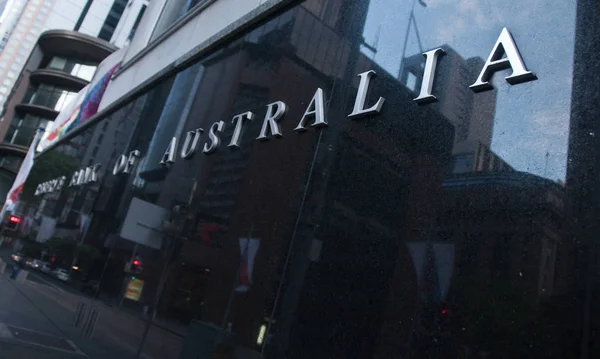
Australia just pulled off something that almost nobody saw coming six months ago. After three rate cuts through 2025 that had markets celebrating, the Reserve Bank of Australia (RBA) has done a sharp U-turn and hiked rates twice in a row, pushing the cash rate to 4.10%. Meanwhile, the US Federal Reserve is hinting at cuts later this year. This kind of policy split between two major economies doesn't happen often, and when it does, things get interesting fast. I've been tracking the Australian market closely, and right now there are a few angles here that I think deserve serious attention.
From Cuts to Hikes in Five Months
Let me rewind briefly. Through 2025, the RBA delivered three consecutive rate cuts, bringing the cash rate down to 3.60%. Consumer confidence started picking up, property markets firmed, and the general mood was cautiously optimistic.
Then the data shifted.
GDP came in stronger than expected. The labour market refused to soften, with unemployment hovering around 4.1-4.3%. And inflation, which had been trending down nicely, reversed course and climbed back to 3.8% by January 2026. That's well above the RBA's 2-3% target band.
The RBA's February meeting delivered the first hike, taking the cash rate to 3.85%. March brought a second 25 basis point increase to 4.10%, though the vote was tight at 5-4. That split tells you something. The board isn't unified. Some members clearly worry about overdoing it.
And then the Middle East situation made everything worse.
Oil, Iran and the Inflation Shock Nobody Wanted
The conflict with Iran, now in its fifth week, has effectively closed the Strait of Hormuz and sent crude oil prices above US$100 a barrel. For Australia, which imports most of its refined fuel, this is a direct hit.
Petrol prices have jumped roughly 15% in a matter of weeks. The Australian government has already released 762 million litres from domestic fuel reserves and lowered diesel specification standards to free up an additional 100 million litres. When governments start tapping strategic reserves, you know the situation is serious.
The Deloitte Access Economics Business Outlook for March 2026 put it bluntly. Fuel is an input cost across much of the economy, so the pain won't stay at the petrol pump. It will filter through to transport, food, manufacturing and services as 2026 goes on.
I have to admit, the speed of this turnaround has caught me off guard. Six months ago I was writing about rate cuts and a recovery in consumer spending. Now I'm watching the RBA reverse every single cut it made in 2025, with ANZ forecasting a third hike to 4.35% in May.
Current RBA forecasts suggest headline inflation could spike above 5% if petrol prices stay elevated. That's a number we haven't seen in a while.
The Aussie Dollar Paradox
Here's where it gets strange. Normally, when a central bank raises rates, its currency strengthens. Higher yields attract foreign capital. Textbook stuff.
But the Australian dollar has actually fallen to a two-month low against the US dollar, trading around 68.69 US cents. According to Morningstar's ASX market report, the Aussie lost 2.1% in a single week, its biggest drop since March 2025.
Why? Because the AUD is what traders call a "risk-sensitive, pro-cyclical commodity currency." When global risk appetite drops, the Aussie tends to sell off regardless of what the RBA does with rates. The geopolitical shock from the Iran conflict is overwhelming the interest rate differential.
This creates a genuinely unusual setup. The RBA is tightening policy, which should support the currency. But risk-off sentiment is dragging it lower. For forex traders, that tension is worth watching closely, because it can't last forever. Something has to give.
Today's RBA minutes release added more fuel. The board explicitly debated further hikes at the March meeting and signalled low tolerance for inflation staying above target. The AUD jumped on the news. So the tug-of-war continues.
The ASX 200 Is Feeling the Pain
Australian equities have had a rough few weeks. The S&P/ASX 200 has dropped around 8% from this year's highs, with Monday's session closing at 8,461 after falling as much as 137 points intraday.
The sector breakdown tells an interesting story though. I've pulled the numbers together below.
Sector | Recent Performance |
|---|---|
Energy, utilities | Up (benefiting from high oil prices) |
Consumer staples | Holding up |
Banks | Down 1.7-3.8% (rate hike pressure on mortgages) |
Tech (WiseTech, Pro Medicus) | Down 2.7-4.9% |
Mining (Genesis, Greatland) | Down 4.0-4.2% |
Travel (Qantas) | Down 1.1-1.9% |
It's a classic stagflation rotation. Money flows into energy and defensives, out of growth and rate-sensitive sectors. Banks are in an odd spot. Higher rates usually help their margins, but if borrowers start struggling with repayments, credit quality becomes a concern.
The NAB Forward View for March 2026 warned that the global outlook has weakened significantly, with elevated risks across the board. AMP's weekly market update noted that money markets are now pricing in nearly three rate hikes for the full year. That's a dramatic shift from the rate-cut expectations I had just months ago.
What the RBA Is Really Worried About
Reading between the lines of the March decision and today's minutes, the RBA's core concern is clear. It's not just current inflation. It's inflation expectations.
Short-term measures of inflation expectations have already risen. Once people start expecting higher prices and adjusting their behaviour accordingly (demanding higher wages, pre-buying goods, locking in contracts at higher rates) inflation becomes self-reinforcing. The RBA knows this, which is why Governor Bullock has signalled a willingness to risk a recession if that's what it takes to keep inflation expectations anchored.
That's a bold position. And it puts Australia on a very different path from the US, where the Fed appears to be leaning toward easing.
So What Does This Mean for Investors?
I'm watching a few things closely, and I think there are real opportunities here if you know where to look.
The AUD/USD Snap-Back Trade
This is the one that interests me most. Right now, the Aussie dollar is being dragged down by geopolitical fear, even though the RBA is hiking rates while the Fed is leaning toward cuts. That's a mismatch that usually corrects itself.
If the Iran conflict de-escalates, or even just stabilises, the AUD could rally hard. The rate differential alone should support it. So if you're a forex trader, this could be a setup worth positioning for. A long AUD/USD position with a tight stop below recent lows is one approach I'd consider. The risk is obvious: if the conflict escalates further, the Aussie drops more. But the reward-to-risk ratio looks attractive at these levels.
Australian Energy Stocks
While the broader ASX 200 is down 8%, energy stocks have been the clear winners. Companies like Santos and Beach Energy benefit directly from elevated oil prices. If you believe oil stays above US$100 for a while (and with the Strait of Hormuz still disrupted, that seems likely) then Australian energy producers could keep outperforming.
There's a secondary play here too. With the government releasing strategic fuel reserves and adjusting diesel standards, downstream logistics and fuel distribution companies are operating in a tighter supply environment. That usually means better pricing power.
Shorting or Underweighting Aussie Banks
This is more of a defensive idea. The big four banks have already dropped 1.7-3.8%, and the pressure isn't going away. Higher rates squeeze borrowers, and Australian household debt levels are among the highest in the world. If the RBA hikes again in May, mortgage stress will climb. That's bad for credit quality, and eventually bad for bank earnings.
I wouldn't go aggressively short, but reducing exposure to the banking sector or looking at put options as a hedge seems sensible right now.
Watching for a Dip-Buy in Aussie Tech
Names like WiseTech Global and Pro Medicus have been hit hard, down 4.9% and 2.7% respectively. These are quality companies that have been caught up in the broader sell-off. If you've had them on your watchlist, a further dip could present a decent entry point. The key is patience. I'd want to see the May CPI data and the next RBA decision before committing capital here.
The Property Angle
This one is less about trading and more about macro positioning. Each 0.25% rate increase reduces borrowing capacity for a median-income household by roughly $18,000. Two hikes means approximately $36,000 less borrowing power. A third would push that closer to $54,000.
Sydney and Melbourne are most exposed. But Perth, Brisbane and Adelaide are holding up better due to tighter housing supply. If you're looking at Australian REITs or property-related equities, that geographic split matters.
The Bigger Picture
What I'm seeing in Australia right now is a case study in how quickly the economic picture can flip. A few months ago, the story was about rate cuts, recovering confidence and a gentle return to normal. Now it's about war-driven energy shocks, re-accelerating inflation and a central bank that's prepared to inflict short-term pain to prevent longer-term damage.
The policy divergence with the Fed makes it especially worth watching. If the RBA keeps hiking while the Fed starts cutting, the yield differential could eventually pull capital into Australian assets. But that assumes the conflict doesn't escalate further and that the Australian economy can absorb the higher rates without cracking.
I can't say for sure which way this breaks. But the setup is unusual enough that it deserves attention, even if Australia isn't normally on your radar.

Comments
Log in or sign up to join the conversation.