

Close your ears Mr President, but 50bp might be the right move, as it could be more fitting with how Chair Warsh might like to pursue policy. We're not calling for it, as we go for 25bp. But, is Chair Warsh just going to deliver the market discount? Really? After all that 'we'll do things differently' talk? This is why this meeting is so intriguing.
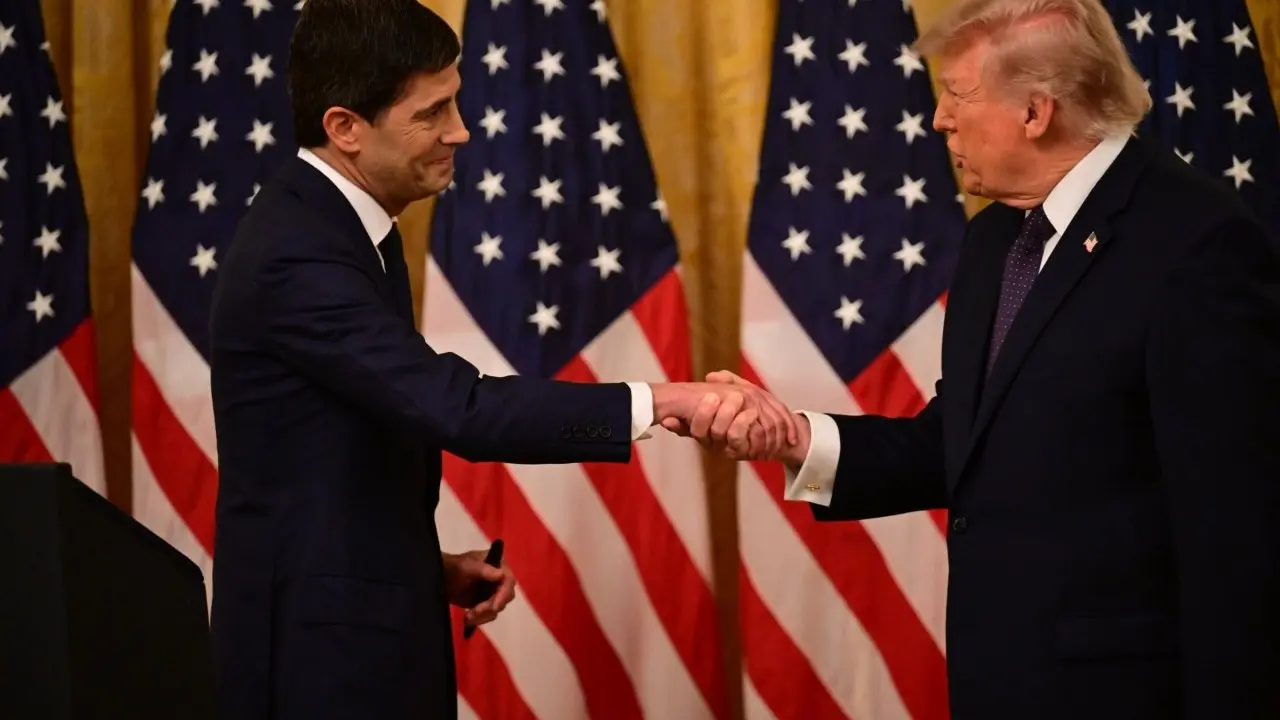
We think a 25bp hike. But lets discuss
So, how are we positioned ahead of the Fed decision? Basically, the Federal Reserve must hike, and if it doesn't, it has quite some explaining to do, as a hike is practically fully discounted. The issue is just that. Chair Warsh would be delivering on the market discount, one that he, to a significant extent, manufactured through guidance (from his Jackson Hole speech). This is precisely the round and round that Chair Warsh voiced as quite sub-optimal: the circular from Fed guidance to the market discount to Fed delivery of that discount. There are two alternatives. One is no change in rates, which is not impossible given that we're still getting our heads around Warsh. But still, quite unlikely, partly as it could really kill off the back end.
The other option is to hike by 50bp. Doing so would see the Fed take some degree of control of the situation, which may well be more preferable from Chair Warsh's perspective. Presumably, such a move would not be followed by forward guidance (as that's not what he likes), but it could still be "guided" as akin to a "one and done", or at the very least, getting ahead of the curve, through a chunky "insurance hike". That's the reward. But the risk could be market instability. The back end should be comforted by this, as the Fed would be seen to be actively protecting it. But it could just as easily freak out the back end, as it validates the 100bp rise seen in the 10yr yield in the past half year, and it engineers a follow-through sell-off. All things considered, this is the move that is more likely to tame the back end (if it can be tamed at this juncture).
For clarity, we're going for 25bp. See more here. And for our views on longer tenor rates, see more here.
Term premium can keep building, bear steepening curves
Rate markets continue to show volatility and higher longer rates suggest not everything is about near-term central bank expectations. The term premium is doing its own thing and adds uncertainty to the rates outlook. Even if oil prices were to ease lower from here, other factors might keep the long end sticky at elevated levels. For one, the yield on a 30Y Japanese government bond is rising rapidly again. Meanwhile, lower liquidity at such longer tenors in the euro swap space is adding to the volatility. US deficit concerns are also unlikely to fade.
The question is then, who wants to jump in at these higher rates. Exposures to long-duration bonds are typically a hedge against recession risk, but this doesn’t seem a focus for markets currently. Typically, the term premium can keep rising in favourable economic circumstances as growth and positive sentiment add upward pressure. Yet we cannot forget the flip side of this. Booms are followed by busts. Timing is of course the issue here. We could be at the beginning of a cyclical upswing driven by AI as the driving engine, or we could be at peak global growth followed by a cooling from here onwards. Plenty of arguments for both directions. For now, we think the upward pressure can sustain. For 2027 we are, however, more pessimistic, especially on the US economic outlook.
Wednesday’s events and market view
The Fed will take the spotlight on Wednesday. By now, the market is pricing an over 90% probability of a hike, which would take the Fed funds target range to 3.75-4%. One thing market participants will watch is whether the dot plot pencils in more tightening by the end of this year.
Ahead of the Fed meeting there will be some notable data releases over the course of Wednesday, starting with the UK inflation numbers for August. In the eurozone we will get the industrial production data for July. Of further interest surrounding the debate about second-round inflation effects will be the European Central Bank’s release of its wage tracker. Speakers scheduled for the day are Vujcic and Nagel from the ECB.
Turning to the US, import/export prices can round off the inflation picture; retail sales are expected to have improved in August. We will also get the mortgage application numbers and the NAHB housing market index.
In primary markets, Germany taps two ultra-long bonds (€2.5bn).



Comments
Log in or sign up to join the conversation.