

Although manufacturing is far less important to the US economy than it was in the decades after World War II, it is still about 25% of the total weighting; and further, it is more vulnerable to shocks than the services portion of the economy. Which means, for forecasting purposes, it is always a sector that turns down in advance of a general downturn, even if a sharp downturn in manufacturing by itself is generally no longer enough to bring about a recession. Put another way, a downturn in manufacturing is a necessary, but not sufficient, leading indicator for the economy.
At the beginning of this month, the ISM manufacturing index continued its string this year of expansioinary readings. The three month averages of its headline and new orders indexes, which smooth out some volatility, were steady at 52.6 and slightly lower at 54.5, respectively, with any reading above 50 indicating expansion:
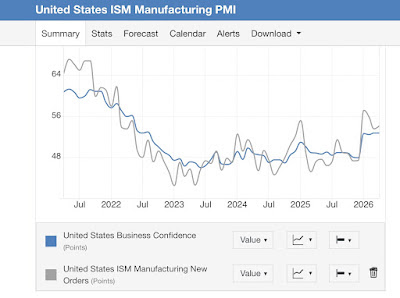
But I also noted that the prices paid subindex rose sharply to the highest number since May of 2022.
Those trends have continued with the first May readings from the New York and Philadelphia Fed regional manufacturing surveys.
To begin with, the headline numbers were 19.6 for New York (orange in the graphs below), the highest index result since 2022, while the Philadelphia headline number (gold in the graphs below) was slightly negative, at -0.4. To smooth out these very noisy series, I also show the average (blue):
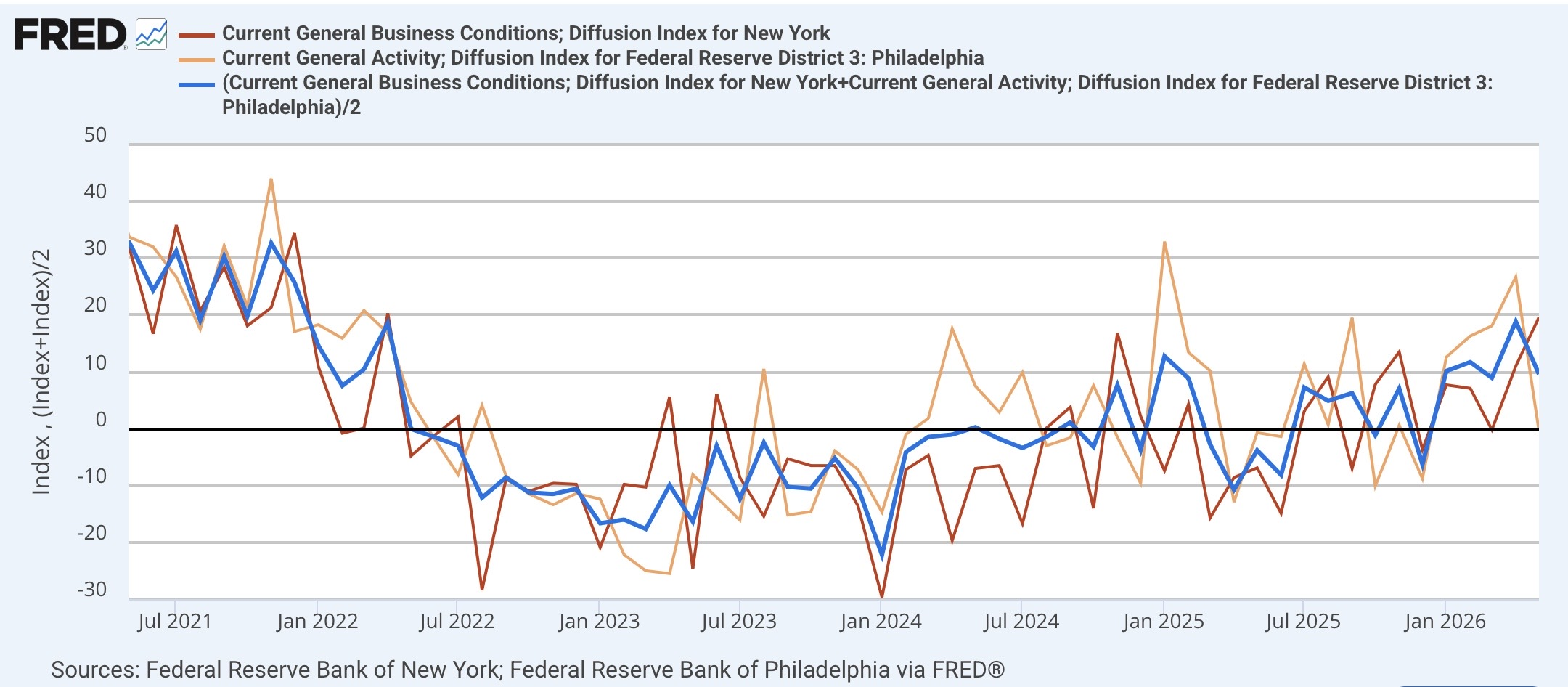
The general trend of expansion in manufacturing since late last year is apparent.
Further, the more leading new orders components of the regional surveys was similar, with New York showing robust expansion, and Philadelphia very minor -1.4 contraction. The average of the two was less positive than in April, but the three month average was the most positive since early 2025:
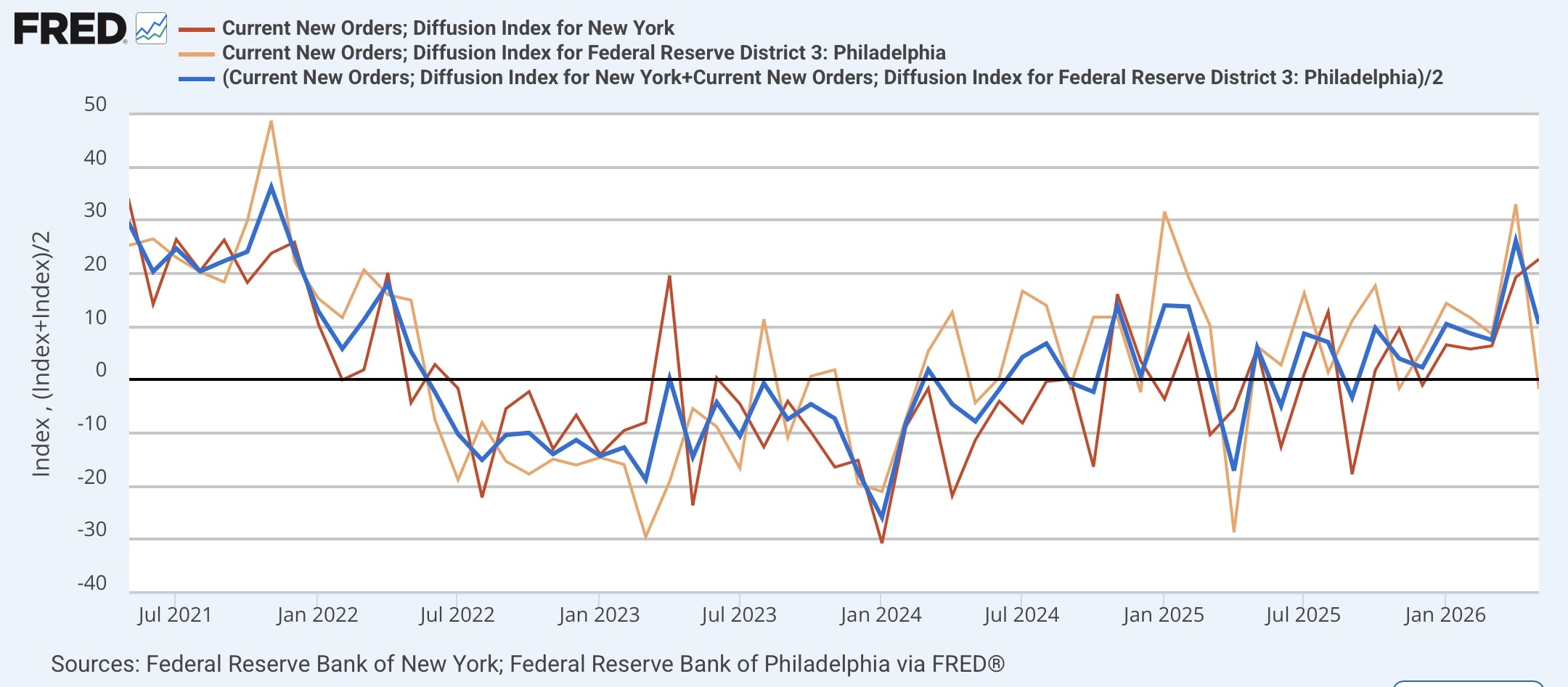
But if the production portion of the surveys was positive, inflationary problems reared their head in the pricing components.
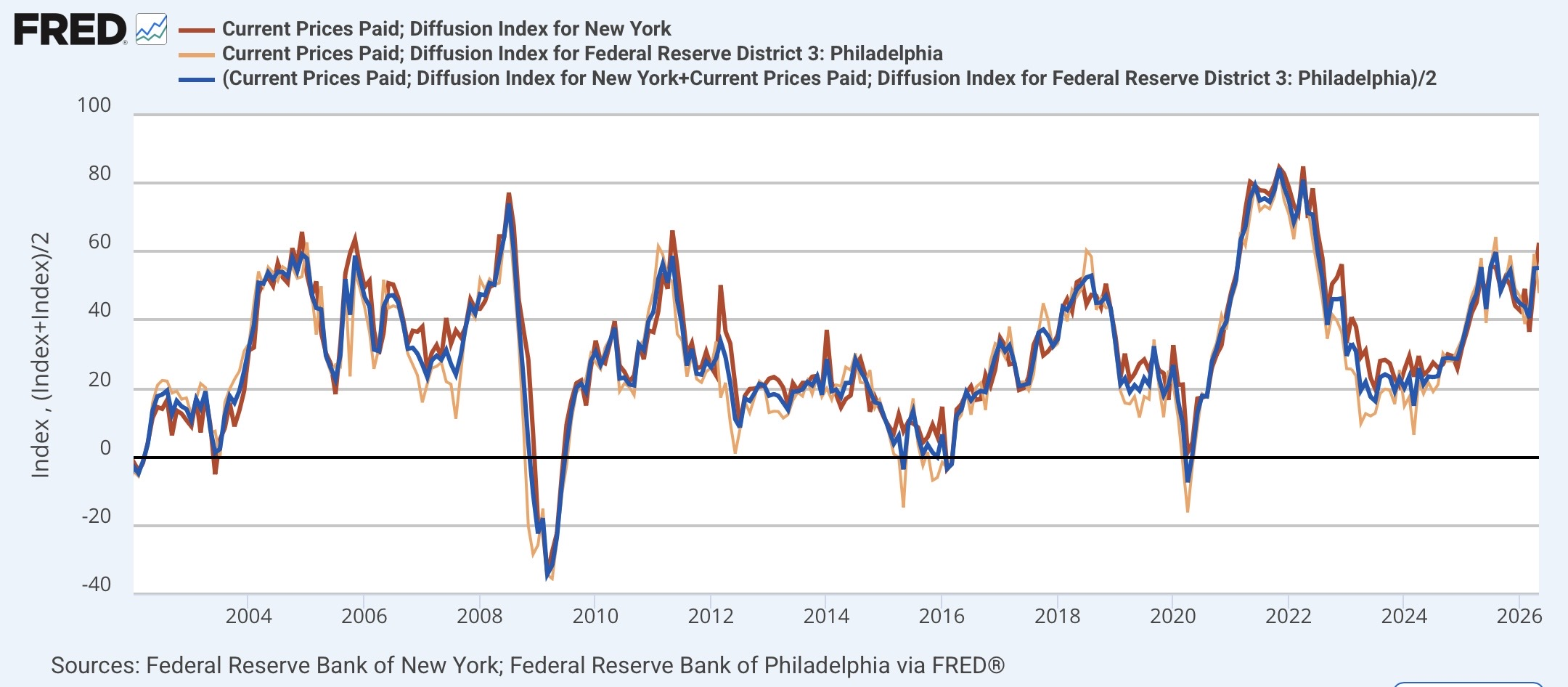
Prices paid for commodities for production increased for about 50% of all respondents, close to last spring’s highs and aside from the massive 2022 inflation, amongh the highest readings of the Millennium:
And the index o prices received by those same producers also increased to close to 12 month highs, and aside from 2022 among the highest average readings as well:
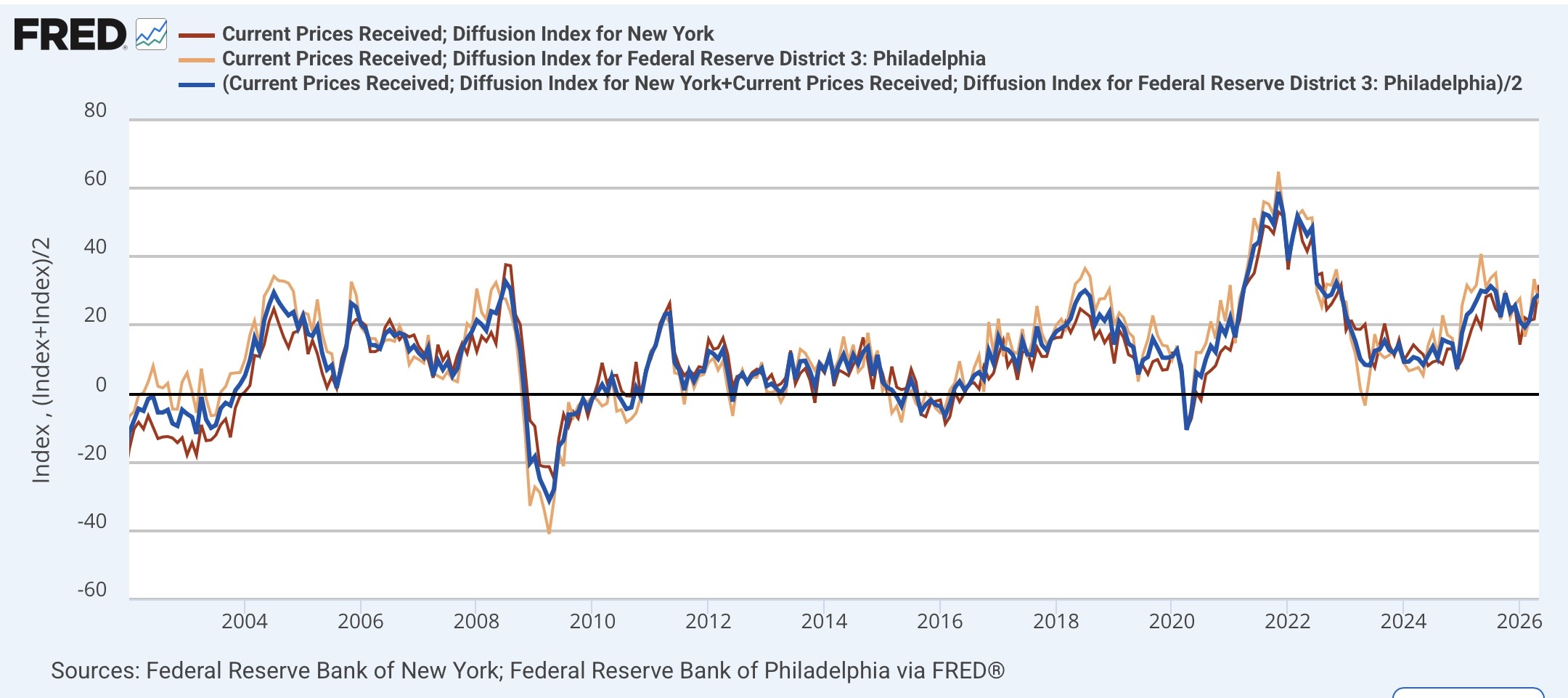
Since these are May numbers, they suggest further inflationary pass-throughs to consumers. In other words, while the good news is that the economy likely will continue to expand in the next month or two, as I indicated earlier this week, the inflationary pulse that began in March is almost certainly continuing in May.

Comments
Log in or sign up to join the conversation.