
There is a reason why half wall molding has been a staple of classic interior design for hundreds of years. It strikes that perfect balance between formal and welcoming, adding structure without feeling stuffy. Also known as chair rail molding, this treatment divides the wall horizontally, typically covering the lower third or half of the wall with paneling, beadboard, or simple trim while leaving the upper portion free for paint or wallpaper. The result is a room that feels grounded, intentional, and effortlessly traditional. But achieving that look used to mean hiring a carpenter or spending days measuring, cutting, and installing individual pieces of trim. A pre-cut half wall molding kit changes all of that. Every piece arrives cut to the exact length you need, with pre-mitered corners and sometimes even pre-assembled panels. You are not wrestling with a miter saw or trying to calculate angles. You are simply installing, painting, and admiring a classic interior style that has never been easier to achieve.
Understanding the Timeless Appeal of Half Wall Molding
Let me explain why this particular style has endured for centuries while other trends have faded. Half wall molding serves two purposes simultaneously, and it serves both of them beautifully. First, it protects your walls. The chair rail, which sits at about thirty-two inches from the floor, was originally designed to prevent chair backs from scuffing plaster walls. Even today, that practical benefit remains valuable in dining rooms, breakfast nooks, and anywhere people pull chairs up to a table. Second, it adds architectural interest to otherwise blank walls. The horizontal line created by the chair rail breaks up large expanses of drywall, making rooms feel more human-scaled and less cavernous. Below the rail, you can add paneling, beadboard, or simply leave the wall as is. Above the rail, you have a canvas for wallpaper, a contrasting paint color, or artwork. This two-zone approach gives you incredible flexibility in decorating while maintaining a cohesive, classic look that never feels dated.
What Makes a Pre-Cut Kit Different from Raw Trim
If you have ever wandered down the trim aisle at a home improvement store, you know how overwhelming it can be. Rows upon rows of different profiles, lengths, and materials, and you still have to figure out how many linear feet you need, how to cut the corners, and how to join everything together neatly. A pre-cut half wall molding kit eliminates that entire headache. The manufacturer has already calculated the exact lengths you need based on the dimensions of your room or your wall. Every piece of chair rail is cut to size, and every corner piece is pre-mitered or designed to use a decorative corner block that requires no angled cuts at all. Many kits also include the lower panel molding or beadboard sheets, pre-cut to fit between the chair rail and the baseboard. Some even include the baseboard itself. You open the box, lay out the pieces according to the included diagram, and start installing. There is no waste, no miscalculations, and no last-minute trips back to the store for one more piece of trim.
Choosing the Right Height and Profile for Your Room
One of the most common questions people ask is where exactly the chair rail should go. The traditional answer is one-third of the way up the wall, which for an eight-foot ceiling means about thirty-two inches from the floor. But you have options. For a more dramatic, modern take, you can install the chair rail at the halfway point, creating two equal zones. For rooms with very high ceilings, such as nine or ten feet, you might place the chair rail at forty-two inches to keep the proportions balanced. The profile of the molding matters just as much as the height. Classic profiles feature rounded edges, stepped layers, and decorative details that feel formal and traditional. These work beautifully in dining rooms, living rooms, and entryways. Simpler profiles with clean, flat surfaces and sharp edges feel more transitional or contemporary. These are ideal for bedrooms, home offices, or any space where you want a hint of tradition without full formality. Many pre-cut kits offer multiple profile options, so you can match the molding to your existing trim and baseboards for a cohesive look throughout your home.
Step by Step Installation from Start to Finish
Let me walk you through how a typical installation unfolds so you can see just how manageable this project is. First, you clear your wall and measure up from the floor to your desired chair rail height. Use a level to draw a faint pencil line all the way across the wall at that height. This line will be your guide. Second, you locate the wall studs using a stud finder and mark their positions. While adhesive alone can hold molding, attaching the chair rail into studs with finishing nails provides extra security. Third, you dry-fit your pre-cut chair rail pieces along the wall without adhesive, just to ensure everything lines up correctly at the corners. Fourth, you apply construction adhesive to the back of each piece, press it against the wall along your pencil line, and drive finishing nails through the molding into the studs. Fifth, if your kit includes lower panels or beadboard, you install those next, fitting them between the new chair rail and your existing baseboard. Finally, you fill all nail holes with wood filler, sand smooth, and apply your choice of paint. The entire process for an average-sized room takes four to six hours, spread across two days to allow for adhesive curing and drying time between paint coats.
Design Ideas for Above and Below the Rail
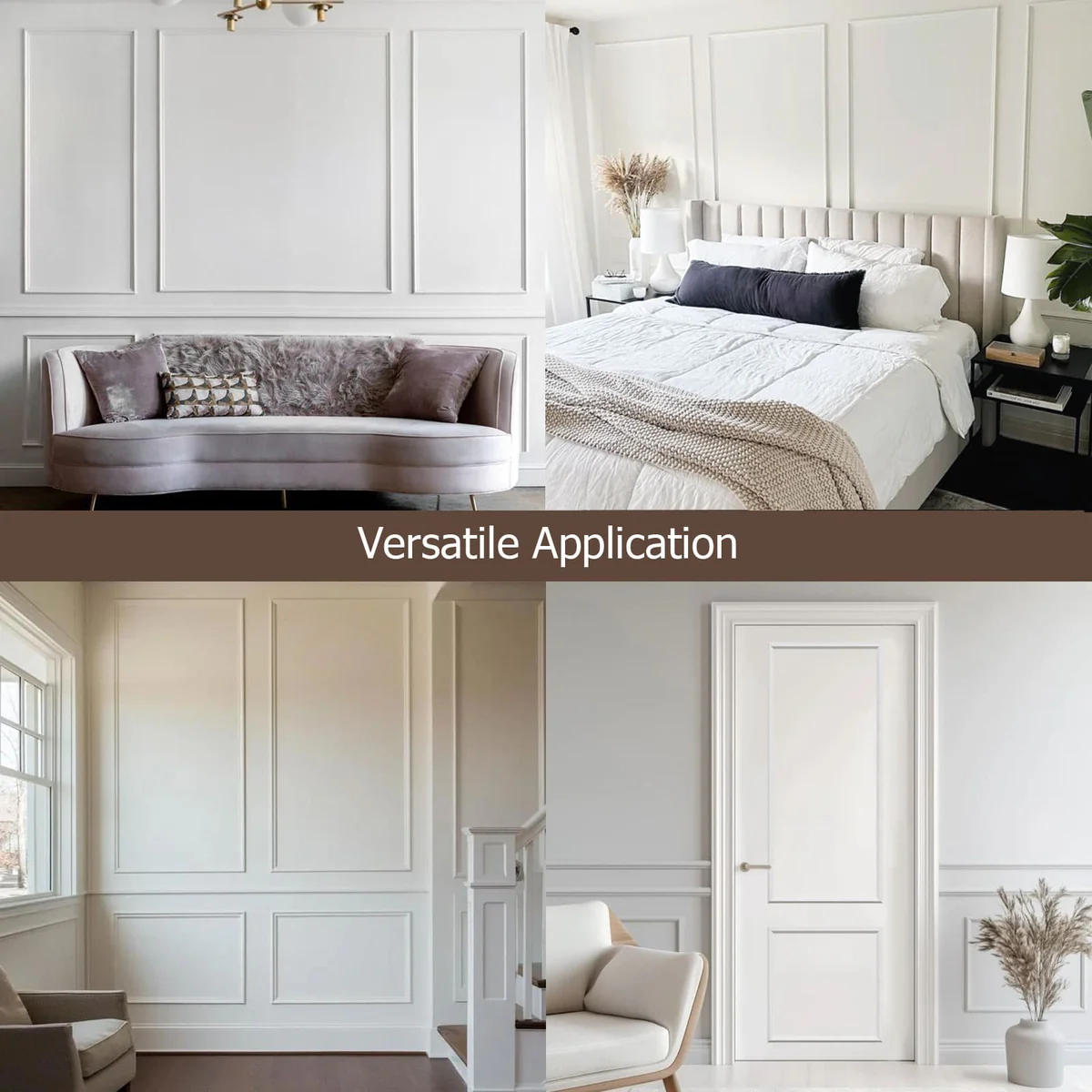
The beauty of half wall molding is the creative freedom it gives you. You can treat the upper and lower zones as a single unit or as two distinct design elements. For a classic, seamless look, paint both the upper wall and the lower wall the same color, but use a semi-gloss or satin finish on the lower portion and a matte finish above. The subtle sheen difference adds depth without contrast. For a traditional two-tone look, paint the lower wall a darker or richer color than the upper wall. Navy below with soft gray above creates a grounded, sophisticated feel. For a truly timeless style, install wallpaper above the chair rail and keep the lower wall and molding crisp white. This approach is especially popular in dining rooms and powder rooms, where the wallpaper becomes the focal point and the molding provides a clean, elegant frame. Below the chair rail, you have options too. Flat wall panels, beadboard sheets, board and batten strips, or even just plain drywall all work beautifully. The pre-cut kit you choose will determine which lower treatment is included, but many kits are modular, allowing you to mix and match.
Long Term Value and Maintenance of Half Wall Molding
Investing in half wall molding adds more than just beauty to your home. It adds real, tangible value. Real estate professionals consistently note that architectural details like chair rail and paneling make a home feel more custom and well-maintained, which can translate into higher offers when you sell. But even if you never plan to move, the durability of a well-installed half wall system is worth celebrating. The chair rail itself acts as a bumper, protecting your upper wall from furniture damage. The lower paneling is typically made from moisture-resistant MDF or polyurethane, which resists dings and scuffs far better than plain drywall. Maintenance is refreshingly simple. Dust the molding regularly with a microfiber cloth. Wipe away any scuffs on the lower panels with a damp cloth and mild soap. If the paint gets scratched, a small touch-up brush makes it disappear. Because the molding is paintable, you can refresh the entire look with a new coat of paint whenever you redecorate the room. That might be every few years or every decade. Either way, your pre-cut half wall molding kit delivers a classic interior style that stays beautiful, protects your walls, and adapts to your evolving taste with nothing more than a paintbrush and an afternoon.
Comments
Log in or sign up to join the conversation.