

Market Analysis
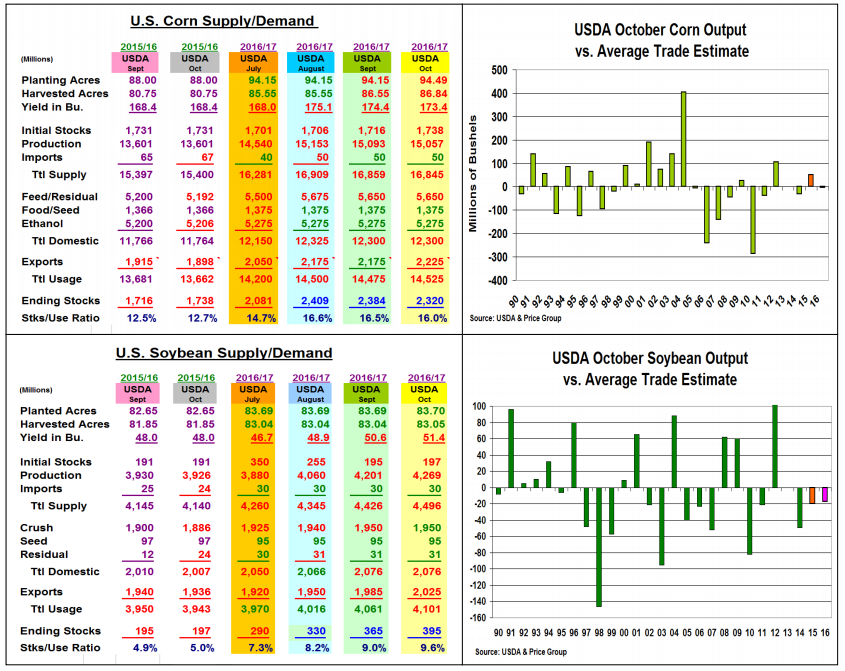
This year’s October crop reports showed very modest output difference from the trade’s analytical expectations for the USDA’s latest production updates. However, beans modest 0.8 bu jump in yield when fears circulated within the trade of 2-2.5 bu. increase in the US yield because of recent high yields being reported across the Midwest prompted an initial post-report rally. Limited participation from corn and wheat and merchandiser movement of beans lead to a late session break as investors remained skittish about the size 2016 US harvest and the potential for heavy combining given the current Midwest forecast over the next week to 10 days.
Given last spring’s generally uneventfully planting period, this month’s planting and harvested acreage adjustment based on FSA data was modest with only 286,000 rise in harvested area. Interestingly, increases of 300,000 and 250,000 in KS and TX compensated for some slippage in the Midwest. Despite the USDA increasing IL & IA yields by 2 bu. along with some other NC states, yield declines in the Mid-South and the SW because of summer heat shaved this month’s US yield by 1 bu. to 173.4. With October’s output off 36 million to 15.057 billion bu. and just 3 million bu. below the trade’s 15.06 billion outlook, this month’s report didn’t provide much excitement. A 50 million increase in 2016/17 exports did help slip ending stock off 64 million from September.
The US soybean crop estimate did rise 68 million to 4.269 million bu. with increases in harvested area and yields in the Midwest being compensated by other states and the Delta having reduced seedings and yields according to the USDA. Interestingly, IL’s acres and yield went up while IA’s seedings went down and its yield was left unchanged. The USDA also upped beans exports by 40 million bu. helping to limit 2016/17 ending stocks rise to 30 million to 395 million vs. 413 million expectation.
What’s Ahead
Country yield information and harvest progress will remain important information to corn and soybean price action. However, the significant export sales already on the books and the strong shipping schedules to move substantial US quantities into export channels before the end of 2016 suggests exporter demand may limit downside ahead and begin this year’s seasonal strength earlier than normal.



Comments
Log in or sign up to join the conversation.