


Is the real interest rate set by the demand vs. supply of all savings, private and public? Or is it set by the demand for money vs. bonds emanating from liquidity preference and (outside) wealth demand? Got to answer this in anticipation of teaching this Fall semester.
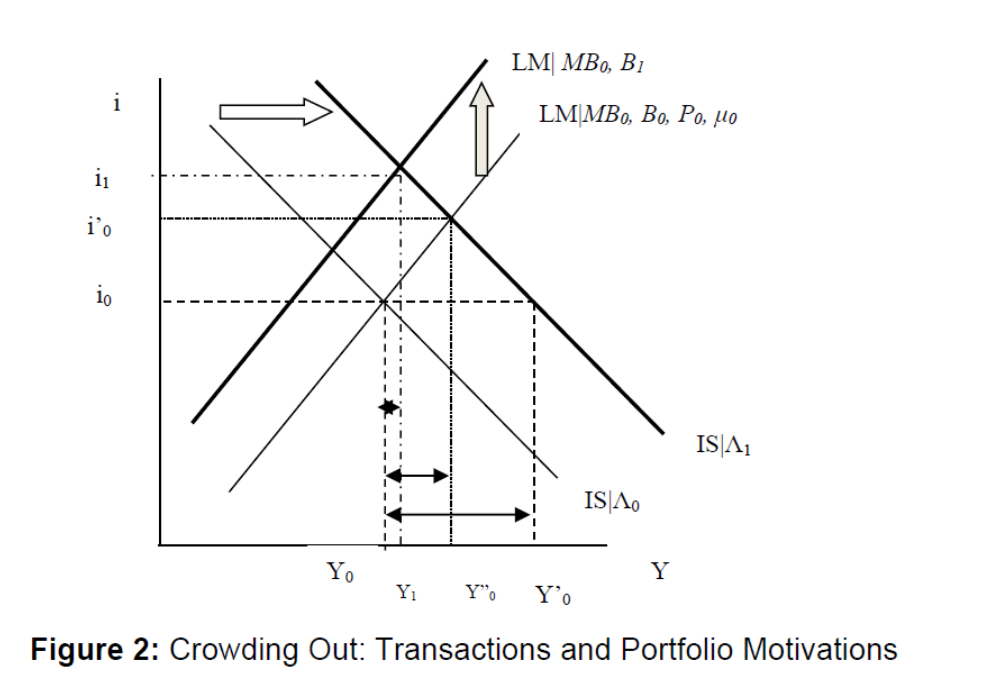
Usually, I use the latter in my classes, to illustrate portfolio crowding out arising from government budget deficits. Here’s an example of how I explain it, couched in IS-LM.
The loanable funds picture of increasing demand for savings due to running budget deficits looks like this.
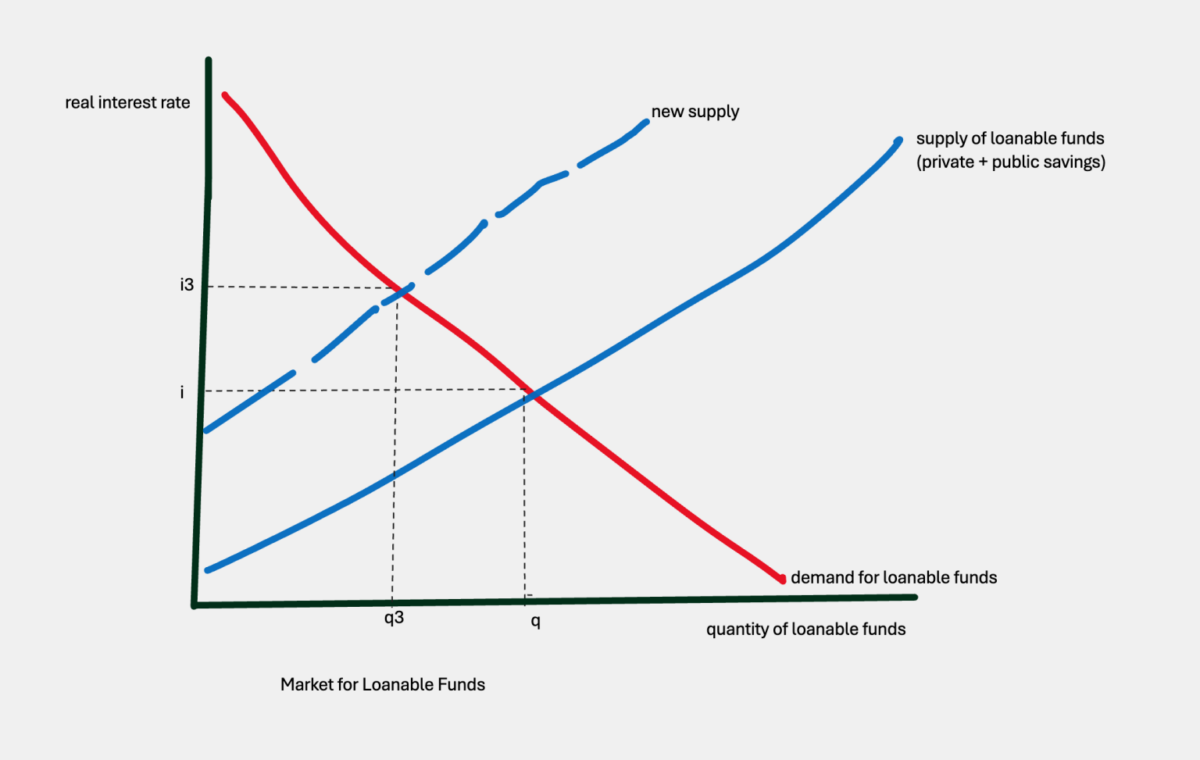
Both predict higher interest rates; I’d say both contain insights. However, it’s a good question which one is more accurate?
Well, if one could focus on outside assets only (which is consistent with a non-Ricardian equivalence world), then the former determines the interest rate on government debt.
However, recent journalistic accounts (e.g., [1]) have noted that demand for credit emanating from corporates, particularly those involved in AI capex, have had an influence. Hanno Lustig argues that, in fact, US government debt has become more “risky” so that government debt and other inside assets like high quality corporate bonds have become closer substitutes. Lustig deploys a picture of the AAA Treasury gap. I plot below the Glichrist-Zakrajsek spread, which controls for maturity.
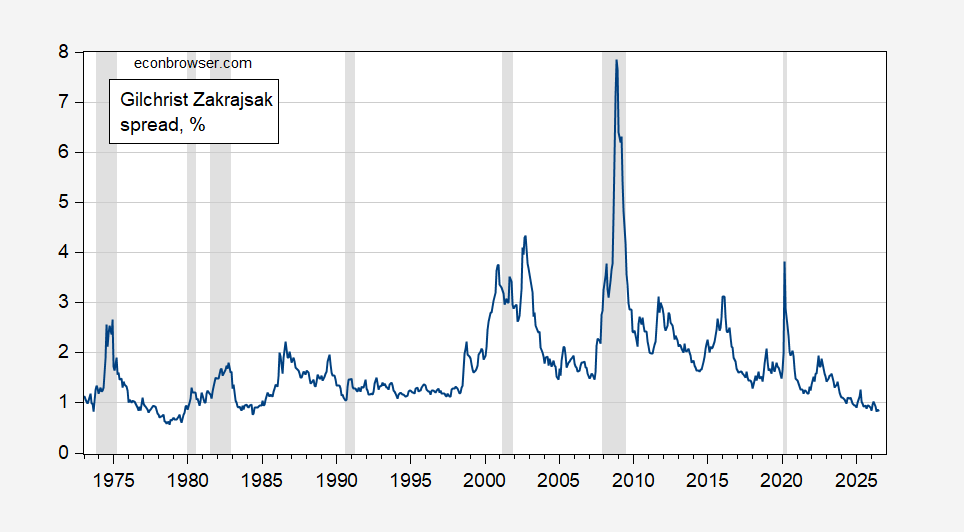
Figure 1: Gilchrist Zakrajsak spread, % (blue). Source: FRB.
The spread is quite low, suggesting that indeed the credit risk between US Treasuries and corporates has shrunk.

Comments
Log in or sign up to join the conversation.