
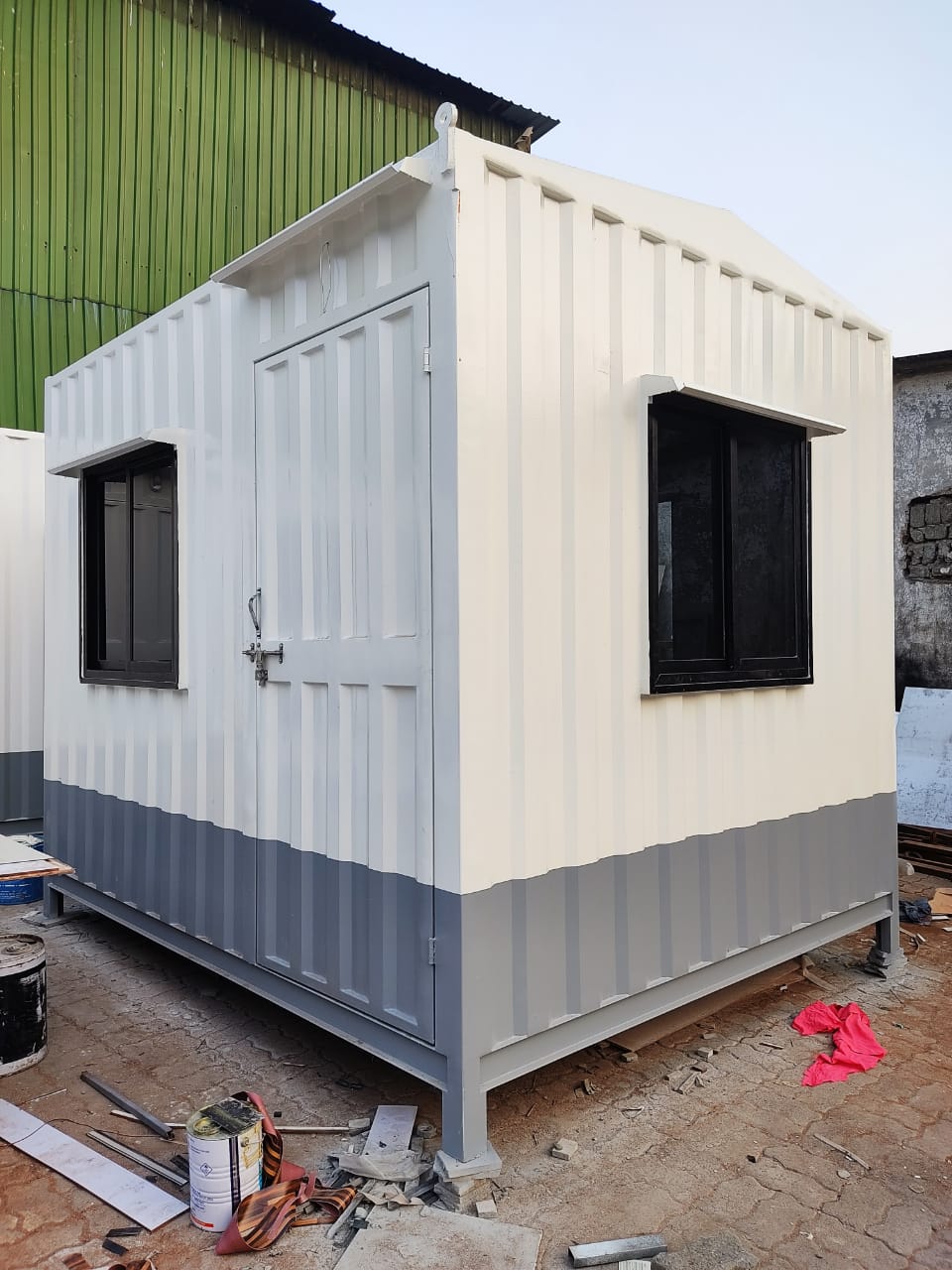
Walk onto almost any active construction site in India today, and you'll spot one — a compact, steel-framed structure standing near the entrance, doubling up as the project engineer's workspace. That's a portable site office cabin, and it has quietly become one of the most useful pieces of infrastructure on any job site.
If you're managing a project and wondering whether you actually need one, or how to pick the right one, this guide breaks it down in plain, everyday language.
What Exactly Is a Portable Site Office Cabin?
Think of it as a ready-made office that comes to you instead of being built from scratch. A portable site office cabin is manufactured in a factory using steel frames and insulated panels, then transported and installed directly at your project location. There's no cement, no bricklaying, and no waiting weeks for a foundation to cure.
Once it arrives, the cabin is typically operational within 24 to 48 hours. Compare that to a traditional site office, where even a basic structure can take several weeks to build, and the appeal becomes obvious.
Why Every Construction Site Needs One
Construction sites move fast, and so do project timelines. Engineers, supervisors, and project managers need a place to review drawings, hold quick meetings, store documents safely, and get away from dust and noise for a few hours. A portable site office cabin gives them exactly that, without adding months to the project schedule.
Beyond construction, these cabins show up just as often on mining sites, oil and gas fields, industrial plants, and even large event or exhibition grounds — anywhere a temporary but professional workspace is needed quickly.
What's Inside a Typical Site Office Cabin
A well-built portable site office cabin isn't just four steel walls. It usually includes:
- A sturdy MS steel frame, with thickness ranging from 2 mm for smaller units up to 5 mm for larger cabins
- Insulated wall and roof panels (PUF, EPS, or Rockwool) that keep the interior cool in summer and warm in winter
- Flooring suited to daily foot traffic — PVC vinyl for standard use, or cement board with vinyl for heavier movement
- Complete electrical wiring, LED lighting, and power points for laptops, printers, and site equipment
- Optional add-ons like an attached washbasin and WC, storage cabinets, or a small conference table
Everything can be customized based on how many people will use the cabin and what kind of work happens inside it.
Choosing the Right Size for Your Site
Sizing is where a lot of buyers get stuck, so here's a simple way to think about it. A small cabin, around 10 x 8 ft, comfortably fits 2 to 4 people and is perfect for a solo site office or a guard room. A medium cabin, roughly 20 x 10 ft, works well for a small team of 6 to 10 people and can double as a meeting space. For bigger project teams of 12 to 20 people, a large cabin around 40 x 10 ft gives everyone room to work without feeling cramped.
If you're not sure which size suits your site, it's worth getting expert input before ordering. [Reach out for a free consultation and quote on your portablesite office cabin
Site Office Cabin vs. a Permanent Structure
It's a fair question — why not just build a small permanent room instead? The honest answer is time and flexibility. A permanent structure takes weeks to plan, get approvals for, and build, and once it's up, it's stuck there for good. A portable site office cabin skips almost all of that. It's factory-built in parallel while your site preparation happens, delivered ready-to-use, and — this is the big one — fully relocatable. When your project wraps up or moves to a new phase, the cabin moves with it, without any structural damage.
For any project with a defined timeline, whether it's 6 months or 3 years, that flexibility usually makes far more financial sense than sinking money into a structure that has no life beyond the current job.
Durability in Real Site Conditions
A construction or industrial site isn't a gentle environment. Dust, monsoon rain, direct sun, and constant movement of heavy machinery all take a toll. This is why a genuine portable site office cabin is built with heavy-gauge steel framing and weatherproof exterior cladding — so it holds up through years of tough site conditions rather than showing wear within a single season.
Structural lifespan on well-built cabins typically runs 10 to 20 years, even with repeated relocation between projects, which makes them a long-term asset rather than a one-time expense.
Getting the Delivery Timeline Right
Most site office cabins are delivered and installed within 7 to 21 days across India, depending on size and the level of customization requested. If your project has a hard deadline, it's worth confirming this timeline in writing before you place your order, along with clarity on who handles installation once the cabin reaches your site.
Summary
A portable site office cabin solves a very real, very common problem — the need for a professional, functional workspace on-site, fast, without the cost and delay of permanent construction. Focus on steel frame quality, insulation, the right size for your team, and a manufacturer who can commit to a realistic delivery timeline, and you'll have a workspace that serves your project reliably from groundbreaking to handover — and can simply move with you to the next site after that.
Ascent Porta Solutions has spent over 15 years manufacturing durable, factory-direct portable site office cabins for construction, industrial, and infrastructure projects across India, with pan-India delivery and installation support included.
[Request your free quote today and get a factory-direct portable site officecabin, delivered in as little as 7 days→]
Comments
Log in or sign up to join the conversation.