

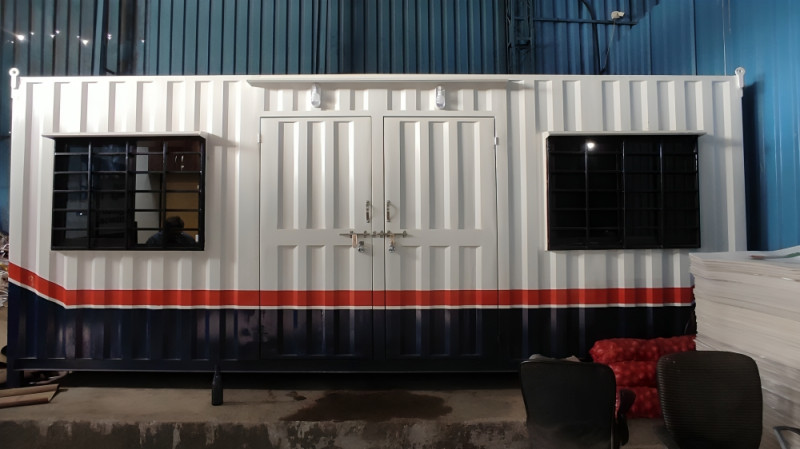
Ever wondered what actually happens before a portable cabin lands on your site? Behind every finished unit is a detailed process called portable cabin manufacturing and understanding it can help you make a far smarter buying decision.
Most buyers only see the final product. But the real difference between a cabin that lasts a decade and one that starts rusting within a year comes down to what happens on the factory floor. Let's walk through it.
What Is Portable Cabin Manufacturing?
Portable cabin manufacturing is the process of designing, fabricating, and assembling a prefabricated structure in a controlled factory environment, before it's transported and installed at the customer's site. Unlike traditional construction that happens brick by brick on location, this entire process is completed off-site which is exactly what makes a portable cabin so much faster to deliver.
A good portable cabin manufacturer doesn't just weld a metal box together. The process typically includes structural design, material selection, fabrication, electrical fitting, insulation, quality checks, and finally, dispatch and installation support.
The Step-by-Step Manufacturing Process
1. Design and Planning
Everything starts with understanding the customer's requirement size, purpose, and site conditions. Whether it's a small security cabin or a large modern portable office, the design phase decides the layout, door and window placement, and overall structure.
2. Frame Fabrication
The base of any strong portable cabin is its steel frame. This frame determines how well the structure will hold up over years of use, transport, and reinstallation. Reputable portable cabin manufacturers use galvanized steel to prevent rusting, especially important in coastal cities like Mumbai where humidity is high year-round.
3. Wall Panels and Insulation
Once the frame is ready, insulated wall panels usually made of sandwich puf panels or similar materials are fixed in place. These panels regulate temperature inside the cabin, keeping it cooler in summer and warmer during the monsoon chill, which matters a lot if you're planning to install a porta cabin ac later.
4. Roofing and Flooring
Roofing sheets are added with proper slope and sealing to prevent water leakage, a critical step for any porta cabin that will face heavy rainfall. Flooring is then installed, often using durable, water-resistant materials suited for daily foot traffic.
5. Electrical and Fixture Installation
Wiring, switchboards, lighting, and where required AC ducting are fitted at this stage. This is what turns a basic shell into a genuinely functional, modern portable office ready for daily use.
6. Quality Testing
Before dispatch, the cabin goes through checks for structural stability, leak-proofing, and electrical safety. This step is often skipped by lower-quality portable cabin manufacturers in Mumbai, which is why some cheap units fail within months of installation.
7. Transport and On-Site Installation
Finally, the completed unit is transported to the customer's site and installed on a prepared, level surface. No heavy foundation work is needed, which is one of the biggest advantages of choosing a portable cabin over conventional construction.
Why the Manufacturing Process Matters to You as a Buyer
You might be thinking why should I care about the process if I'm just buying the end product? Here's why it matters directly to your wallet and your peace of mind:
— Durability — A properly manufactured portable cabin can last well over a decade with minimal maintenance.
- Safety — Poor electrical fitting or weak framing can become a real hazard, especially in cabins meant for daily occupancy.
- Resale and reuse value — A well-built cabin holds its value better if you plan to resell or relocate it later.
- Fewer repair costs — Cutting corners during manufacturing usually means higher repair bills down the line.
This is exactly why it pays to choose an experienced porta cabin manufacturer rather than the cheapest quote you find online.
Curious how our manufacturing process works?[Reach out to our team] for a factory walkthrough or a detailed breakdown of materials used in your custom portable cabin.
What to Look for in a Portable Cabin Manufacturer
When evaluating portable cabin manufacturers, ask about:
1. The type of steel and insulation material used
2. Whether they handle transport and installation in-house
3. Their typical delivery timeline for your cabin size
4. Sample projects or a portfolio you can review
5. Warranty or after-sales support offered
A transparent portable cabin manufacturer will happily walk you through each of these points instead of rushing you toward a quick sale.
Summary
Portable cabin manufacturing is a multi-step process that includes design, frame fabrication, insulation, roofing, electrical work, quality testing, and finally installation. Understanding this process helps you spot the difference between a durable, well-built cabin and a cheaply assembled one. When choosing a manufacturer, always ask about materials, timelines, and after-sales support before placing your order.
Looking for a reliable partner for your next project? [Get a free quote now]and let our manufacturing team build a portable cabin that's made to last.
Comments
Log in or sign up to join the conversation.